What Are The Disadvantages Of E-Bikes? Weighing Them Up Before You Book An E-Bike Tour
The real disadvantages of e-bikes for a Melbourne guided tour: the 25 km/h legal ceiling, park restrictions, transport rules, sizing limits and the cost step, with what the operators publish and what to ask about before you book.
What Are The Disadvantages Of E-Bikes? Weighing Them Up Before You Book An E-Bike Tour?
The disadvantages of e-bikes for a Melbourne tour are the legal ceiling, the restrictions, the transport rules and the price. A legal e-bike in Victoria assists only while you pedal and stops assisting at 25 km/h, some parks bar them entirely, trains require them switched off, and the touring step up from a standard bike costs more. None of these stops a good tour, but each one deserves a look before you pay.
E-bikes have changed what a day on two wheels looks like in Melbourne. The city is mostly flat, but the Yarra Valley and the bayside climbs out of St Kilda reward a motor, and pedal assist opens guided rides to people who have not sat on a saddle in a decade. That is the upside, and it is real.
The downside is quieter. It lives in regulations most visitors never read, in park signage, in the small print of booking pages, and in the gap between what an operator publishes and what you only find out by asking. Each disadvantage is set out below using the rules as they are actually written, so you can weigh them against the ride you want.
None of what follows is an argument against e-bike tours. Melbourne has several e-bike tours worth booking, including the Melbourne E-Bike Tour With Local Guide, rated 4.9 from 300+ reviews. The point is that an informed booking is a better booking, and the e-bike decision has more moving parts than the standard-bike one.
Does An E-Bike Actually Go Faster Than A Regular Bike?
On a Melbourne tour, not in the way most people assume. Victorian law caps the electric assist at 25 km/h, and the motor stops helping at that point, so an e-bike only travels faster than a regular bike if you pedal harder than the motor allows. What the motor really buys you is easier speed: the same kilometres with less sweat, not a higher top speed. Tour e-bikes are pedal-assist machines that cut out at 25 km/h; confirm each bike's motor spec with the operator.
The legal e-bike in Victoria, the type called an EPAC, has a motor of at most 250 W continuous rated power. It assists only while you are pedalling and the assist cuts off at 25 km/h. A rider can pass 25 km/h by pedalling alone, just as on any bike, but the motor contributes nothing above that line. A throttle is allowed only up to 6 km/h in walk mode, which exists for pushing the machine up a ramp, not for riding. Transport Victoria sets these rules out on its electric bikes page; confirm the motor spec of any tour bike with the operator.
So the first disadvantage is an expectations problem more than a practical one. If you picture an e-bike as a small scooter that whisks you along while you rest, that machine is not legal on Victorian roads and paths unless it stays on private property. Tampered e-bikes that override the limits carry fines on public roads and paths. Tour operators run legal machines, which means no Melbourne e-bike tour will be fast.
In practice this matters less than you might think on a guided city ride. Group tours pace themselves to the riders, stop often for commentary and photos, and the Melbourne E-Bike Tour With Local Guide covers about 16 km in roughly 4 hours including a lunch stop. That is a gentle average. The assist earns its keep at take-offs, on the odd climb, and in the last hour when your legs would otherwise flag, not at the top of the speed range.
The 25 km/h ceiling becomes more relevant on longer rail trail rides, where a fit rider on a good regular bike can hold a higher cruising speed than the motor will assist. If raw pace is the reason you are considering electric, a standard bike may actually suit you better, a trade-off explored in the guide to choosing between e-bike and regular bike tours.
Wondering whether the assist makes the whole decision for you?
Where Are E-Bikes Barred Around Melbourne?
Three well-known Melbourne riding spots restrict e-bikes. Albert Park bars power-assisted bicycles above 200 W on its paths, Yarra Bend Park lists motorised bicycles as barred on management-vehicle-only tracks and shared-use trails, and St Kilda Pier bans e-bikes on its management-vehicle-only paths. A tour route that touches these places needs planning, which is exactly what a good operator does for you.
These rules come from Parks Victoria, and they catch visitors by surprise because an e-bike feels like a bicycle right up until a sign says otherwise. The Albert Park rule is the sharpest: "No power assisted bicycles or scooters (above 200 watts) are allowed on the paths," on the official Albert Park page. A legal EPAC's 250 W motor sits above that line, so an Albert Park lap may be off the table for an e-bike group unless the operator uses bikes that fall under it. Ask before you assume.
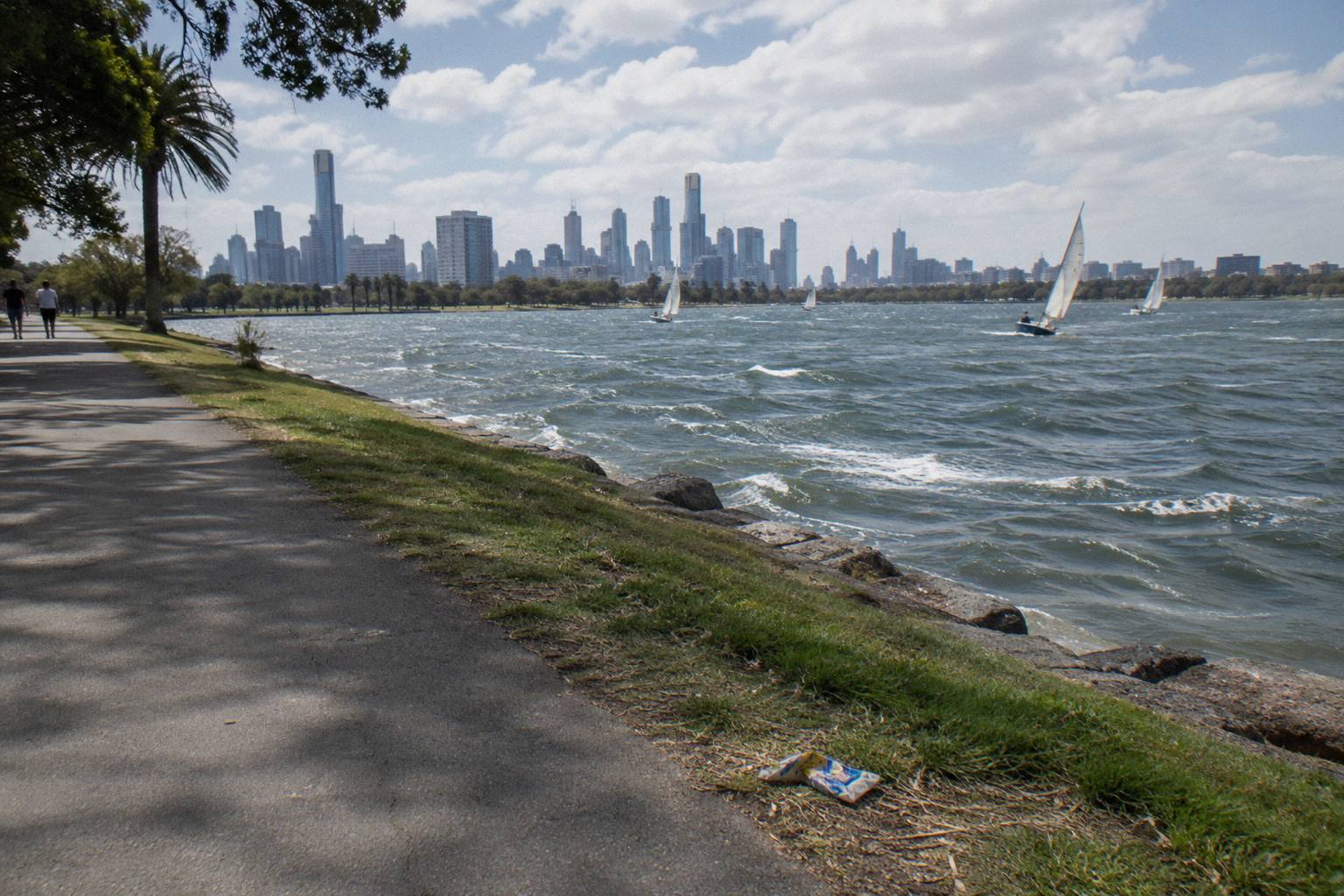
Yarra Bend Park is the second case. Motorised bicycles are listed as barred on management-vehicle-only tracks and shared-use trails, and there is a practical complication too: the riverside trail linking from the Bushland Circuit Trail is temporarily closed for structural damage, with a detour in place. Nobody can promise you a full riverside loop there right now, on any bike.
St Kilda Pier is the third. No motorised vehicles, expressly including e-bikes and scooters, are allowed on the management-vehicle-only paths, and the pier's breakwater also bans dogs and fishing. The pier is famous for its little penguin colony, which got a 150 m viewing boardwalk with free ticketed sessions run by Phillip Island Nature Parks. Getting off and walking the last stretch is the e-bike rider's answer.
| Location | The restriction | What it means for an e-bike rider |
|---|---|---|
| Albert Park paths | No power-assisted bicycles above 200 W | A 250 W tour e-bike cannot ride the paths |
| Yarra Bend shared-use trails | Motorised bicycles barred on these trails and management tracks | Route around; riverside trail section also closed |
| St Kilda Pier management paths | No motorised vehicles, including e-bikes | Dismount and walk the pier section |
For independent riders this is homework. On a guided tour it is the operator's problem, and the established operators route around these places as a matter of course. It still pays to know the map of restrictions exists, because it shapes which tour format sees which parts of the city, and because a seller promising an e-bike lap of Albert Park is promising something the rules do not allow.
Can You Take An E-Bike On Public Transport In Melbourne?
Not on trams, and only switched off on trains. Trams and buses carry folding bikes and folding e-bikes up to 82 x 69 x 39 cm with wheel rims up to 51 cm, and tour e-bikes do not fold. Metro trains accept bikes and factory-built e-bikes, but the e-bike must be switched off, not ridden and not charged aboard, and you walk it on platforms. Converted e-bikes are banned from trains altogether.
This is the disadvantage that most often ambushes a plan. Melbourne's tram network is the envy of many cities, and visitors reasonably assume a bike comes along. It does not, unless it folds to the stated dimensions, and the pedal-assist machines used on tours are full-size. Never plan a day that involves riding to a tram stop and boarding with an e-bike, because the rule closes that door.
| Transport | Standard bike | Factory-built e-bike | Converted e-bike |
|---|---|---|---|
| Metro trains | Allowed, walked on platforms | Allowed, switched off, not charged | Banned on all trains |
| Trams | Folding only, up to 82 x 69 x 39 cm | Folding e-bikes only, same limits | Banned |
| Buses | Folding only, same limits | Folding e-bikes only, same limits | Banned |
| V/Line regional trains | Free, conductor decides space | Free, switched off, conductor decides | Banned |
The train rules are friendlier but come with strings. An e-bike on a metro train must be off, and you walk it on the platform rather than rolling it. V/Line regional services take bikes free and the conductor decides the space, which matters for anyone combining a regional rail trail with an e-bike. The rules are published by Transport Victoria.
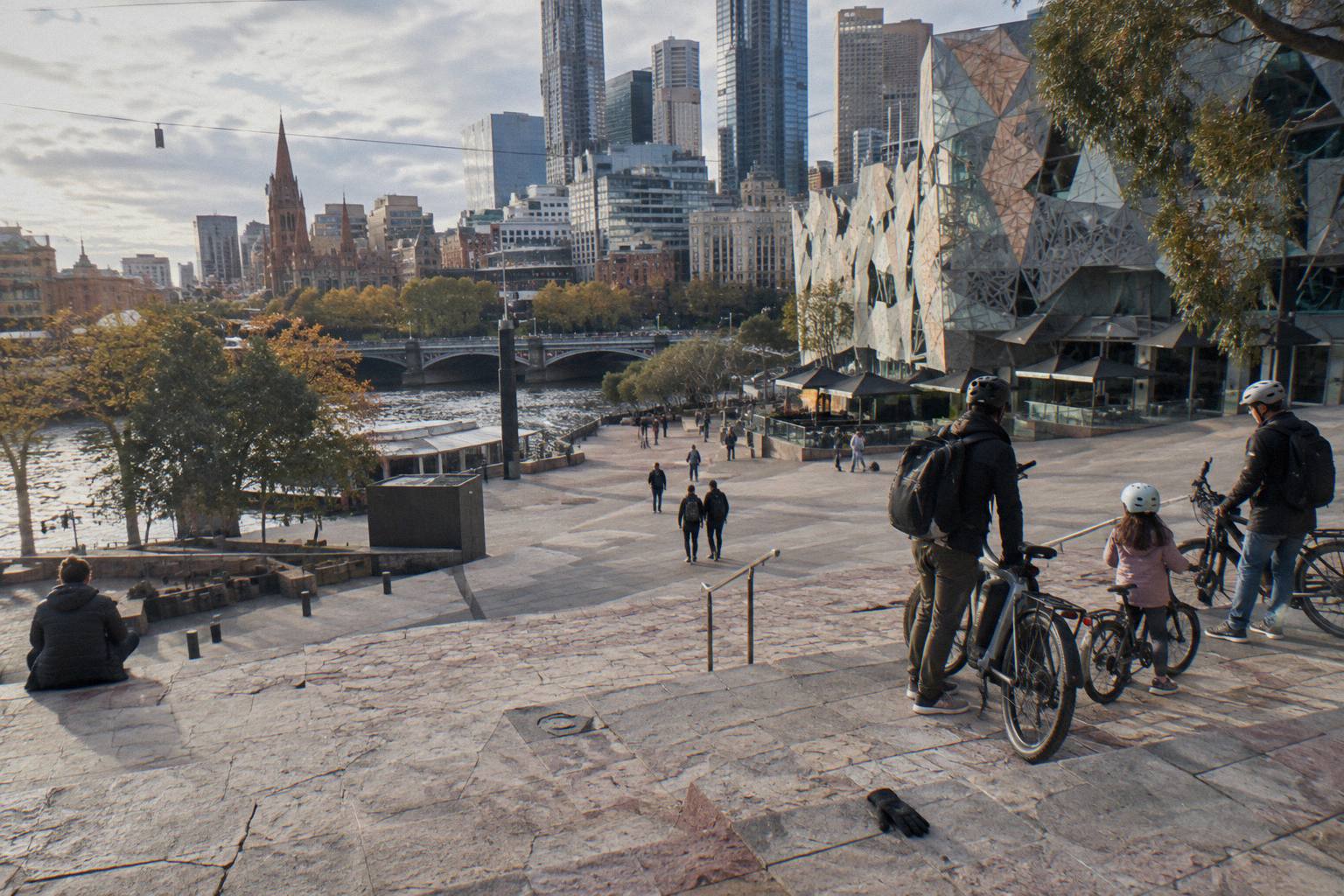
The practical effect on tours is smaller than the effect on independent rides, because guided e-bike tours start where the bikes already are. The Melbourne E-Bike Tour With Local Guide starts at Batman Park, a short walk from the city's southern edge, and the bayside and rail trail tours start at stations chosen so the ride begins where the train delivers you. The transport rules bite hardest when you want to move an e-bike across the city yourself, which is one quiet argument for guided formats over independent hire.
One more wrinkle: e-bikes and tram tracks share streets in the inner city, and official guidance on handling tracks is thin on the ground. A guided group simply follows the guide, and the operator can tell you how their rides manage tracks on a given route.
What Do Operators Not Tell You About The Battery?
No Melbourne tour operator publishes battery range, charging time or e-bike weight, so you cannot compare machines on paper before you book. What the listings do publish is what the ride demands of you: the Melbourne E-Bike Tour covers about 16 km in about 4 hours and asks only that you can ride a bike. For battery specifics, ask the operator directly before you go.
This is a genuine gap, not an oversight on your part. Battery life, range, charge time and machine weight are not published for any tour e-bike, so check these on the booking page before you go. Do not let anyone else guess either: a claimed "80 km of range" from a third party tells you nothing about the specific bike under you on the day.
What you can lean on is the shape of the rides. A 16 km city tour over 4 hours is a short day by battery standards, and operators who run the same route daily with the same fleet are managing charge cycles as a routine business, not gambling. The longer-format options, like the Yarra Valley rail trail day, are also designed around the machines that carry them, with the operator choosing the route to match.
The questions worth asking before you book are concrete ones. How many hours does the tour ride versus stop? What happens if a battery runs flat mid-ride, is there a support option or a spare bike? Is the machine pedal-assist only, which the law requires for the 250 W type? Operators answer these easily, and a hesitation on any of them tells you something.
Do not confuse the battery question with the riding question, either. Whether an e-bike is hard to ride at all is a separate worry, and the answer for most people is no, as the post on how approachable electric bikes are for beginners sets out. The battery's unknowns are about logistics. The riding itself is about whether you can balance and pedal, which the tours already assume you can.
How Much More Does An E-Bike Tour Cost?
The electric step up is real but modest on shared tours. The Melbourne E-Bike Tour With Local Guide costs from A$139 per person against from A$140 for the standard-bike Famous Melbourne City Cycling Tour With Local Guide, while adding an e-bike to the Famous tour costs A$40 per person on top. Private electric formats jump further: the Private Melbourne E-Bike Tour runs from A$500 per person.
Those are booking-page from-prices in Australian dollars, and they move with date and group size, so treat them as the floor rather than a quote. The pattern is consistent, though: on shared city rides, electric and pedal power cost within a few dollars of each other, because you are mostly paying for the guide, the route and the group, not the battery.
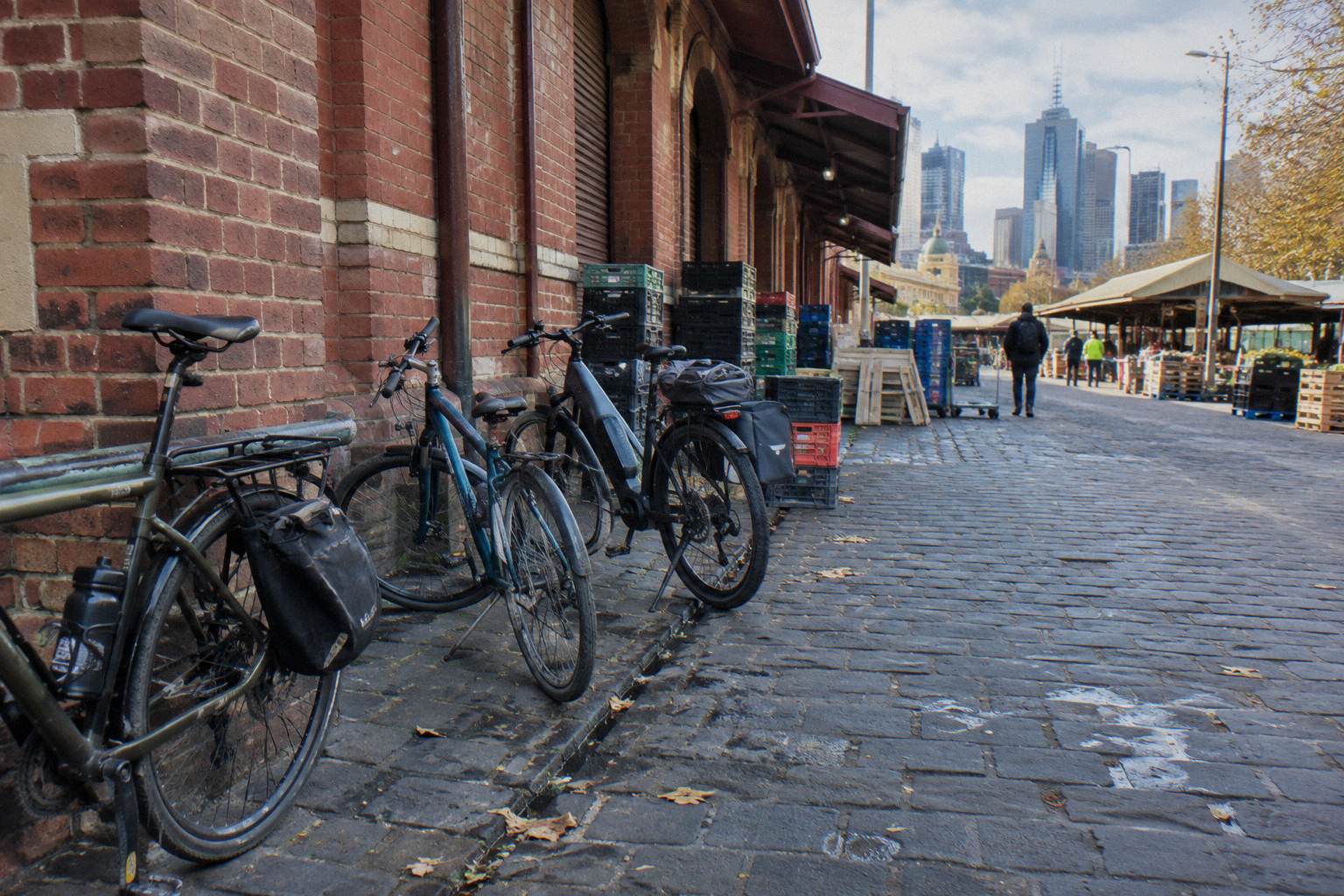
The Famous tour illustrates the upgrade path neatly. It runs from A$140 per person on a standard bike, rated 4.9 from 900+ reviews, and the e-bike upgrade adds A$40 per person. That makes electric a clear add-on decision rather than a different tour: same guide, same 4.5 hours, same lunch stop at Queen Victoria Market, more assistance on the climbs.
The private formats are where the cost conversation changes. A dedicated guide, a route arranged with your group and a flexible 2 to 4 hour duration make the Private Melbourne E-Bike Tour a different product, and the from A$500 per person price reflects that. Its booking page shows the price for the group, since it depends on group size.
The cost disadvantage, then, is not a flat penalty. It is a small premium on shared rides, a mid-sized upgrade on the Famous tour, and a serious step when you go private. Weighing that against hills, distance and how often you ride is exactly the comparison the hire versus guided ride guide walks through.
If the shared electric format is the one that fits, this is the tour that defines it, and if the Famous tour's upgrade path tempts you, that choice sits on its own listing.
Who Does An E-Bike Tour Not Suit?
Some riders are ruled out by the booking pages, not by opinion. The Melbourne E-Bike Tour With Local Guide asks for riders about 150 cm or taller and up to 113 kg, and anyone under 18 rides with an adult. The Private Melbourne E-Bike Tour lists a minimum age of 12. Regional e-bike tours draw their own lines: the 7-hour Yarra Valley e-bike rail trail alternative, which uses fat-tyre e-bikes, excludes riders under 155 cm or over 130 kg.
Sizing and weight limits are the least discussed disadvantage of e-bikes, because they sound like fine print until they are your fine print. Each operator states rider requirements differently, so read the specific tour's conditions before booking. Those requirements vary enough between tours that a rider cleared for one may not be cleared for another. The private e-bike listing also names pregnant women and people who cannot ride a bike as not suitable, which is a category no motor can fix.
Age rules follow the same patchwork. The shared e-bike tour ties under-18s to an adult, the private e-bike tour sets 12 as the floor, the Mornington Peninsula small-group ride uses e-bikes for riders over 14, and the 7-hour Yarra Valley fat-tyre e-bike alternative carries the 155 cm and 130 kg limits. None of this is arbitrary: machines have geometry and load ratings, and operators work inside them. Our family riding guide goes deeper on matching tours to kids.
Then there is the suitability question no rulebook answers. If someone in your group cannot ride a bike at all, no amount of electric assistance fixes that, and the listings say so plainly. The electric part lowers effort, not the skill floor. That single distinction disappoints more bookers than any battery or speed rule, so it deserves stating before money changes hands rather than at the meeting point.
The private electric format exists partly for these edge cases, with a guide arranging the route, pace and start time around the group, and languages including English, German, Spanish, Hungarian and Chinese on the booking page.
Do The Disadvantages Actually Matter On A Guided Tour?
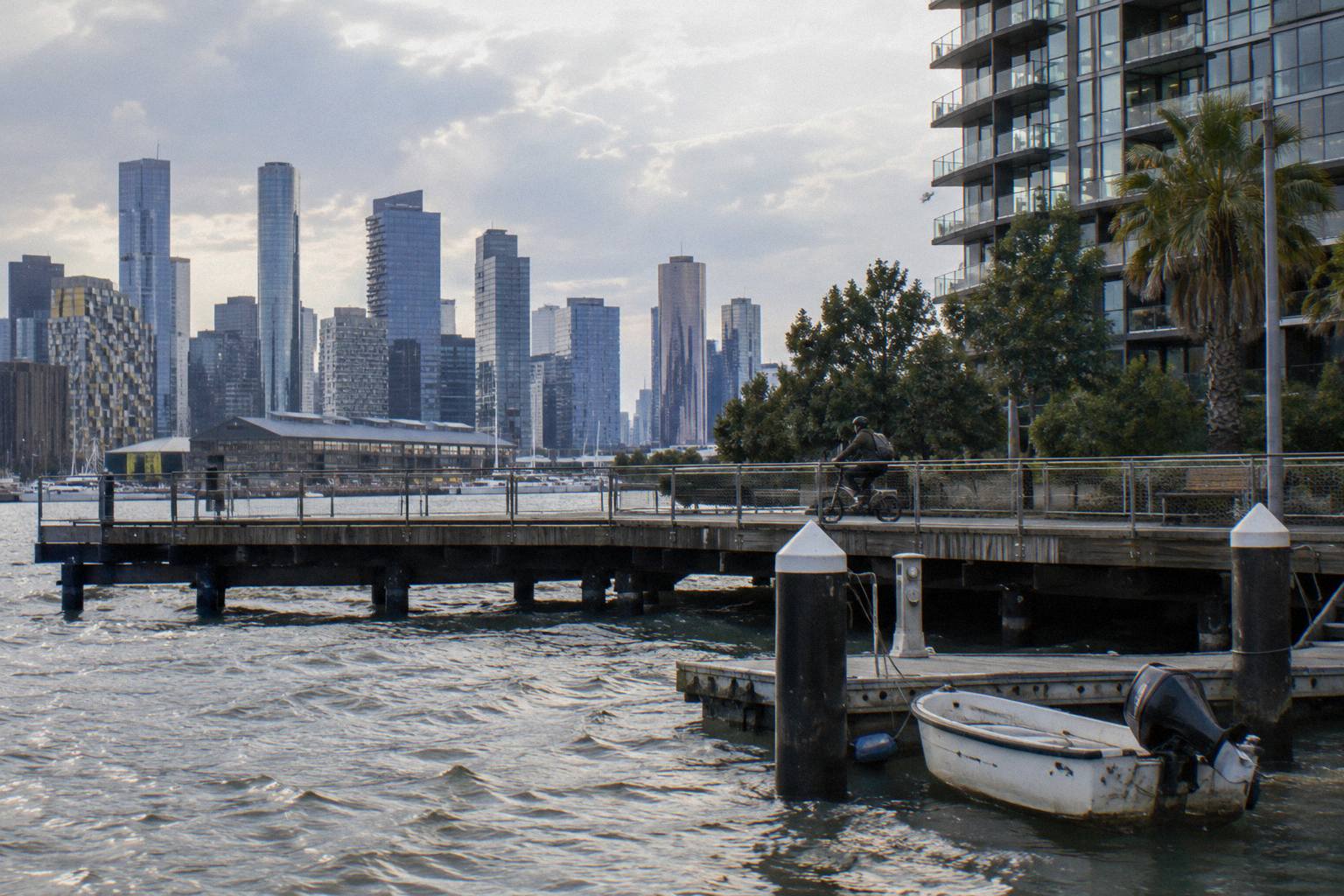
Mostly no, and it is worth being clear about which ones remain. A guided tour absorbs the route restrictions, the park rules and the battery logistics, because the operator plans around them daily. What stays with you are the cost step, the rider limits and the transport rules if you are travelling independently before or after. On a shared city ride, the remaining disadvantages are close to trivial.
Break the list down one item at a time. The 25 km/h ceiling? Irrelevant on a 16 km city tour with commentary stops. Park restrictions? The operator routes around Albert Park, Yarra Bend and the pier as routine. Battery unknowns? A short shared ride makes them a question for the curious rather than the cautious. Public transport? The tour starts where the bikes are. That is four of the six disadvantages effectively handled by choosing a guided format over independent hire.
What survives is the money and the fit. Electric costs a little more on shared rides and a lot more in private formats, though the from A$139 shared price shows how small that gap has become. Rider limits are absolute: height, weight, age and the basic ability to ride are not negotiable at the meeting point. And if your holiday plans involve moving a bike yourself across the city, the tram rules will bite.
The balanced conclusion is that the disadvantages of e-bikes concentrate on independent riders and edge-case riders, not on the typical visitor joining a city tour. The best weather and season choices, covered in the guide to picking the best season for a bike ride, shape the day far more than the motor does: Melbourne averages about 650 mm of rain spread across every month, on roughly 100 rain days a year, so a changeable sky is a bigger variable than a wattage figure.
So weigh them up, but weigh the right ones. The e-bike's real downsides are a small price premium, firm rider limits, and paperwork if you go it alone. Its upsides, easier kilometres and a longer day in the saddle, are exactly what a guided tour is built to deliver, and Melbourne Bike Tours lists both formats for comparing side by side.
If you have read this far and are still deciding, these are the three formats that frame the choice: shared electric, private electric, and the standard-bike tour with the most reviews.
Which Mistakes Do Riders Make About The E-Bike Downsides?
The biggest is buying speed. A legal Victorian e-bike stops assisting at 25 km/h, so no Melbourne e-bike tour is fast. Next: assuming parks are open to all bikes, expecting trams to take a full-size machine, and trusting a third-party battery range claim when no operator publishes one.
- Promising yourself an Albert Park lap. The paths bar power-assisted bicycles above 200 W, so ask the operator about the bike's motor before assuming.
- Planning to tram home. Trams and buses carry folding bikes and folding e-bikes only, up to 82 x 69 x 39 cm; tour machines do not fold.
- Leaving the e-bike switched on, on a train. Metro trains take factory-built e-bikes off and uncharged, and converted e-bikes are banned entirely.
- Believing a quoted range. Battery life, charge time and bike weight are unpublished for every tour e-bike, so a forum figure tells you nothing about the bike under you.
- Ignoring the rider limits. Height, weight and age rules differ per tour, roughly 150 cm and up to 113 kg on one, 155 cm and 130 kg on the valley ride; check before you pay.
Common Questions About E-Bike Disadvantages
What Are The Disadvantages Of E-Bikes? Weighing Them Up Before You Book An E-Bike Tour
The main disadvantages are the 25 km/h assist ceiling under Victorian law, restrictions in parks such as Albert Park and on St Kilda Pier, the folding-only rule for trams and the switched-off rule for trains, rider height, weight and age limits on each tour, unpublished battery specifications, and a cost step that ranges from a few dollars on shared rides to a large one on private formats.
Are E-Bikes Allowed On Melbourne Trains And Trams?
Trains yes, trams no, with conditions. Metro trains and V/Line carry bikes and factory-built e-bikes free, but an e-bike must be switched off, not ridden and not charged aboard, and bikes are walked on platforms. Trams and buses accept only folding bikes and folding e-bikes up to 82 x 69 x 39 cm, and tour e-bikes do not fold.
Can An E-Bike Tour Ride Through Albert Park?
Not necessarily. Parks Victoria bars power-assisted bicycles above 200 W from Albert Park's paths, and a legal EPAC's 250 W motor sits above that line, so confirm the bike's motor spec with the operator. Operators route around the park, and the same planning applies to Yarra Bend's shared-use trails and St Kilda Pier's management paths.
How Much Faster Is An E-Bike Tour Than A Regular Bike Tour?
Barely faster, if at all. The motor assist cuts off at 25 km/h, so above that speed an e-bike is just a bike you pedal. What the motor changes is effort: easier take-offs, easier climbs and less fatigue. The Melbourne E-Bike Tour With Local Guide covers about 16 km in about 4 hours including a lunch stop, which is a relaxed pace on any machine.
Do E-Bike Tours Publish Battery Range Or Charging Details?
No operator publishes battery range, charging time or e-bike weight, so there is nothing to compare on paper. Ask the operator directly how long the ride is versus the stops, and what support exists if a battery runs flat mid-ride.
Is An E-Bike Tour Worth It If I Have Not Ridden In Years?
For many people, yes. The Melbourne E-Bike Tour With Local Guide asks only that you can ride a bike, and the electric assistance makes the ride manageable even if you do not ride often, though its listing sets limits of roughly 150 cm minimum height and up to 113 kg, with under-18s riding alongside an adult. If you cannot ride a bike at all, no tour is suitable, electric or otherwise.