How Fast Do Electric Bikes Ride? The Pace Of A Guided E-Bike Tour
How fast electric bikes legally go in Victoria, and what the pace of a guided e-bike tour through Melbourne actually feels like hour to hour.
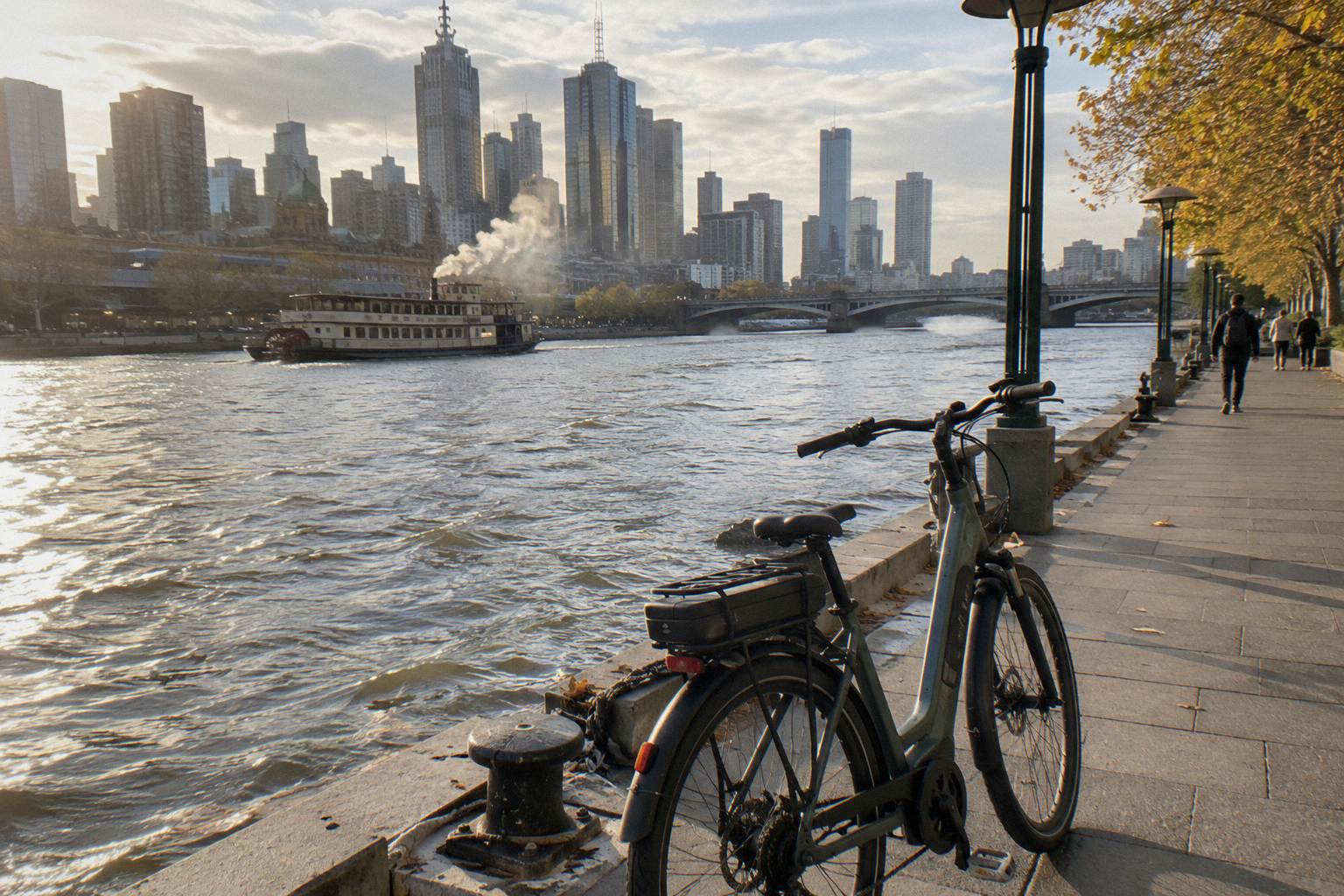
An electric bike in Victoria assists only up to 25 km/h, after which the motor cuts out and your legs take over. On a guided Melbourne e-bike tour the group rarely sustains anything close to that, because the ride is built around laneways, river paths and photo stops rather than open-road speed. The question sounds like it is about the bike, but it is really about the group. A tour is a rolling conversation with a guide, not a race, and the electric assist exists to flatten hills and headwinds so nobody gets dropped.
That distinction matters when you are choosing a ride. The Melbourne E-Bike Tour With Local Guide, run by Blue Tongue Bikes from its shop at 2 Rebecca Walk in Batman Park, covers about 16 km including stops and a lunch break across roughly 4 hours. The operator asks only that you can ride a bike, noting that the electric assistance makes the ride manageable even if you do not ride often. Riders need to be about 150 cm or taller and up to 113 kg, and anyone under 18 rides with an adult. That is a low bar, and it tells you the pace is social, not athletic.
The law is the hard ceiling on all of this. Transport Victoria defines a legal EPAC e-bike as having a motor of at most 250 W continuous rated power that assists only while you pedal, with the assist cutting off at 25 km/h. You can go faster than that under your own pedal power, the same as on any bicycle, but the motor will not help you get there. Tour fleets use exactly this kind of bike, which is why no Melbourne e-bike tour deserves to be called fast.
If you are weighing an e-bike ride against a regular guided ride, our guide on choosing between an e-bike and a regular bike covers the fitness side, and there is a deeper comparison of whether electric bikes are hard to ride for first-timers. For riders curious about the upper age range rather than the lower one, the piece on how far an older rider should comfortably manage looks at realistic distances.
What Are The Legal Speed Limits For E-Bikes In Victoria?
Victoria does not set a special speed limit for e-bikes; it sets a power and assist ceiling. The motor may assist only while you pedal and must cut out at 25 km/h, with continuous rated power capped at 250 W. A rider can exceed 25 km/h by pedalling alone, legally, on any bicycle. The rule comes from Transport Victoria's electric bike page, which also requires working pedals and the EN15194 standard mark on compliant EPAC bikes. A throttle is permitted only up to 6 km/h as a walk mode, which is enough to nudge the bike alongside you, nothing more.
There is a second legal category worth knowing about, though it is not what tours use. A Power-Assisted Pedal Cycle has a peak power output of 200 W or less, and a throttle with pedalling is allowed on that type. Everything else, bikes with no pedals, or tampered motors that override the 25 km/h or 250 W limits, may only be ridden on private property. Riding them on public roads and paths carries fines.
Here is the whole framework in one place:
| Rule | What it means on tour |
|---|---|
| Motor cap: 250 W continuous rated power (EPAC) | Legal e-bikes in Victoria fit this cap; power flattens hills, it does not launch you |
| Assist cut-off at 25 km/h | Above that speed the bike coasts like a regular bike; you can pedal faster on your own |
| Assist only while pedalling | Stop pedalling and the motor stops; no throttle riding |
| Throttle up to 6 km/h walk mode only | Operators never advertise throttle-only riding |
| EN15194 standard, working pedals | A compliance mark for e-bikes sold as legally roadworthy |
| Alternative type: 200 W peak Power-Assisted Pedal Cycle | A separate legal category, not used for guided tours |
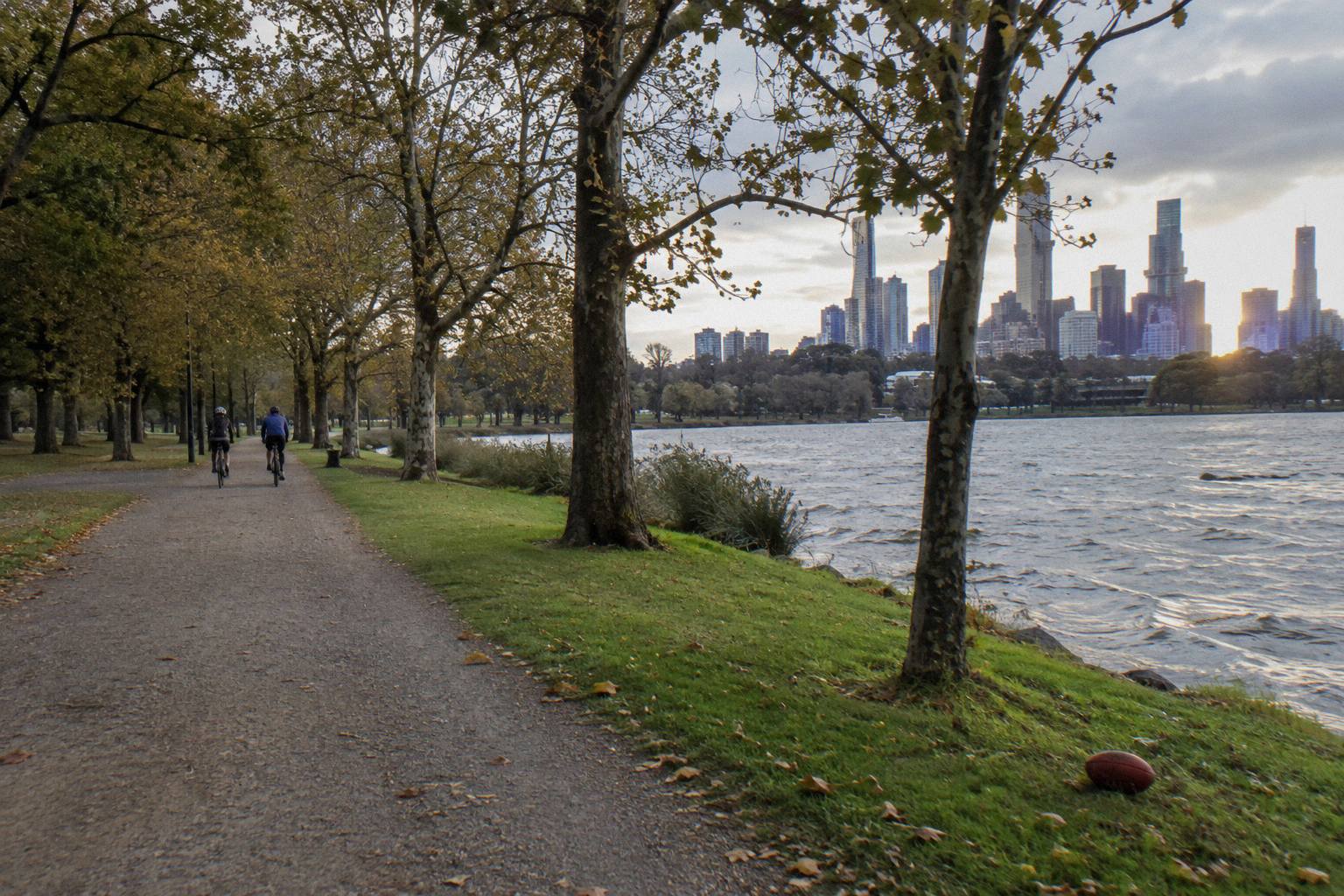
One park rule interacts with these limits in a way that surprises people. Parks Victoria bars power-assisted bicycles above 200 W from Albert Park's paths, which sits below the standard 250 W EPAC rating, so a tour's standard e-bikes would not be permitted on a lap of the lake. Albert Park Lake sits about 3 km from the CBD with a 5 km walking and running track. If riding the park matters to you, ask the operator first rather than assuming the route includes it.
The law that governs the rest of the ride is the ordinary bicycle ruleset, published on the same Transport Victoria site. Helmets Australian rules apply: helmets are mandatory for every rider, e-bike riders included, and the helmet must carry a label for an approved standard such as AS/NZS 2063 or EN 1078. Tours normally supply one. Riders stay on the road or shared path, not the footpath, unless aged 12 or under or supervising a rider that age. At night, a white front light and red rear light visible from 200 m are required, though city tours run in daylight.
If the pace question has already made you curious about booking, the guided e-bike option below is the natural place to check dates. Free cancellation up to 24 hours before applies on the booking page, so an early reservation costs you nothing if plans shift.
How Fast Is A Guided E-Bike Tour In Practice?
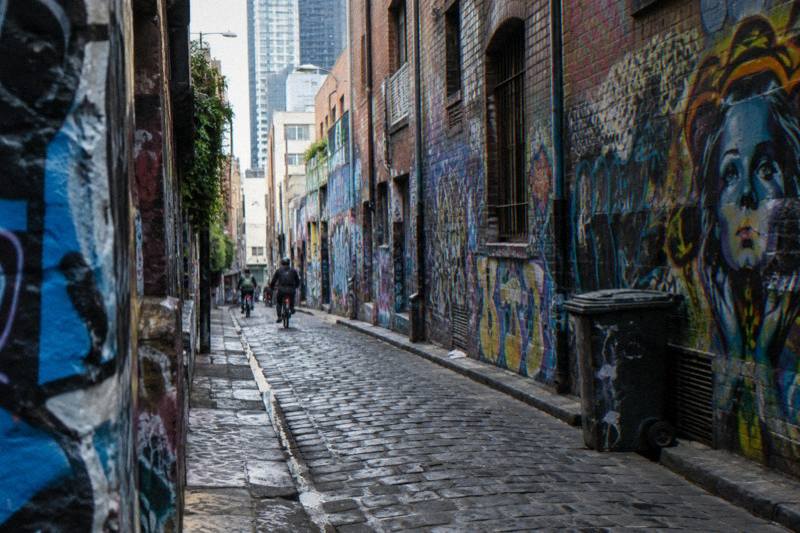
Expect an easy touring pace with frequent stops, not a cruise at the legal ceiling. The Melbourne E-Bike Tour With Local Guide covers about 16 km including stops and the lunch break across roughly 4 hours, which works out to a relaxed roll punctuated by guide commentary, photos and food. The route on the operator's page reads like a sightseeing list: the Yarra, the Shrine of Remembrance, the MCG, Cooks' Cottage, Parliament House, Fitzroy, the Royal Exhibition Building, Chinatown and Hosier Lane. Nobody rides that list quickly, because the point of it is the looking.
Think of the assist as an equaliser rather than an accelerator. It smooths the climb up toward the Shrine and takes the sting out of a headwind on the river path, so a mixed group of regular riders and rarely-riders stays together. When the group rolls, it rolls at conversation speed. When the guide stops to talk about a laneway mural or the Parliament facade, the bikes stand still. Most of the four hours is spent at something well under the assist ceiling, and that is by design.
The distance figure is worth dwelling on because it answers the fitness question that usually hides inside the speed question. Sixteen kilometres with a lunch stop is a modest day for anyone who rides occasionally, and the pedal assist lowers the effort further. The tour's own suitability notes say riders should be about 150 cm or taller and up to 113 kg, and that anyone under 18 rides with an adult. Within those bounds, the pace suits newcomers. For a wider look at what else the format involves, the guide to what to expect on a guided bike ride walks through the whole arc of a tour day.
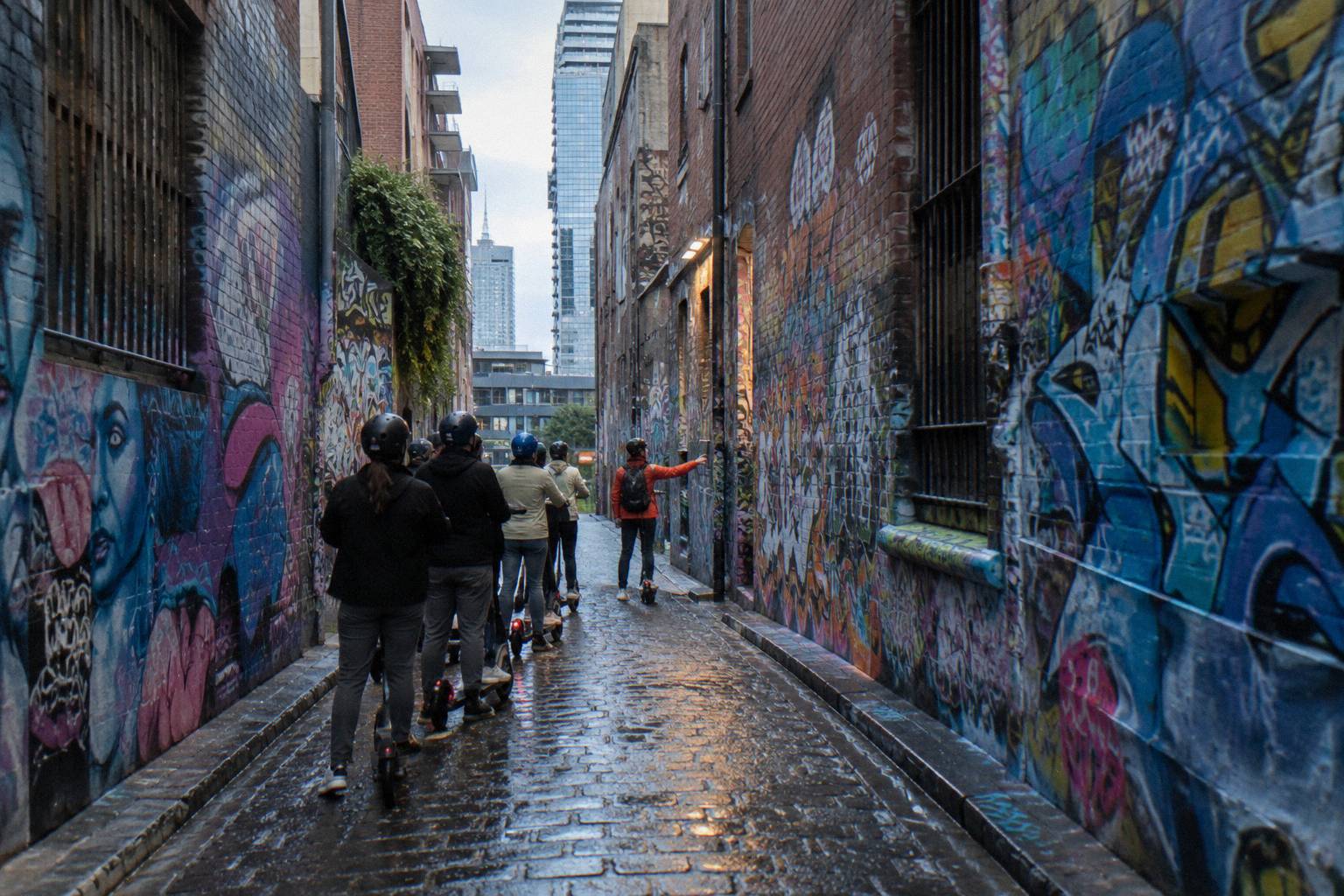
Groups are capped at 10 on the shared e-bike tour, which is part of why the pace stays gentle. Ten riders cannot filter aggressively through traffic, and a guide sets the tempo at the front for the whole file. Melbourne's cycling the CBD layout matters here too: the city's grid, its tram tracks and its laneways all reward patience over speed, and guides ride accordingly. Our piece on tram tracks and cycling safety explains why crossing rails at speed is the one place a tour will always slow down.
Can You Pedal Faster Than The Assist Limit?
Yes, and legally. Once you pass 25 km/h the motor simply stops helping, and anything above that speed is ordinary human pedal power, exactly as on a regular bike. On flat city ground most guided tour riding sits below the cut-off anyway, so the ceiling rarely comes into play on a Melbourne route. The distinction matters mainly on descents, where gravity, not the motor, carries you past 25 km/h and the law is entirely relaxed about it. The rules target tampered bikes that assist beyond the limits, not fit legs.
That is also why comparing e-bike tours on speed is a dead end. Every legal tour fleet in Victoria rides the same 250 W, 25 km/h assist standard, so the difference between one guided e-bike ride and another is route, group size and guide, not velocity. If you want a sense of how the assist changes effort rather than top speed, the article on whether you must pedal all the time on an electric bike covers the mechanics.
No guided ride in Melbourne will offer throttle-only riding, and no legal e-bike here assists above 25 km/h. A bike whose limits have been overridden may only be used on private property, and fines apply on public roads and paths. When a listing elsewhere promises a "high-speed" e-bike experience, that is a marketing phrase, not a legal category.
Where Are E-Bikes Restricted Around Melbourne?
Parks Victoria bars e-bikes and scooters above 200 W from Albert Park's paths, and lists motorised bicycles as barred on management-vehicle-only tracks and shared-use trails at Yarra Bend Park. St Kilda Pier bans e-bikes on its management-vehicle-only paths altogether, and the breakwater also excludes dogs, cats and fishing. None of these closures is about speed per se, but all of them shape where a guided e-bike route can go, and they explain why tour itineraries concentrate on the river corridor, the CBD grid and the bayside roads.
Two trail notes matter for anyone planning independent riding around a tour. The riverside trail linking from the Bushland Circuit Trail in Yarra Bend Park is temporarily closed for structural damage, with a detour in place, so a full riverside loop there is off the table for now. And if you are riding out toward the bay, the Capital City Trail is rated easy, with drinking fountains along it.
Getting to a ride with an e-bike has its own rules. Metro trains carry bikes and factory-built e-bikes, but the e-bike must be switched off, not ridden and not charged, and you walk it on platforms. Trams and buses take only folding bikes and folding e-bikes within size limits, so planning to ride to a tram stop and board with a tour bike is not an option. Converted e-bikes are banned from trains entirely. Details are on Transport Victoria's bicycles on public transport page.
How Fit Do You Need To Be For An E-Bike Tour?
Less fit than the distance suggests. The shared e-bike tour asks only that you can ride a bike, with riders about 150 cm or taller and up to 113 kg, and the assist makes the kilometres manageable even if you rarely ride. Group pace is set by the guide at the front. The effort level is closer to a long walk than a workout, because the motor absorbs the hills and headwinds that would otherwise sort a group into stragglers and sprinters.
Age rules are lighter on e-bike tours than many visitors expect. The shared Melbourne e-bike ride takes anyone under 18 accompanied by an adult. The private version lists a minimum age of 12, and its booking page also lists pregnant women and people who cannot ride a bike as not suitable. Out of the city, the six-hour guided Yarra Valley ride lists a minimum age of 18, while the seven-hour e-bike alternative is not for riders under 155 cm or over 130 kg, and Mornington Peninsula e-bikes are single-rider only for those over 14. For the fine detail on age thresholds, our guide to how old you need to be to ride an e-bike in Victoria collects the rules in one place.
Weather changes the felt effort more than the route does. Melbourne averages about 650 mm of rain a year spread across every month, roughly 100 rain days, with a mean maximum of 25.9 °C in January falling to 13.5 °C in July, and fast-changing showers are a local signature. None of that stops tours, but layers and a rain shell matter more than leg speed. The Bureau of Meteorology's long-run Melbourne climate averages give the month-by-month picture.
If a fixed group pace still feels risky, the private option is the escape hatch. With a dedicated guide, your party sets the route and the tempo, and the operator arranges the plan with you directly.
Do Tour E-Bikes Have Battery Range Limits?
Battery capacity, range, charge time and bike weight are not published for the tour e-bikes, so check these on the booking page before you go. Ask the operator when booking; on a roughly 16 km city ride, range is simply not a limiting factor in practice. The question usually comes from long-day touring anxiety, and the answer for Melbourne's guided rides is that the distances are short relative to any modern e-bike battery. Multi-hour rail trail days out of the city are a different conversation, and again one to have with the operator.
The related question people ask is whether the battery recharges as you pedal. That depends on the bike's regenerative capability, which tour operators here do not publish, so treat it as unknown rather than assuming either way. If the technical side interests you, the articles on e-bike battery life on a day ride and whether electric bikes charge while pedalling separate what the physics allows from what listings promise.
What is published and useful is the assist behaviour: the motor helps only while you pedal and tapers off as you approach 25 km/h. That means the battery works hardest on climbs and into headwinds, and barely at all on the flat, which is why a flat-city tour is gentle on the charge. Helmets are supplied, locks and pedal-assist bikes are included in the guided e-bike tour's inclusions, and lunch and drinks are not, so the midday stop at the operator's chosen venue is at your own cost.
Which E-Bike Ride Suits Your Preferred Pace?
For a social pace with a set route, the shared Melbourne E-Bike Tour With Local Guide runs about 4 hours with a group of up to 10 from Batman Park. For total control of speed and stops, the Private Melbourne E-Bike Tour runs 2 to 4 hours with a dedicated guide. Regular-bike riders can also add an e-bike upgrade to the Famous tour for A$40 per person. All prices here are booking-page from-prices per person in Australian dollars.
| Ride | Format | Duration | From price (per person) | Who it suits |
|---|---|---|---|---|
| Melbourne E-Bike Tour With Local Guide | Shared group, up to 10, pedal-assist bike supplied | About 4 hours | A$139 | First-time visitors who want the highlights at conversation pace |
| Private Melbourne E-Bike Tour | Private, dedicated guide, route set with the group | 2 to 4 hours | A$500 | Riders who want to control speed, stops and duration |
| Famous Melbourne City Cycling Tour With Local Guide | Shared group with optional e-bike upgrade (A$40 per person) | 4.5 hours | A$140 | Visitors who want the tour with the most reviews and flexibility on bike type |
The Famous tour deserves a line of explanation rather than a ranking. Melbourne By Bike has been serving Melbourne visitors since 2002, it carries a 4.9 rating from 900+ reviews, and it stops for lunch at Queen Victoria Market, or elsewhere on the Mondays and Wednesdays when the market is closed. The e-bike upgrade at A$40 per person turns the same route into an assisted ride, which is a neat way to hedge the pace question: you keep the regular-tour itinerary and shed the effort. Our deeper comparison of e-bike and regular guided rides works through the trade-offs.
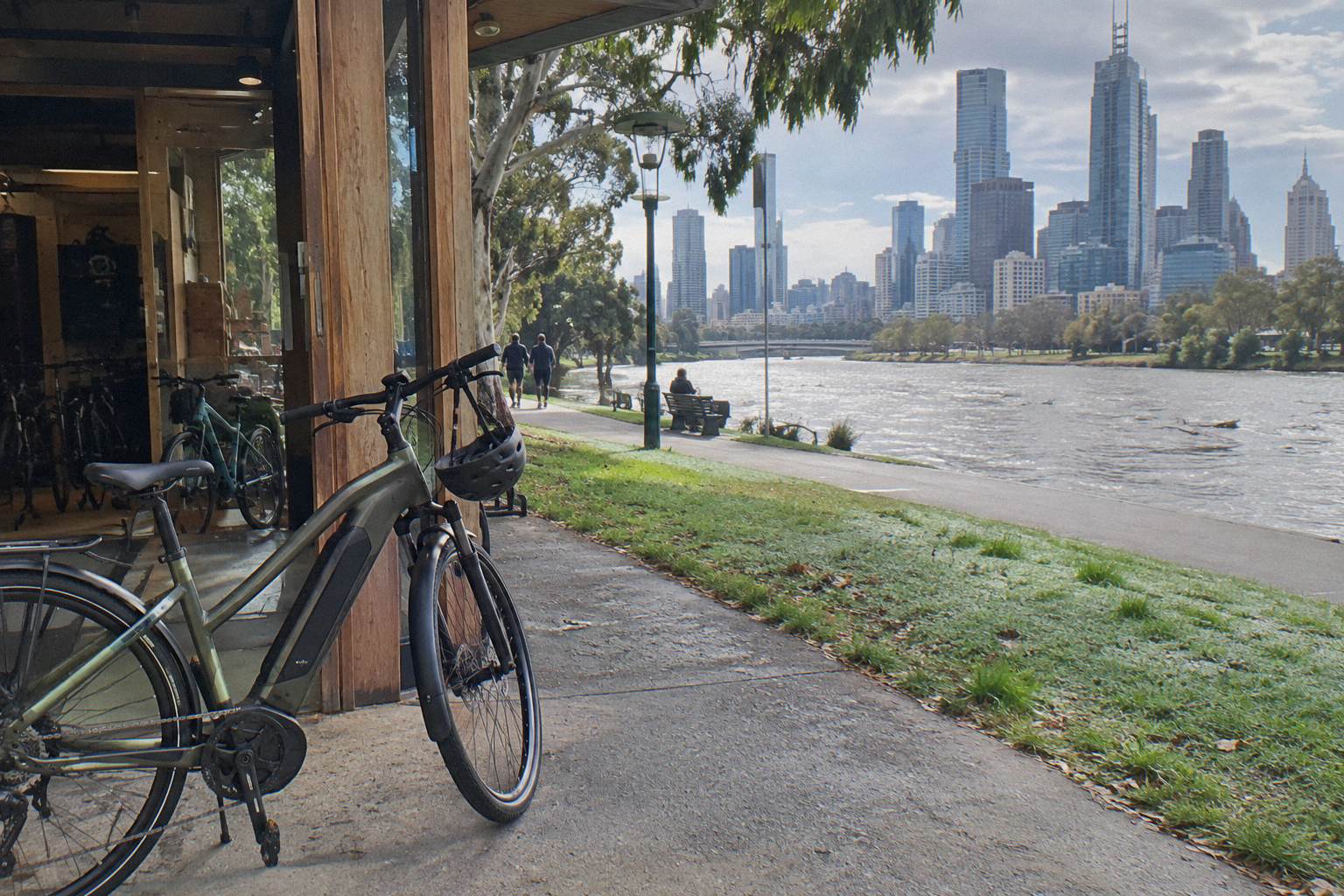
Every tour carries free cancellation up to 24 hours before, and the departure details, including the meeting arrangement for the Famous tour, come with your booking confirmation. Victoria's helmet law applies on every ride, tour-supplied helmets are the norm, and the road rules that govern your four hours are the standard bicycle ruleset on Transport Victoria's bicycle road rules page. Whether you arrive by train with the bike switched off or on foot, the pace question answers itself within the first kilometre: slow enough to see everything, quick enough to cover a city in an afternoon.
For the wider picture of whether two wheels are the right way to see this city at all, Melbourne Bike Tours compares routes and formats across Melbourne's guided rides, including the bayside and rail-trail days out.
Which Mistakes Do People Make About E-Bike Speed?
The most common error is believing a tour e-bike is a fast machine. In Victoria the motor is capped at 250 W, assists only while you pedal and cuts out at 25 km/h, so anything faster comes from your own legs. On a guided ride the group sits well below that ceiling anyway, covering about 16 km with stops and lunch across roughly 4 hours. Comparing tours on speed is another dead end, because every legal fleet rides the same standard, and the real differences are route, group size and guide.
- Expecting throttle riding. A throttle is legal only up to 6 km/h as a walk mode, and no tour advertises throttle-only riding. Stop pedalling and the motor stops.
- Trusting high-speed marketing. A listing promising a high-speed experience is using a marketing phrase, not a legal category. Tampered bikes may only be used on private property.
- Assuming e-bikes go anywhere. Albert Park bars power-assisted bicycles above 200 W, below the standard tour bike's 250 W rating, and St Kilda Pier bans e-bikes on its management-vehicle-only paths.
- Planning a tram trip with the bike. Trams and buses take folding e-bikes only; trains carry factory-built e-bikes switched off, and converted e-bikes are banned from trains entirely.
- Ignoring helmet law. Helmets are mandatory for every rider including e-bike riders, normally supplied on tours, but no specific type is promised.
Common Questions About E-Bike Speed
How Fast Do Electric Bikes Ride? The Pace Of A Guided E-Bike Tour
The motor assists only up to 25 km/h, after which it cuts out and your pedalling takes over. On a guided Melbourne tour the group rides well below that ceiling most of the time, covering about 16 km with stops and lunch across roughly 4 hours on the shared e-bike ride.
Can An E-Bike Go Faster Than 25 Km/H In Victoria?
Yes, under human power. The 25 km/h limit applies to the motor's assist, not to the bike. A rider can exceed it by pedalling harder or on a descent, exactly as on a regular bicycle, and that is legal.
Do Tour E-Bikes Have A Throttle?
Only in walk mode, up to 6 km/h, which is enough to nudge the bike along beside you. Legal Victorian e-bikes assist only while you pedal, and no tour operator advertises throttle-only riding.
Is A Guided E-Bike Tour Too Fast For A Beginner?
No. The Melbourne E-Bike Tour With Local Guide asks only that you can ride a bike, with riders about 150 cm or taller and up to 113 kg. The assist flattens hills and headwinds, and the guide sets a conversational group pace.
Are E-Bikes Allowed Everywhere Regular Bikes Go In Melbourne?
Not quite. Albert Park's paths bar power-assisted bicycles above 200 W, Yarra Bend Park lists motorised bicycles as barred on certain trails, and St Kilda Pier bans e-bikes on its management-vehicle-only paths. Trams and buses take only folding e-bikes.