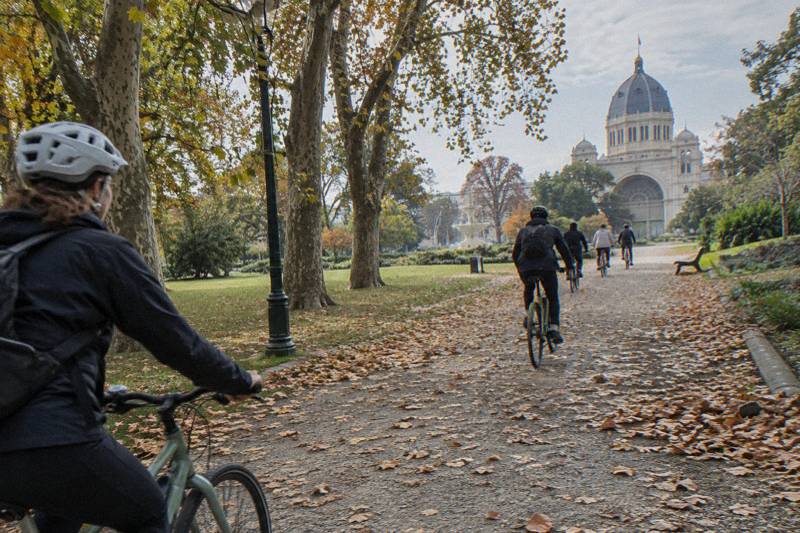
Is Melbourne A Good City For A Guided Bike Ride?
A straight answer on whether Melbourne works for a guided bike ride: the trail network, the road rules, the weather and the park restrictions a visitor should know before booking.
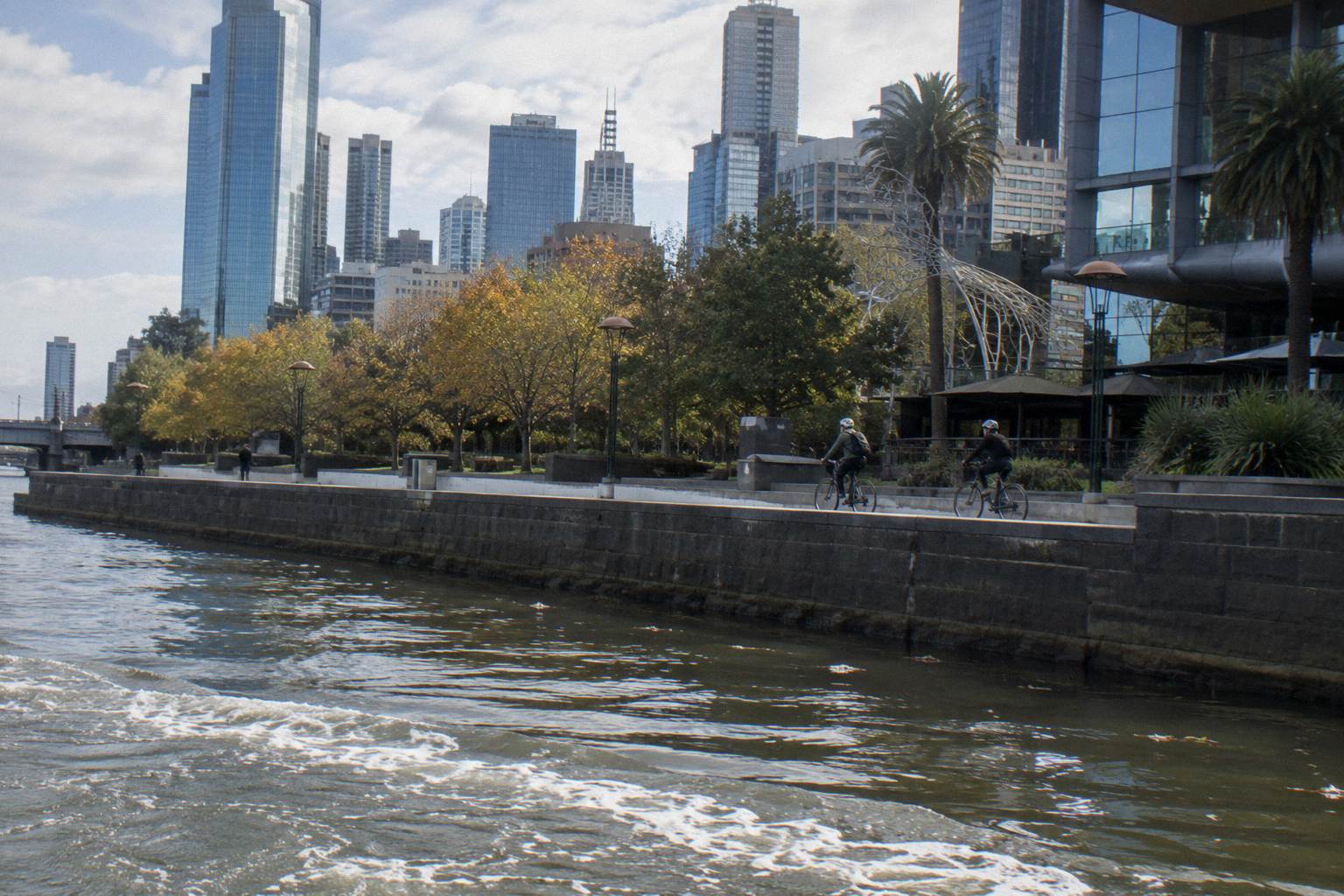
Yes, Melbourne works well for a guided ride, and the reasons are concrete. The centre is flat, the Yarra River corridor and bayside beaches are linked by off-road shared paths, and the climate stays rideable for most of the year, with Bureau of Meteorology averages showing a mean maximum of 25.9 °C in January and 13.5 °C in July. A guide also solves the one genuine friction: Victoria's road rules, especially the mandatory helmet law.
That last point matters more than visitors expect. Helmets are compulsory for every rider in Victoria, e-bike riders included, and the law is enforced with fines. A guided tour takes the guesswork out entirely: the tours include a bike, a helmet and a guide who knows which paths welcome bikes and which do not. That is the core of the decision, and if you are weighing it up, Melbourne Bike Tours lays out the options side by side.
The city's riding character is easier to describe than most. Melbourne built its cycling network out of riverside and rail corridors, so a visitor can move between the CBD, the Royal Botanic Gardens area and the bayside suburbs largely on separated paths rather than in traffic. The Capital City Trail is described on Wikipedia as an easy loop largely assembled from sections of other trails, and the Main Yarra Trail follows the river out of the centre, though length estimates for it vary depending on how the trail is defined. No guided tour rides the Capital City Trail as a named tour, but the paths it is built from appear across several routes.
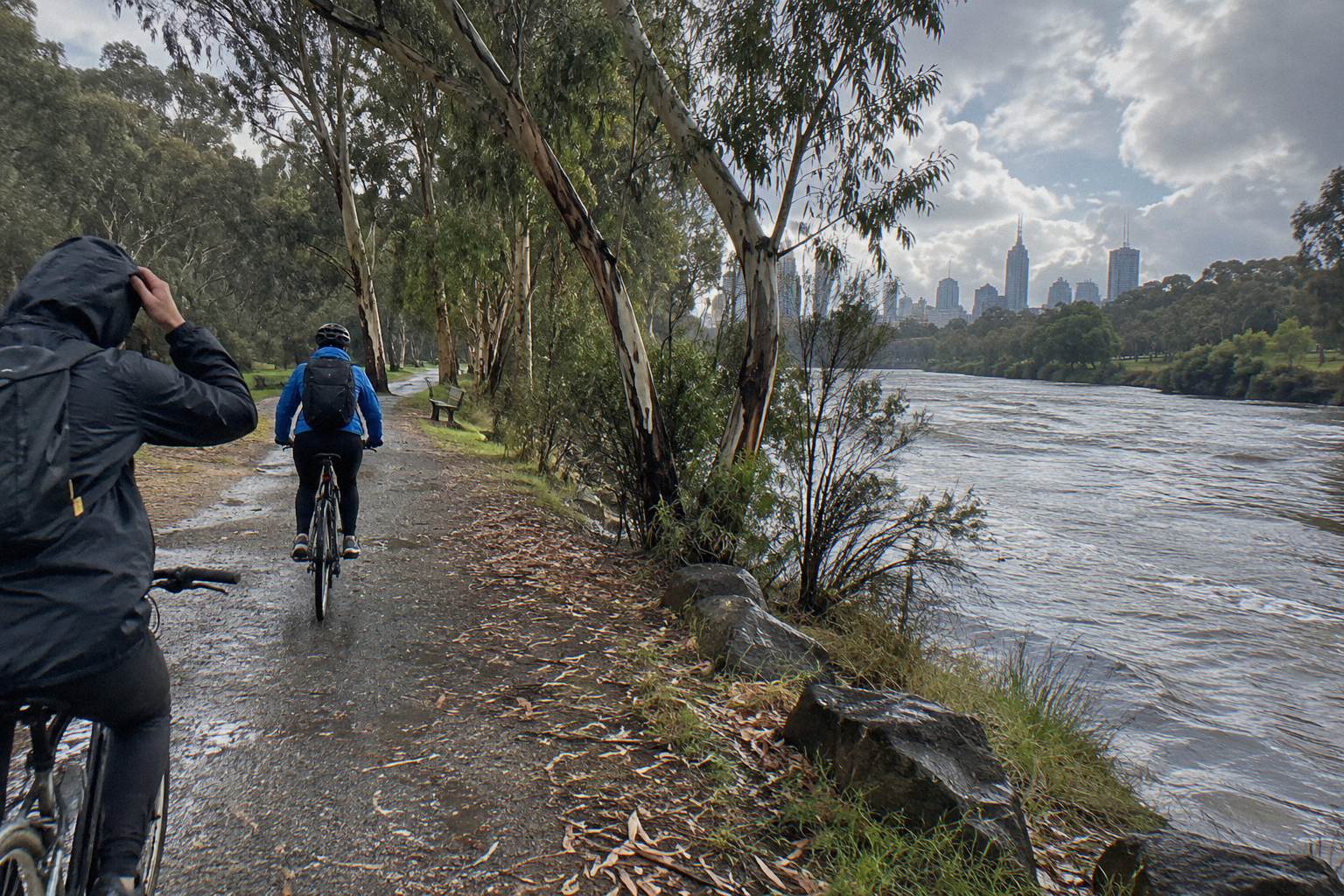
Weather is the other quiet advantage. About 650 mm of rain falls across the year, spread through every month rather than concentrated in a wet season, and the city averages roughly 100 rain days a year. Showers move fast, and the same stretch of sky can swing between grey and bright in an hour. Tour operators plan for it. The E-Bike tour runs rain or shine unless conditions are dangerous, with ponchos available, and the Yarra Valley guided ride operates in all weather.
There is also a practicality argument that first-time visitors tend to underrate. A guided ride compresses the learning curve of a new city into a single morning or afternoon: the guide picks the river crossing with the gentlest ramp, knows which laneway delivers you to the good coffee, and times the route so the group arrives at the water before the crowds. Doing that independently on day one, with a hire bike and a map, usually costs more in time than the tour costs in dollars.
If that sounds like your kind of city, these are the three formats most visitors compare:
What Are Victoria's Road Rules For Cyclists?
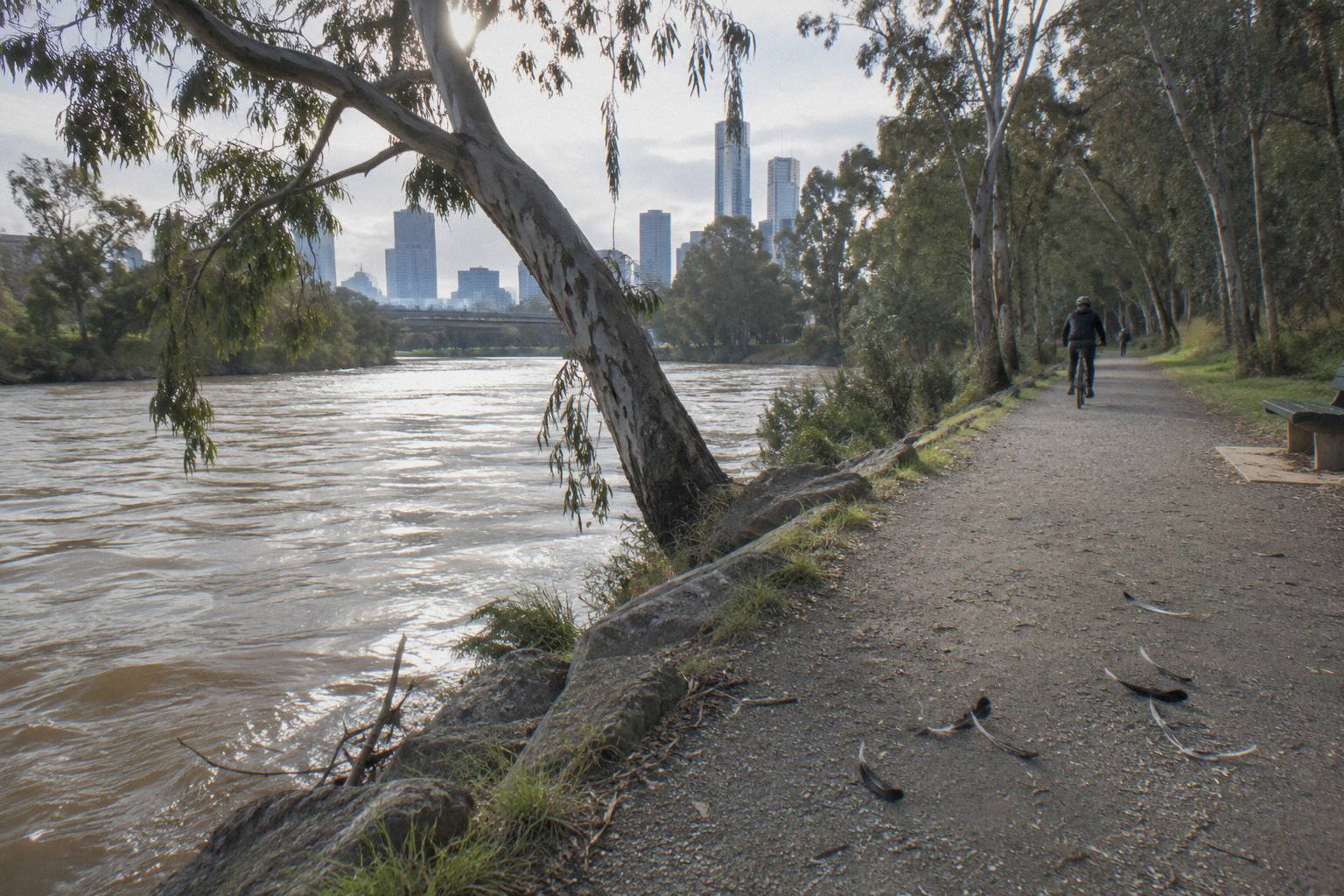
The rules that shape a Melbourne ride are the helmet law, the footpath ban, lighting and passing distances. Every rider must wear an approved helmet, adults ride on the road rather than the footpath, and riders must give way to pedestrians on shared paths while keeping left. Drivers must leave 1 m when passing on roads up to 60 km/h and 1.5 m above that. Riding impaired is unsafe and illegal.
The helmet rule is the one with teeth. A helmet must carry a label for an approved standard such as AS/NZS 2063 or EN 1078, and the only exemptions are religious headdress or a medical certificate carried while riding. Guided tours normally supply helmets, and most listings include one, though it is worth confirming what a specific tour provides before you book.
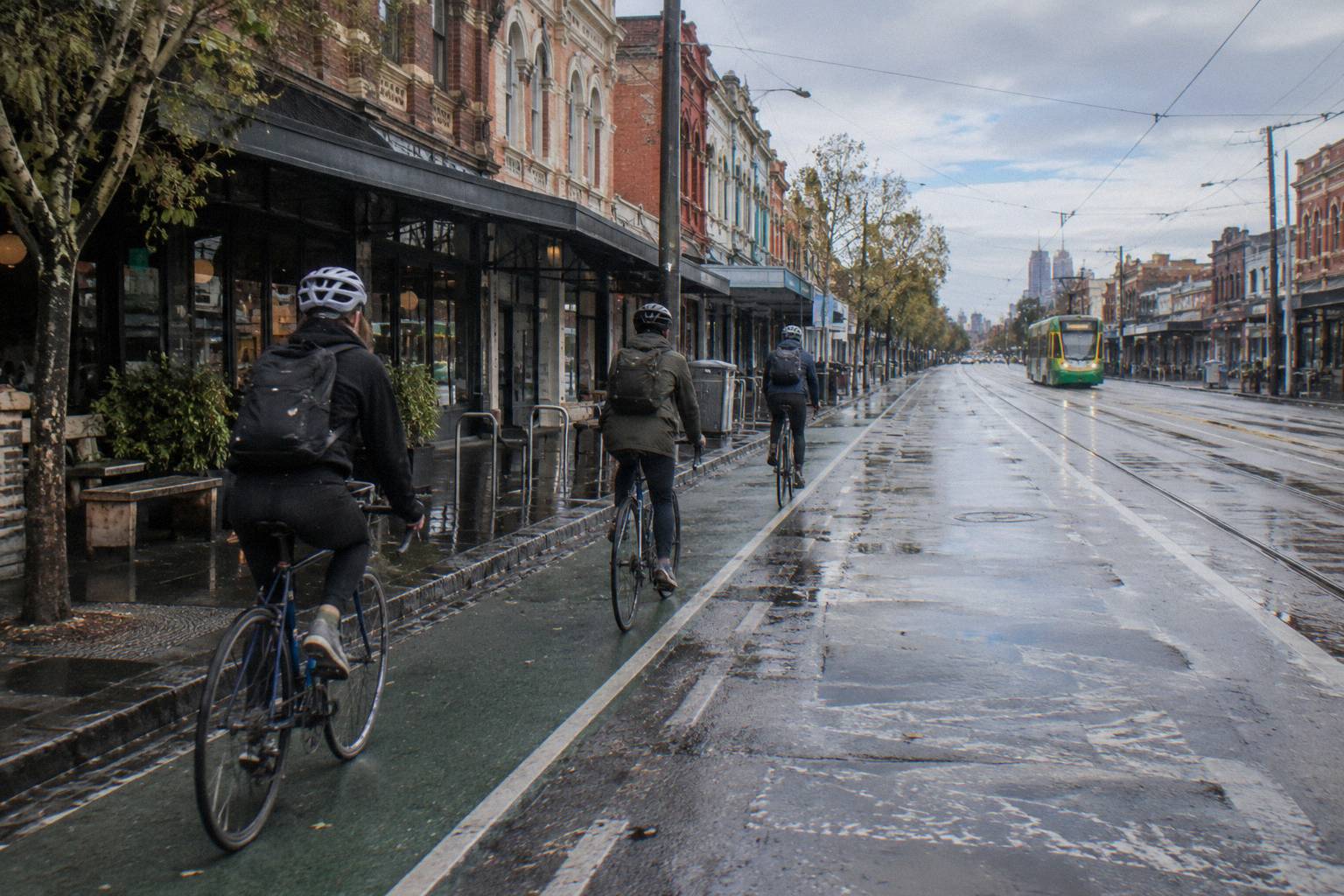
The footpath rule surprises visitors from countries where pavements are shared. In Victoria, bicycle riders must ride on the road, not the footpath, unless they are aged 12 or under, supervising a rider aged 12 or under, or carrying a medical certificate. Tours therefore stay on roads and designated paths. At night or in low light the law requires a white front light and red rear light visible from 200 m plus a red rear reflector visible from 50 m, another detail a tour operator handles for you.
| Rule | What it means on tour |
|---|---|
| Helmet | Mandatory for every rider including e-bike riders, approved-standard label required, fines apply |
| Footpaths | Adults ride on the road or shared paths, not the footpath, with limited exemptions |
| Night lighting | White front and red rear lights visible from 200 m, red rear reflector visible from 50 m |
| Passing distance | Drivers leave 1 m up to 60 km/h, 1.5 m above it |
| Shared paths | Riders give way to pedestrians, keep left, use a bell or voice to overtake |
The full rules sit on the Transport Victoria bicycle road rules page, and the helmet requirements are detailed on the Transport Victoria helmet page. A guide absorbs all of this for you, which is a real part of what you are buying.
Still weighing whether a guide earns their fee on day one?
Where Can You Actually Ride In Melbourne?
The rideable network centres on the Yarra River corridor and the bayside suburbs. The Capital City Trail loops the inner city on largely flat shared paths with drinking fountains placed at regular intervals, the Main Yarra Trail follows the river upstream, and Beach Road carries riders from the city towards St Kilda and Brighton. Guided tours use sections of these corridors rather than the whole distance.
The Yarra is the spine. The Melbourne E-Bike Tour With Local Guide lists the river on its route alongside the Shrine of Remembrance, the MCG, Cooks' Cottage, Parliament House, Fitzroy, the Royal Exhibition Building, Chinatown and Hosier Lane, a loop that stitches together the landmarks most visitors want. The Famous Melbourne City Cycling Tour With Local Guide covers similar ground with the tour with the most reviews behind it, 4.9 from 900+ reviews over 4.5 hours, from A$140 per person in Australian dollars. Its lunch stop is at Queen Victoria Market, or elsewhere on Mondays and Wednesdays when the market is closed.
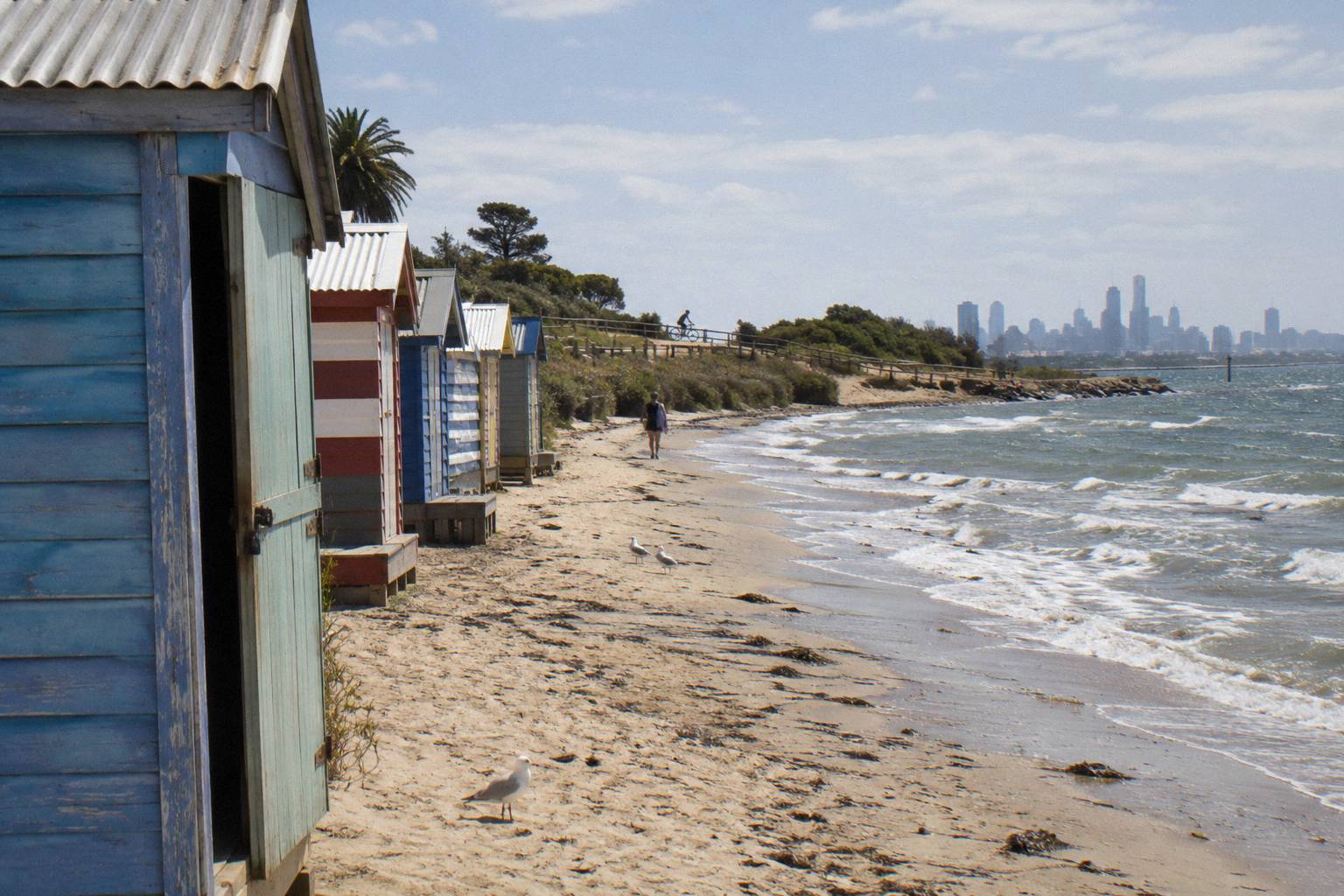
Bayside riding is the second flavour. The St Kilda And Brighton Bayside Bike Tour runs 3 hours from A$124 per person, departing Brighton Beach Railway Station, and connects the coastline with its bathing boxes. St Kilda Pier has its own draw now: a 150 m penguin viewing boardwalk that opened in October 2025, with two free ticketed sessions nightly for 150 people each, booked through Phillip Island Nature Parks. Note the pier restrictions: no motorised vehicles, including e-bikes, on management-vehicle-only paths, and no dogs, cats or fishing on the breakwater. Penguin viewing needs a separate booking and is never guaranteed.
| Corridor | Character | Guided tours that touch it |
|---|---|---|
| Yarra River paths | Flat riverside shared path through the centre, landmarks on both banks | E-Bike Tour With Local Guide, Famous Melbourne City Cycling Tour |
| Bayside coast from St Kilda to Brighton | Beachside riding, bathing boxes, pier and penguin boardwalk | St Kilda And Brighton Bayside Bike Tour |
| Capital City Trail sections | Easy inner loop, drinking fountains along the way | No tour rides it as a named tour, but its segments appear on routes |
| Batman Park and Kings Way area | Tour start point with direct river access | Classic Cycling Tour From Batman Park |
For planning your own route before or after a tour, the guide to riding the Yarra River bike path covers the riverside corridor in detail, and the St Kilda Beach Road ride guide does the same for the coast.
The Classic Cycling Tour From Batman Park, from A$129 per person with a 4.9 rating from 680+ reviews over 4 hours, starts at 2 Rebecca Walk on the corner of Kings Way, which puts riders directly onto the river network within minutes of leaving the shop.
What About E-Bikes And Park Restrictions?
Legal e-bikes in Victoria have a 250 W motor that assists only while you pedal and cuts out at 25 km/h, which keeps them comfortable rather than fast. The catch is parks: Albert Park bars power-assisted bicycles above 200 W on its paths, and Yarra Bend Park lists motorised bicycles as barred on management-vehicle-only tracks and shared-use trails. A tour operator plans around these rules before you arrive.
That 200 W threshold at Albert Park is the detail that catches people out. A legal road e-bike at 250 W is fine on streets but not on Albert Park's paths, so any operator promising an Albert Park lap needs to have checked their fleet against the rule, which is stated on the Parks Victoria Albert Park page. Albert Park Lake sits about 3 km from the CBD with a 5 km walking and running track around it, a lovely spot that simply has its own rules for powered bikes.
Yarra Bend Park, further upstream, has two things to know. Motorised bicycles are barred from its management-vehicle-only tracks and shared-use trails, and the riverside trail linking from the Bushland Circuit Trail is temporarily closed for structural damage, though a detour exists. A full riverside loop up there is not possible at the moment, so expect any tour description to reflect that.
The e-bike format itself suits Melbourne well. The Melbourne E-Bike Tour With Local Guide runs about 4 hours including a lunch stop over roughly 16 km, in groups of up to 10, departing at 10am from Batman Park with a guide, pedal-assist e-bike, helmet and lock included. Lunch and drinks are not. It is rated 4.9 from 300+ reviews and costs from A$139 per person. Anyone under 18 must ride with an adult.
If you are still deciding between pedal and power, the comparison of e-bike or regular bike for a guided ride works through the same trade-offs with Melbourne's terrain in mind.
What Happened To Melbourne's Bike Share Scheme?
Melbourne Bike Share launched in 2010 with 600 bikes across 51 stations and shut down on 30 November 2019, with the mandatory helmet law cited among the reasons it struggled. There is no verified dockless bike or scooter scheme running today: a City of Melbourne page describes a trial arrangement with Lime, but it is undated and current status is unverified. A visitor cannot rely on grabbing a city bike on arrival.
This history explains why guided and hired bikes, not share bikes, carry visitors here. The share scheme's collapse left a gap that tour operators fill with something better for a first-time visitor anyway: a route, a helmet, a mechanical backup and someone who knows where the path goes quiet. The decision logic is straightforward. A guided ride bundles the bike, helmet, route and stops into one price, while unguided hire leaves you checking the price, the helmet, the lock, e-bike legality and park restrictions with the hire desk yourself.
For a longer read on that choice, whether a guided ride beats bike hire sets out what each format covers. One practical transport note for anyone extending a ride beyond the city: metro trains take bikes and factory-built e-bikes switched off, but only folding bikes may travel on trams and buses, a rule that has ended more than one ambitious plan at a tram stop.
What's The Weather Like For Cycling In Melbourne?
Bureau of Meteorology averages put the mean maximum at 25.9 °C in January and 13.5 °C in July, with about 650 mm of rain a year spread across every month and roughly 100 rain days. Melbourne is genuinely changeable rather than wet or dry by season, so layers and a poncho beat a perfect forecast. Tour operators run through rain unless conditions are dangerous.
The rain pattern is the interesting part. Monthly means run between 46.8 mm and 66.0 mm with no true dry season, and rain days range from about 5 in February to about 10 in August and September. In practice that means any given day has a real chance of a shower and a better chance of it passing, which is why the E-Bike tour keeps ponchos at the shop and runs rain or shine, and why the Yarra Valley guided ride operates in all weather. Other tours state no weather policy, so ask the operator when booking.
The extremes exist but rarely shape a visit. The record high of 46.4 °C was set on 7 February 2009 and the record low sits at minus 2.8 °C, yet the averages between them are mild, and the city's reputation for fast-moving showers is earned. A morning ride in January can feel warm by 10am; a July ride wants gloves and a jacket. Both are perfectly normal here, and neither is a reason to stay off the bike.
| Month | Mean maximum | Mean minimum | What it means for a ride |
|---|---|---|---|
| January | 25.9 °C | 14.3 °C | Warm mornings, sun protection, carry water |
| April | 20.3 °C | 10.8 °C | Comfortable across the whole day |
| July | 13.5 °C | 6.0 °C | Layers and gloves, often clear and still |
| October | 22.0 °C | 11.3 °C | Changeable, pack a light rain layer |
Guided Tour Or Exploring On Your Own?
A guided tour suits a first visit: the guide handles the rules, the helmet, the route and the pacing, and the tours run from A$120 per person for 2.5 hours to A$350 per person for a 6-hour Yarra Valley day. Independent riding rewards repeat visitors who already know the paths and the restrictions. Free cancellation up to 24 hours before applies on every tour's booking page, which lowers the risk of committing early.
Price bands tell the story clearly. The bayside and Mornington Peninsula options sit from A$120 to A$124 per person for around 2.5 to 3 hours, the city tours cluster from A$129 to A$140 per person over 4 to 4.5 hours, and the out-of-town days, the Yarra Valley rail trail ride and private formats, run from A$255 to A$500 per person depending on group size and format. None of these are sums to calculate, just the range of what a guided day costs here.
Format differences matter more than operator differences, so compare routes and formats rather than businesses. A small-group city loop, an e-bike version of the same idea and a private ride each suit a different traveller. The Private Cycling Tour From Federation Square includes pickup at Federation Square, and the Yarra Valley ride includes a meal and caps groups at 8 with a minimum age of 18.
Families have their own arithmetic. The Mornington Peninsula Small-Group Bike Tour takes riders from age 7 and runs groups of up to 15, which makes it the best fit for children, while the private e-bike format sets a minimum age of 12 and the Yarra Valley day is adults-only at 18. Matching the age rules to your group before booking saves a cancellation later, though the 24-hour free cancellation window on every booking page is a genuine safety net.
Which Mistakes Trip People Up When Cycling In Melbourne?
Yes, the common slip-ups are predictable: riding on the footpath, skipping a helmet, assuming share bikes exist, and counting on an e-bike lap of Albert Park. Victoria makes helmets mandatory for every rider, bars adults from footpaths, and has no verified share-bike scheme running today. Get these right first and the city itself is forgiving.
- Riding the footpath. Adults must ride on the road or shared paths, not the footpath, unless supervising a rider aged 12 or under or carrying a medical certificate.
- Boarding a tram with a bike. Trams and buses take folding bikes only within size limits, so plan around trains, which carry bikes and factory-built e-bikes switched off.
- Expecting a city share bike. Melbourne Bike Share closed in 2019 and no dockless scheme is verified as running today, so arrange a tour or hire in advance.
- Promising yourself an Albert Park e-bike lap. Its paths bar power-assisted bicycles above 200 W, and a legal tour e-bike's motor is 250 W, so check before you plan that route.
- Relying on one forecast. Rain falls across every month here with roughly 100 rain days a year, so pack a light shell even on a bright morning.
Common Questions About Cycling In Melbourne
Is Melbourne A Good City For A Guided Bike Ride?
Yes. The centre is flat, the Yarra corridor and bayside paths link most of what visitors want to see, the climate averages between 13.5 °C and 25.9 °C across the year, and a guide absorbs the strict road rules, starting with the mandatory helmet law. Guided tours from A$120 per person cover the bike, helmet, route and stops.
Do I Need To Wear A Helmet On A Bike Tour In Melbourne?
Yes, helmets are mandatory for every rider in Victoria, including e-bike riders, and you can be fined for riding without one. Guided tours normally supply a helmet as part of the package, and most listings include one, but confirm the inclusions on the specific tour before booking.
Can I Ride An E-Bike In Melbourne's Parks?
It depends on the park. Albert Park bars power-assisted bicycles above 200 W on its paths, while a legal Victorian road e-bike has a 250 W motor, so a legal e-bike may not be permitted there. Yarra Bend Park lists motorised bicycles as barred on management-vehicle-only tracks and shared-use trails. Tour operators plan routes around these restrictions.
Are There Share Bikes Available In Melbourne?
Not reliably. Melbourne Bike Share closed on 30 November 2019, and the current status of Lime e-bike share is unverified, so visitors should not plan around grabbing a city bike on arrival. A guided tour or a hire bike arranged in advance are the dependable options.
What Happens If It Rains On My Tour Day?
The tours generally run. The E-Bike tour operates rain or shine unless conditions are dangerous, with ponchos available at the shop, and the Yarra Valley guided ride operates in all weather. Other tours state no weather policy, so ask the operator when booking. Free cancellation up to 24 hours before applies on every tour's booking page.
Can I Take A Bike On Public Transport In Melbourne?
Metro trains carry bikes and factory-built e-bikes switched off, and V/Line carries them free at the conductor's discretion. Trams and buses only take folding bikes and folding e-bikes within size limits. Converted e-bikes are banned from all trains and ticketed areas.