Bike Helmet Law In Victoria: What Visitors Must Know
Victoria has one of the strictest helmet laws in the world: every rider needs one, e-bike riders included, and police can fine riders without. Here is what the law actually says, which helmets are legal, and how guided tours handle it.
Short answer
Every bicycle rider in Victoria must wear an approved helmet, including e-bike riders, with only two exemptions: religious headdress and a medical certificate carried while riding. The helmet needs a label showing an approved standard such as AS/NZS 2063 or EN 1078. Guided tours normally supply helmets, and riders can be fined for riding without one.
Victoria's helmet law applies to every rider on every bicycle, and it catches out visitors constantly. You can be fined for riding without a helmet anywhere in the state, on a hired bike, on a tour bike, or on your own. The rule comes from Transport Victoria, it covers e-bike and e-scooter riders as well as pedal cyclists, and it has only two narrow exemptions.
For a visitor the practical consequence is simple. If you ride in Melbourne, you wear a helmet, full stop. Guided tours solve the problem for you: helmets are normally supplied and included in the price on most listings, which is one quiet advantage a guided ride has over independent hire. Here is the law in full: the standards that make a helmet legal, the exemptions, the wider road rules that come with riding in Melbourne, and what to ask an operator before you book.
Who Has To Wear A Helmet In Victoria?
In Victoria, every person riding a bicycle must wear an approved helmet, and the rule applies with no exceptions for age, short trips, hire bikes, or visitors. The same requirement extends to riders of e-bikes and e-scooters, so anyone hopping on any of these vehicles anywhere in the state needs an approved helmet on their head. Transport Victoria puts it plainly: you must wear a helmet when riding a bicycle, including e-bikes, e-scooters and human powered scooters. A rider without one commits an offence and can be fined, and no amount of careful riding changes that.
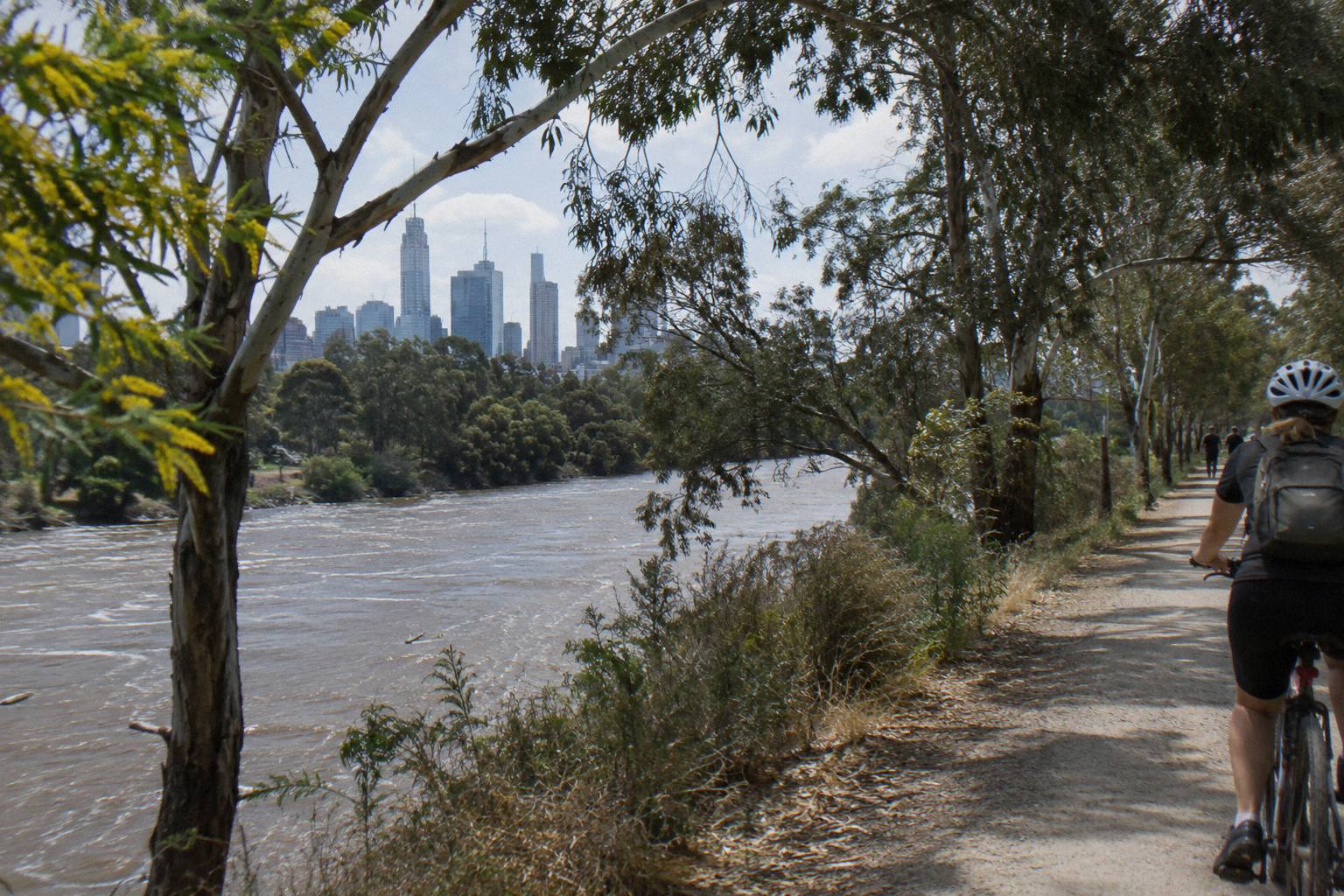
The law is not advisory and it is not a guideline. It applies on shared paths, on river trails, in parks and on quiet suburban streets just as much as on busy roads. Visitors sometimes assume a casual lap of a park or one of the best bike paths for a relaxed ride is different in law from riding in traffic. It is not. The helmet requirement travels with the rider, not with the road.
Two points about enforcement are worth knowing. First, Victoria Police do enforce the rule, particularly around the inner city and beach areas where visitors ride. Second, the helmet must actually be fastened: a helmet resting on a head with the strap dangling does not meet the requirement in spirit or in practice, and an unfastened helmet is a common reason riders are stopped.
There is a widely repeated story that Melbourne's mandatory helmet law is one reason the old Melbourne Bike Share scheme, which closed on 30 November 2019, never reached the ridership its planners hoped for. Whether or not you accept that explanation, the history is a useful reminder of how seriously this state treats the rule. Visitors arriving from countries where helmets are optional for adults are the riders most often caught out.
Which Helmet Labels And Standards Are Legal?
A helmet counts as approved only if it carries a label or marking for a recognised standard, and the ones Transport Victoria names include AS/NZS 2063:2008 or :2020, EN 1078, US CPSC 1203, ASTM F1447-18 and Snell B-95. If your travel helmet has any of these labels inside or on the shell, it is legal on Victorian roads. A helmet with no visible standard label is treated as non-compliant, whatever its price or origin. The detail is on the Transport Victoria helmet page.
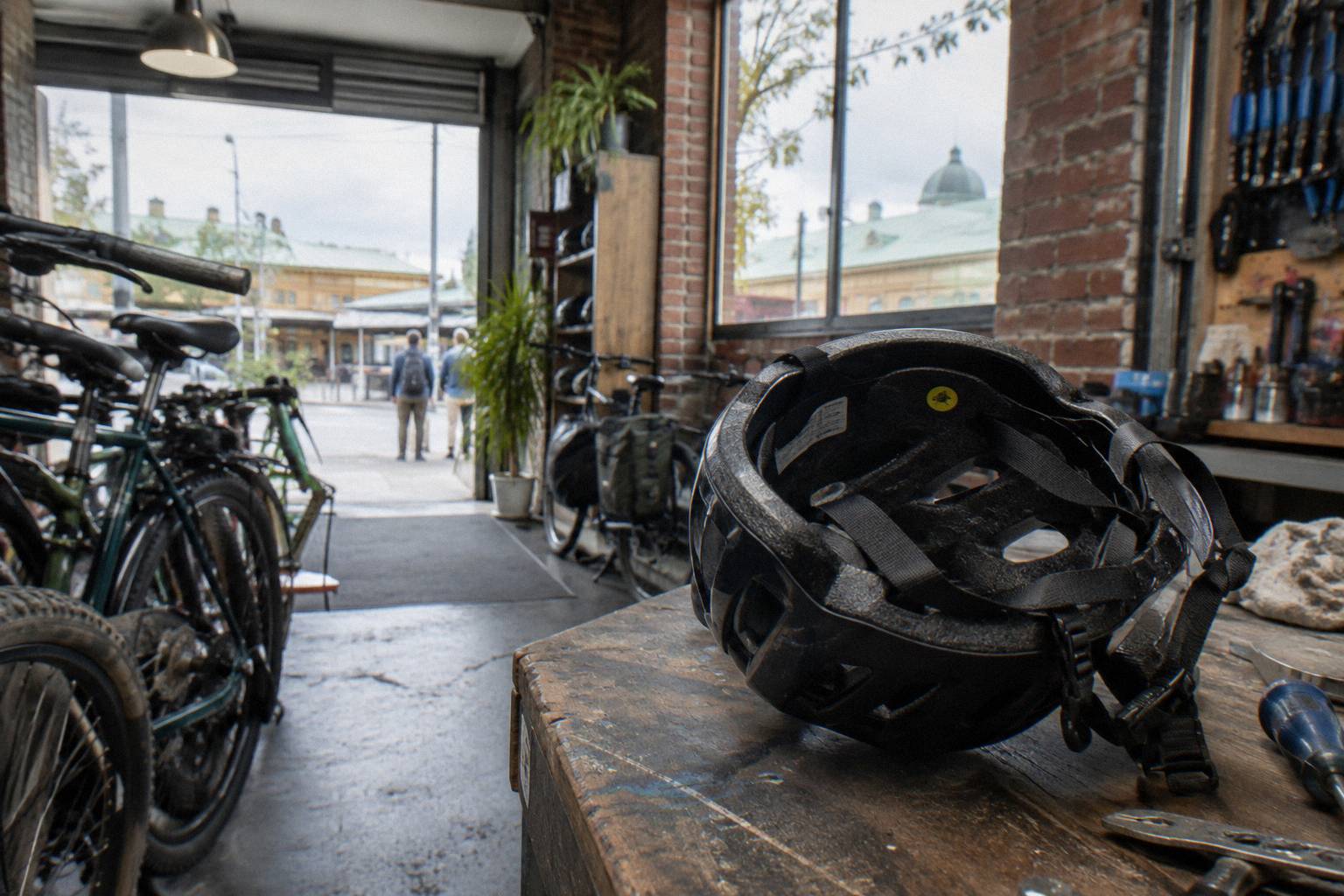
This matters most to visitors who bring their own helmet. Helmets sold in Europe usually carry EN 1078. Helmets sold in the United States usually carry CPSC 1203. Both are explicitly accepted here, so a helmet bought at home is almost certainly fine. The trap is the novelty helmet, the folded cloth cap, or the ageing helmet whose label has worn away entirely.
| Standard label | Where you usually see it | Accepted in Victoria |
|---|---|---|
| AS/NZS 2063:2008 or :2020 | Australia and New Zealand retail helmets | Yes |
| EN 1078 | European Union and UK retail helmets | Yes |
| US CPSC 1203 | United States retail helmets | Yes |
| ASTM F1447-18 | United States, recreational cycling | Yes |
| Snell B-95 | Higher-end US and racing helmets | Yes |
| No label readable | Very old, worn or novelty helmets | No |
A helmet supplied by a tour operator or a hire shop will meet the standard, because the operator is legally exposed otherwise. No operator can promise a specific type, brand or fit in advance. Heads vary, sizing varies, and the right question to ask before booking is simply whether helmets are included and whether sizes run to children and to larger adults.
If you would rather the helmet question simply be handled for you, the three city highlights rides below, including the e-bike tour with a local guide, all include a helmet with the bike, alongside a guide who knows the road rules from the inside.
Do Guided Bike Rides In Melbourne Supply Helmets?
Yes: helmets are supplied on the Famous, Classic, E-Bike, Bayside, Private E-Bike, Yarra Valley guided and Mornington tours, so you can ride without bringing your own. Several of these tours list a bike, helmet and lock together among their inclusions, which means the gear you need arrives bundled with the ride itself. The listing inclusions are explicit on this point, which means that for the overwhelming majority of visitors, the helmet law is satisfied the moment the guide hands over the bike. You do not need to pack one or buy one on arrival.
The Famous Melbourne City Cycling Tour With Local Guide is a good illustration. Melbourne By Bike has been serving Melbourne visitors since 2002, the ride runs about 4.5 hours with a lunch stop at Queen Victoria Market, groups are usually 8 to 10 or fewer, and children are welcome with buggies and tagalongs for small ones. Meeting details come in your booking confirmation. The tour carries 4.9 from 900+ reviews, the largest review pool among Melbourne's guided rides, and costs from A$140 per person. The helmet is part of the package, and an e-bike upgrade is available at A$40 per person.
Blue Tongue Bikes, which operates from 2 Rebecca Walk at Batman Park, runs the Classic Cycling Tour From Batman Park and the Melbourne E-Bike Tour With Local Guide, both departing at 10am with groups of up to 10; both list a helmet with the bike and lock, and both also list a rain poncho if needed. The Classic cycling tour from Batman Park runs about 4 hours from A$129 per person with 4.9 from 680+ reviews, and the E-Bike tour covers about 16 km in about 4 hours including stops and the lunch break, from A$139 per person with 4.9 from 300+ reviews. If you want a fuller picture of how a guided day actually unfolds, read what happens on a guided bike ride before you commit.
Listings, including the bayside tour from St Kilda to Brighton, say a helmet is included, but none publishes sizing ranges, child-seat helmet details, or the brand. That is normal across the industry. Ask when you book, especially if you are riding with a toddler in a buggy or a teenager with a larger head, and note the answer before the day.
Who Is Exempt From The Victorian Helmet Law?
Under Victoria's helmet law, exactly two exemptions exist: riders wearing a religious headdress that makes wearing a helmet impractical, and riders who carry and show a medical certificate stating they cannot wear a helmet. That certificate must be carried with them whenever they ride. There is no age exemption, no visitor exemption, no short-distance exemption and no hire-bike exemption. If neither of those two categories applies to you, the helmet requirement applies in full. Transport Victoria's road rules pages set this out, and the bicycle road rules page is the primary source.
| Situation | Helmet required? | What the law says |
|---|---|---|
| Adult on a city street | Yes | Mandatory for every rider, fines apply |
| Child rider | Yes | Mandatory at every age |
| E-bike rider | Yes | Explicitly included, e-scooter riders too |
| Rider with religious headdress | Exempt | Listed exemption under the rules |
| Rider with a medical certificate | Exempt | Certificate must be carried while riding |
| Rider on a shared path or park trail | Yes | The rule follows the rider, not the road |
| Rider on a hired or tour bike | Yes | The tour or hire operator normally supplies one |
The medical certificate exemption is narrower than it sounds. It exists for genuine medical reasons, the certificate has to travel with you on the ride, and a police officer can ask to see it. A preference, a bad hair day or an unfamiliarity with local law is not a medical certificate. The religious headdress exemption is likewise specific to headdress that a helmet cannot reasonably fit over.
Visitors sometimes raise medical questions before booking. The sensible course is to raise any concerns with the operator in advance, since a guide will make the final call on what happens on their ride. For everything else, the working assumption is: helmet, worn, fastened, every time.
What Other Road Rules Apply To Riders In Victoria?
Riders must ride on the road rather than the footpath unless aged 12 or under, supervising a rider aged 12 or under, or carrying a medical certificate; at night they need a white front light and red rear light visible from 200 m plus a red rear reflector visible from 50 m. Drivers must leave 1 m when passing on roads up to 60 km/h and 1.5 m above that. Two cyclists may ride abreast, no more than 1.5 m apart. On shared paths, riders give way to pedestrians, keep left, and use a bell or voice to overtake.
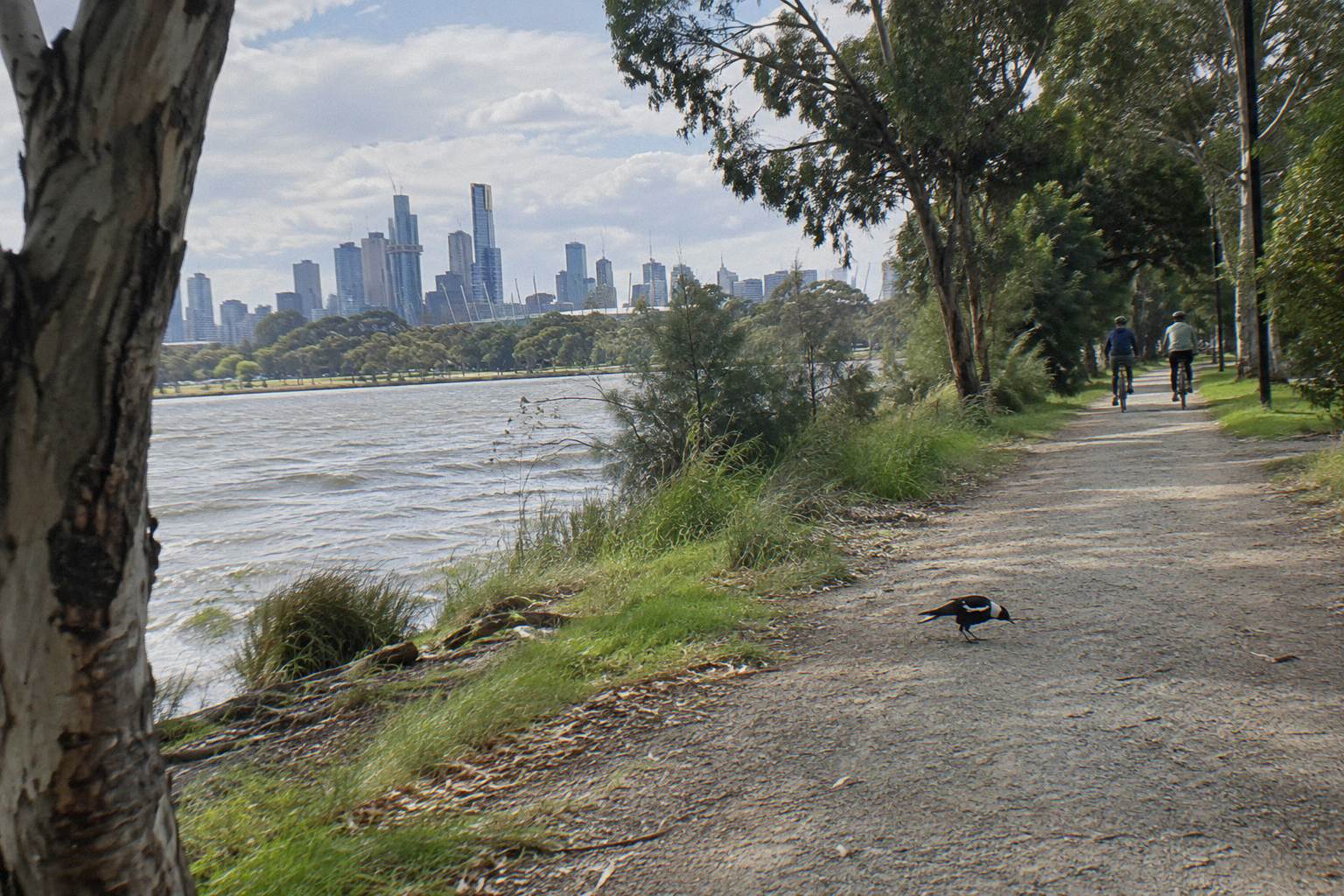
| Rule | What it means for a visitor |
|---|---|
| Ride on the road, not the footpath | Only riders 12 or under, their supervisors, or medical certificate holders may use the footpath |
| Lights at night or low light | White front and red rear light visible from 200 m, red rear reflector visible from 50 m |
| Passing distance | Drivers must give 1 m up to 60 km/h, 1.5 m above; the rule protects you, hold a steady line |
| Two abreast | Allowed, within 1.5 m of each other; single file on narrow roads is courteous |
| Shared paths | Give way to pedestrians, keep left, bell or voice before overtaking |
| Signals | A green bike signal means you may ride across; a pedestrian-only light means dismount and walk |
| Alcohol | Riding impaired is unsafe and illegal |
A few of these shape a visitor's day more than expected. The footpath rule surprises riders from countries where pavement cycling is tolerated: in Victoria it is the road, or a shared path, or walking. The lights rule matters because the best season for a bike ride can still bring quickly turning weather, and low light arrives without warning in autumn and winter; tour bikes that ride in the evening are set up for it, but a private hire bike may not be. Melbourne averages about 650 mm of rain a year spread across every month, roughly 100 rain days, so showers are part of riding here and the Classic and E-Bike tours list a rain poncho for exactly that reason.
Victorian law treats riding impaired as unsafe and illegal, and no limit or penalty figure is claimed here. If your day plans include wineries, the better structure is a guided ride rather than bike hire, such as the Yarra Valley Guided ride, which includes coffee, tea, snacks and lunch, and runs 6 hours.
Do The Helmet And Road Rules Change For E-Bikes?
No: e-bike riders wear helmets under exactly the same law, and the e-bike itself must be a legal type, meaning a motor of at most 250 W continuous rated power that assists only while you pedal and cuts out at 25 km/h. A throttle is legal only up to 6 km/h in walk mode. A second legal type, the Power-Assisted Pedal Cycle, has a peak power output of 200 W or less. Anything with no pedals, or tampered to assist beyond the limits, may only be ridden on private property, with fines on public roads and paths. The Transport Victoria e-bike page carries the detail.
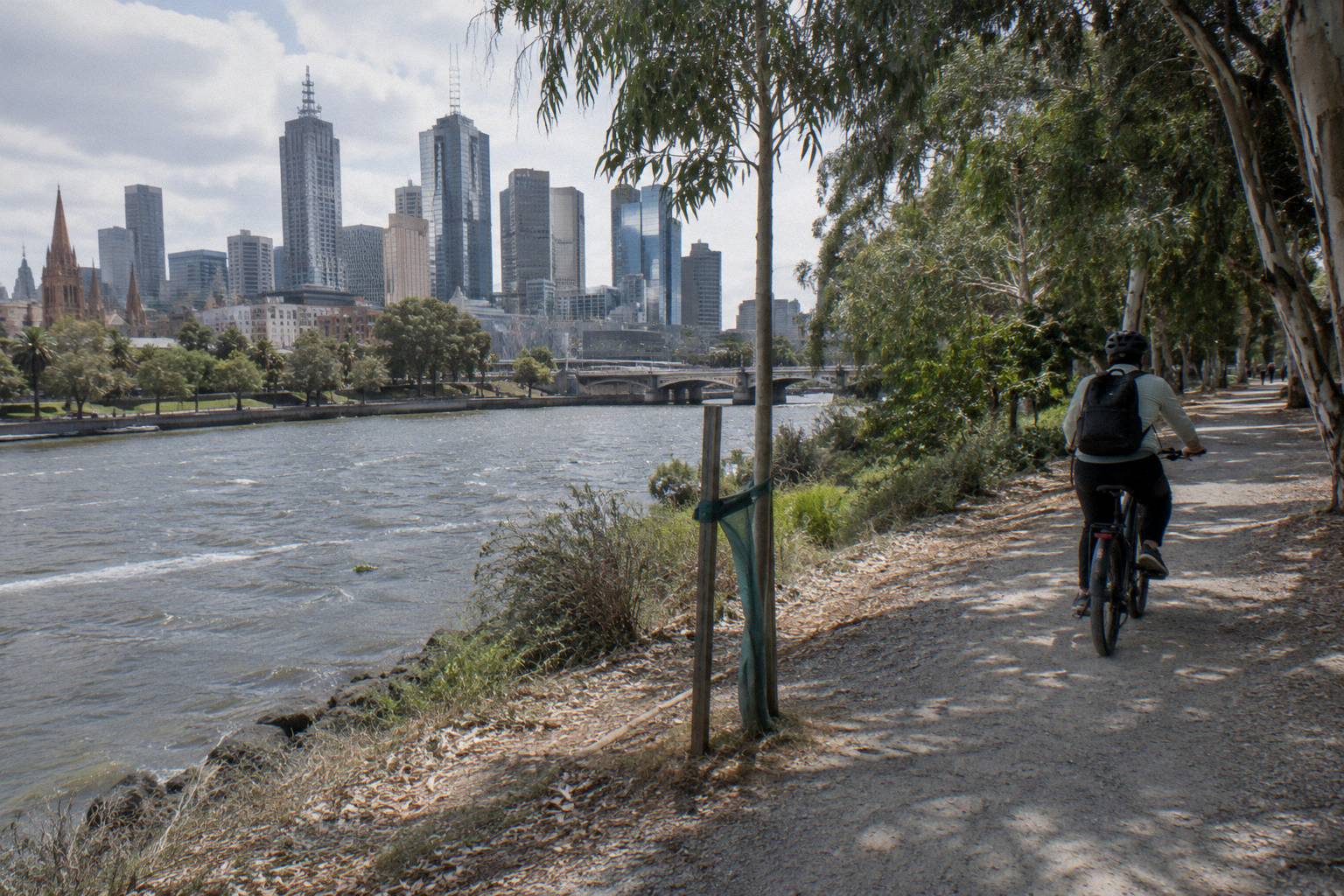
Two practical consequences follow for visitors. First, tour e-bikes are the 250 W pedal-assist kind, so they are quiet, manageable and capped by law at 25 km/h of assistance; a rider can go faster than that by pedalling hard, but no tour e-bike is a fast bike. Second, the law shapes where e-bikes may go. Parks Victoria bars power-assisted bicycles above 200 W from Albert Park's paths, which is a real constraint on any plan that assumes an e-bike lap of the lake, and St Kilda Pier's management-vehicle-only paths bar motorised bicycles including e-bikes.
If you are weighing the two formats against each other, the e-bike tour and the pedal tour differ mostly in effort, not in speed or in rules. The Melbourne E-Bike Tour With Local Guide covers about 16 km in about 4 hours with stops and a lunch break, asks only that you can ride a bike, notes that the electric assistance makes the ride manageable even if you do not ride often, and sets rider guidance at about 150 cm or taller and up to 113 kg, with anyone under 18 riding with an adult. The finer comparisons, including how the two formats actually feel on the route, are covered in choosing between an e-bike and a regular bike tour.
Battery life, range, charging time and bike weight are not published for any tour e-bike, so ask the operator directly when booking, especially if you are a heavier rider or the day is windy. The per-tour age rules in the next section are the guidance that matters.
What Should You Ask An Operator Before You Book?
Ask five things: whether a helmet is included and in what sizes, what the age and suitability rules are for your group, where the ride starts and at what time, what happens in rain, and what the cancellation terms are. Every tour below carries free cancellation up to 24 hours before on its booking page, which answers the last question in advance, and the meeting point is fixed for most rides: Batman Park for the Blue Tongue tours, Brighton Beach Railway Station for the Bayside ride, Federation Square for the Guydeez private tour, and details in your booking confirmation for the Famous tour.
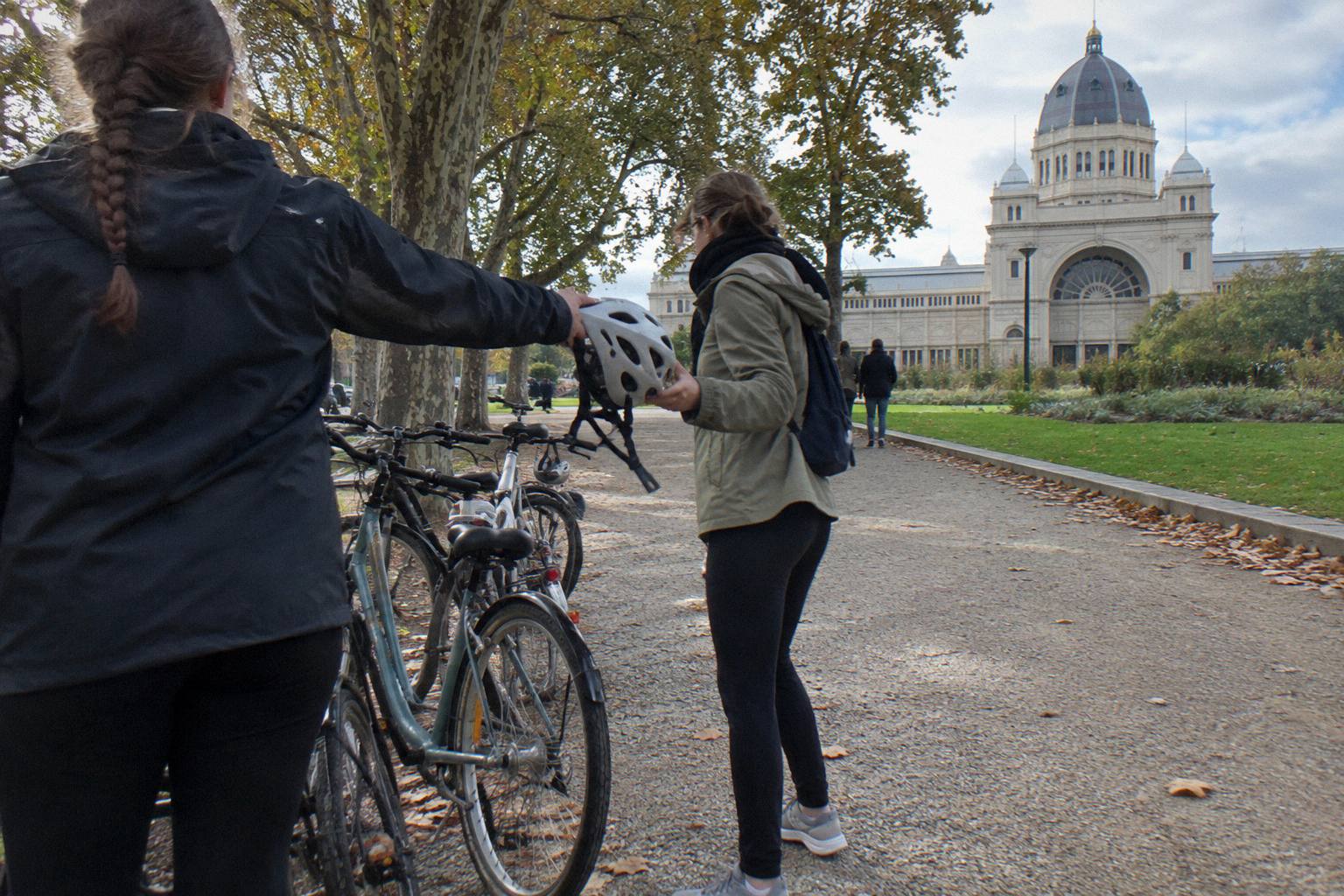
| Question to ask | Why it matters | What is already published |
|---|---|---|
| Is a helmet included, and which sizes? | Satisfies the law; sizing is rarely published | Helmet supplied on seven of the eight tours |
| Age and suitability rules for my group? | Rules are per tour, not statewide | Famous: children welcome, solo riding from 12. E-Bike: under 18 with an adult, about 150 cm, up to 113 kg. Private E-Bike: minimum 12. Yarra Valley guided: 18. Mornington: riding from 7, e-bikes over 14 |
| Where does the ride start, and when? | Melbourne trams and buses take only folding bikes, so plan the journey | Batman Park at 10am for Classic and E-Bike; other start points listed on each tour page |
| What if it rains? | About 100 rain days a year | Classic and E-Bike list a rain poncho if needed |
| Cancellation terms? | Plans change mid-trip | Free cancellation up to 24 hours before, on every booking page |
The transport detail catches more visitors than any other. Only folding bikes and folding e-bikes may travel on Victorian trams and buses, so you cannot ride to a tram stop and board with a tour bike. Metro trains take bikes and factory-built e-bikes switched off and not ridden, which makes the Lilydale line genuinely useful: the Yarra Valley ride departs Woori Yallock Station, or offers free pickup from Lilydale railway station, and that is a real decision factor if you have no car. Converted e-bikes are banned from trains altogether.
Newer riders have a natural anxiety about all of this, and Melbourne Bike Tours finds it largely unnecessary. Tours exist precisely because the guide carries the road-rule knowledge, the route avoids the worst interfaces, and groups of 8 to 10 keep the pace human. If you are still building confidence, the advice in how first-time cyclists pick a guided ride walks through the same questions with that lens.
The Classic Cycling Tour From Batman Park is the straightforward pick for a first ride under all these rules: a start from a fixed meeting point at Batman Park, 4 hours, groups up to 10, helmet and lock included, from A$129 per person. The route runs through the Yarra corridor past the Shrine, the MCG and the Royal Exhibition Building with a guide who handles the road craft.
Whatever the format, the same three rides cover most visitors' needs: a pedal city tour, a lower-priced Batman Park classic, and a pedal-assist version of the same idea. Each supplies a helmet, each allows free cancellation up to 24 hours before, and each is led by a guide who rides these rules daily.
Mistakes That Catch Riders Out Under Victoria's Helmet Law
The mistakes that catch visitors out are riding bare-headed for a short hire or park lap, assuming adult helmets are optional because they are back home, wearing an unfastened or unlabelled helmet, and believing e-bike or e-scooter riders are exempt. Every rider on every bicycle needs an approved helmet, and police do enforce the rule, especially around the inner city and bayside paths where visitors ride.
- The park lap assumption: Riders assume a casual circuit of a park or bayside path sits outside the law. It does not. The requirement travels with the rider, not the road, so clip the strap on for every metre.
- The unfastened strap: A helmet resting on your head with the strap dangling does not meet the requirement, and it is a common reason riders are stopped. Fasten it properly before you roll.
- The labelless helmet: A helmet counts as approved only with a label for a recognised standard, such as AS/NZS 2063 or EN 1078. If yours has worn away, use the supplied tour helmet instead.
- Skipping the question: Visitors book without asking whether helmets are included and whether sizes cover children and larger adults. Ask before you book, and the problem disappears at handover.
Common Questions About Victoria's Bike Helmet Law
Who Has To Wear A Helmet In Victoria?
Every bicycle rider, of every age, on every type of road or path, including e-bike and e-scooter riders. Transport Victoria's rule covers hire bikes and tour bikes exactly the same as privately owned ones, and riders without a helmet can be fined.
Are There Any Exemptions To The Victorian Helmet Law?
Two only: a person wearing religious headdress that makes a helmet impractical, and a person carrying a medical certificate stating they cannot wear one, which must be carried while riding. There is no exemption for visitors, children, short trips or hire bikes.
Which Helmet Standards Are Accepted In Victoria?
A helmet must carry a label for an approved standard. Transport Victoria names AS/NZS 2063:2008 or :2020, EN 1078, US CPSC 1203, ASTM F1447-18 and Snell B-95. Helmets bought in Europe or the United States almost always carry one of these labels.
Do Melbourne Guided Tours Supply Helmets?
Yes. Helmets are supplied on the Famous, Classic, E-Bike, Bayside, Private E-Bike, Yarra Valley guided and Mornington tours, with bike, helmet and lock listed together on several. No tour publishes specific helmet brands or sizing, so ask when booking if fit is a concern.
Do E-Bike Riders Have To Wear Helmets Too?
Yes, under the same law and with the same two exemptions. E-bike riders are explicitly named in the helmet rule. The e-bike itself must also be a legal type: a 250 W pedal-assist motor that cuts out at 25 km/h, or a Power-Assisted Pedal Cycle of 200 W or less peak power.
Can I Carry A Bike On Public Transport In Melbourne?
Metro trains take bikes and factory-built e-bikes switched off and not ridden, and V/Line carries bikes free at the conductor's discretion. Trams and buses accept only folding bikes and folding e-bikes within size limits, so you cannot board a tram with a full-size tour or hire bike.