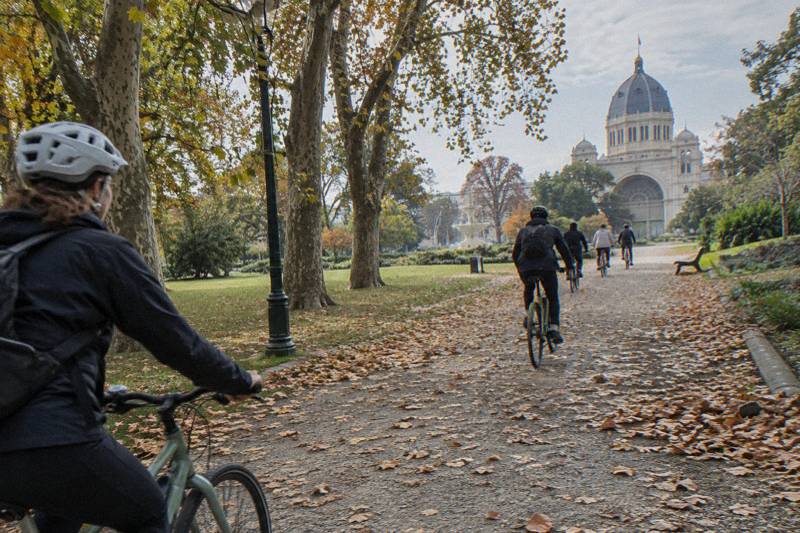
Is A Guided Bike Ride The Best Way To See Melbourne?
A decision guide comparing a guided Melbourne bike ride with walking and trams on stated tour inclusions, Victorian road rules and public transport bike limits.
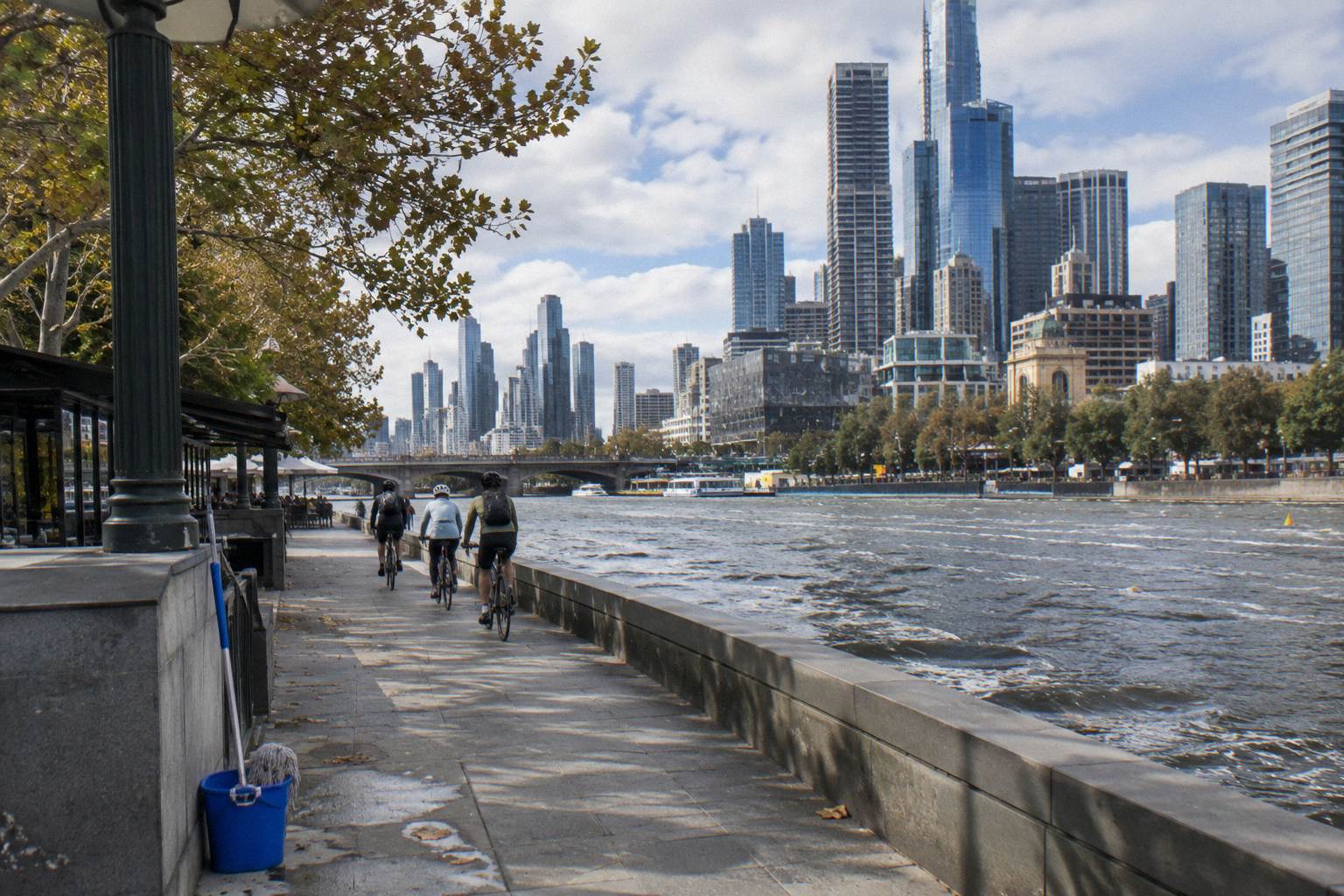
A guided ride is the strongest fit when you want to cover a lot of the city in one morning, because the shortest guided option still runs 2.5 to 4.5 hours and reaches riverside, bayside and inner-city precincts a walking day cannot. It is not automatically the answer: trams reach the CBD quickly, and a standard bike cannot board a tram or bus at all. Treat it as a decision, not a verdict.
That decision is worked through below. Melbourne rewards riders in a way few Australian capitals do: flat terrain in the inner city, a river corridor threading through the middle, and off-road shared paths such as the Capital City Trail ringing the central suburbs. A guided ride turns those assets into a route without you planning anything, and a guide leads the group through the parts of town where road rules and tram tracks need local knowledge.
The comparison has three contenders. Walking is free, slow and stays inside the grid. Trams are Melbourne's signature and the Free Tram Zone covers the central city, but they run on fixed lines and a full-size bike is barred from boarding. A guided ride sits between the two: faster on the ground than feet, more flexible than a tram line, and led by someone who handles the route. For a deeper look at the city's riding character, see our piece on whether Melbourne is a good city for cycling.
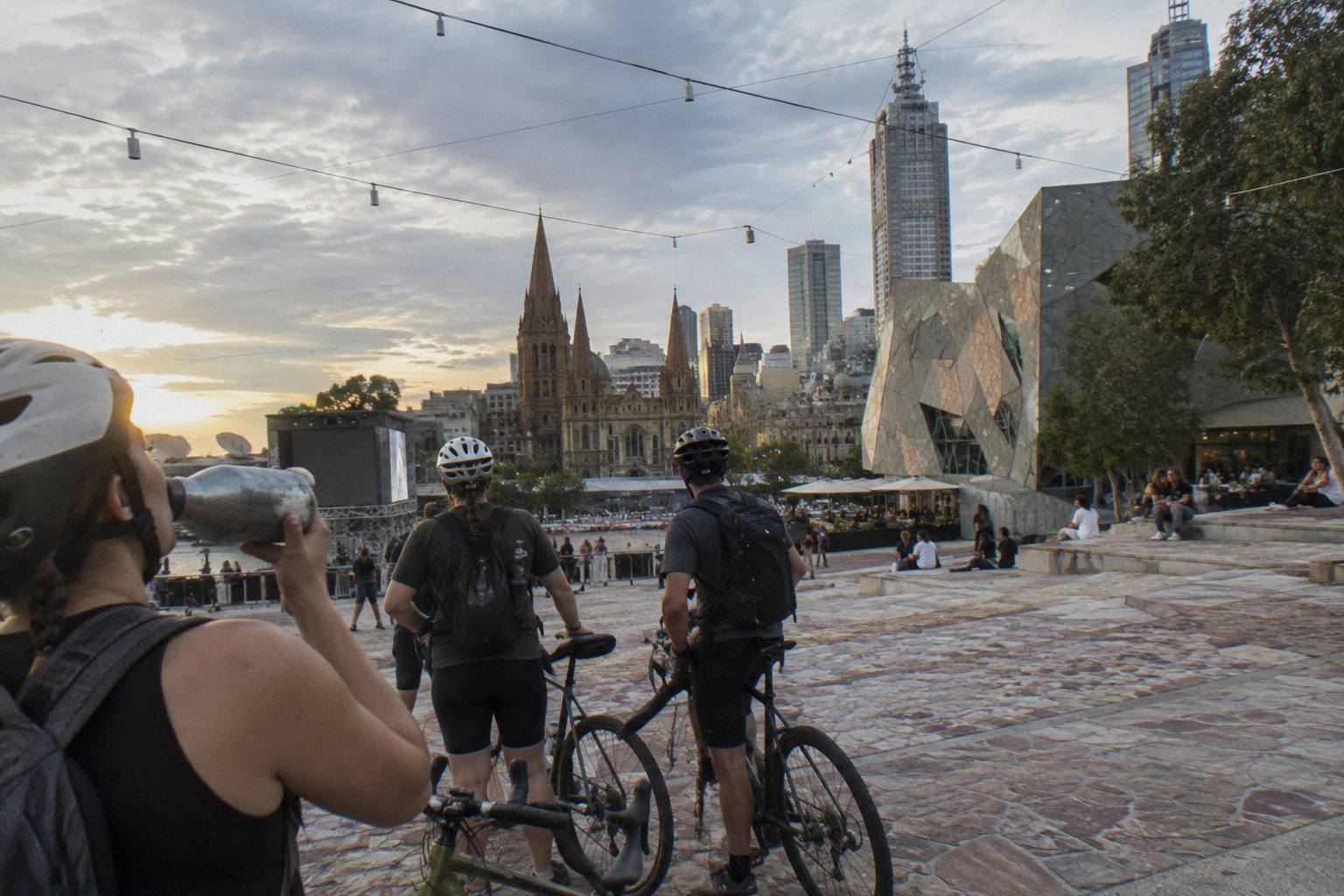
Melbourne's weather also shapes the choice. Bureau of Meteorology averages for the city record about 650 mm of rain a year spread across every month, roughly 100 rain days, with a mean maximum of 25.9 °C in January and 13.5 °C in July. Rain arrives in fast-changing showers rather than long soaks, which suits a half-day ride with a stop indoors more than an all-day walking plan. The Classic Cycling Tour even lists a rain poncho if needed.
What Does A Guided Ride Actually Include?
On Melbourne's guided rides you get a bicycle, a helmet and a guide, with tours running 2.5 to 6 hours and from A$120 per person upward, lunch and hotel pickup generally not included. The Famous Melbourne City Cycling Tour With Local Guide, from A$140 per person, runs 4.5 hours in a group usually of 8 to 10 or fewer, includes bottled water, and stops for lunch at Queen Victoria Market where you buy your own.
The inclusions matter because they are what you are comparing against a walking or tram day, which cost nothing but time. The standard-bike options share a pattern: bicycle, helmet and guide supplied, food and drinks bought by you, and free cancellation up to 24 hours before on every booking page. The Classic Cycling Tour From Batman Park covers about 16 km including stops and lunch over 4 hours, with a Fitzroy lunch stop. The Bayside tour runs 3 hours from Brighton Beach railway station with a drink and a snack listed on one booking page. The most-reviewed tour of them all is the Famous city tour, rated 4.9 from 900+ reviews, run by Melbourne By Bike, an operator serving visitors since 2002.
What a guide adds that neither walking nor trams give you is route judgment. Guides lead the group, choose the pace and handle the road, and a local guide answers questions a map cannot. Helmets, mandatory for every rider in Victoria, are supplied on these tours, so the law is not something you need to organise. If you want the full picture of the format before committing, our guide to what to expect on a guided bike ride walks through the day start to finish.
A guided ride also fixes the two problems that defeat self-guided visitors: not knowing where the safe paths are, and losing time to navigation. Every option above spends its hours moving between sights rather than deciding which way to turn. The trade is money and commitment, roughly half a day of your itinerary, and it is worth asking when that trade pays off.
Why Can't You Take A Bike On A Melbourne Tram?
Only folding bikes, folding e-bikes and folding e-scooters may travel on trams and buses, with folded size limits of 82 x 69 x 39 cm and wheel rims up to 51 cm, per Transport Victoria. A standard tour bicycle cannot board a tram at all, so any plan that mixes riding with tram travel does not work. Metro trains do take bikes, but e-bikes must be switched off and not ridden or charged on board.
This rule quietly decides the shape of a Melbourne sightseeing day. Many visitors assume they can ride to a tram stop and hop on when tired, and that is the one thing the rules forbid. The practical combinations are: ride the whole loop, walk and tram inside the central grid, or combine riding with metro trains, which carry bikes free, with the conductor deciding space on V/Line regional services. Converted e-bikes are banned from all trains and ticketed areas.
For the tram-versus-bike question the answer is that they do different jobs. Trams win inside the CBD grid, where the Free Tram Zone and short blocks make a bike unnecessary. A bike wins the moment your day stretches to the river, the bayside suburbs or the inner north, distances where trams run slow and walking is impractical. The rules on carrying items, published by Transport Victoria, are the primary source for the folding-bike limits above.
The bayside tours show how the train rule gets used. The St Kilda And Brighton Bayside Bike Tour starts at Brighton Beach railway station, a metro ride from the city, so riders arrive by train and ride from there. The Yarra Valley rail trail tour does the same from Woori Yallock Station, or with free pickup from Lilydale. That ride-then-train pattern is the only legal way to blend cycling and public transport in Melbourne, and guided tours are built around it.
How Do The Guided Ride Formats Compare?
The eight guided options split into four formats: standard-bike small-group city rides (2.5 to 4.5 hours, from A$124 to A$140 per person), e-bike rides (from A$139), private rides (from A$255), and full-day regional trips to the Yarra Valley or Mornington Peninsula (from A$350 and A$120). All include bicycle, helmet and guide; meals are generally your own cost.
| Format | Tour | Duration | From price | Group |
|---|---|---|---|---|
| City, standard bike | Famous Melbourne City Cycling Tour With Local Guide | 4.5 hours | A$140 per person | usually 8 to 10 or fewer |
| City, standard bike | Classic Cycling Tour From Batman Park | 4 hours | A$129 per person | up to 10 |
| Bayside, standard bike | St Kilda And Brighton Bayside Bike Tour | 3 hours | A$124 per person | up to 10 |
| City, e-bike | Melbourne E-Bike Tour With Local Guide | 4 hours | A$139 per person | up to 10 |
| City, e-bike, private | Private Melbourne E-Bike Tour | 2 to 4 hours | A$500 per person, price depends on group size | private |
| City, private, pickup included | Private Cycling Tour From Federation Square | 3 hours | A$255 per person | private |
| Regional, e-bike | Yarra Valley Guided And E-Bike Rail Trail Cycling | 6 hours | A$350 per person | up to 8, minimum age 18 |
| Regional, e-bike | Mornington Peninsula Small-Group Bike Tour | 2.5 hours | A$120 per person | up to 15 |
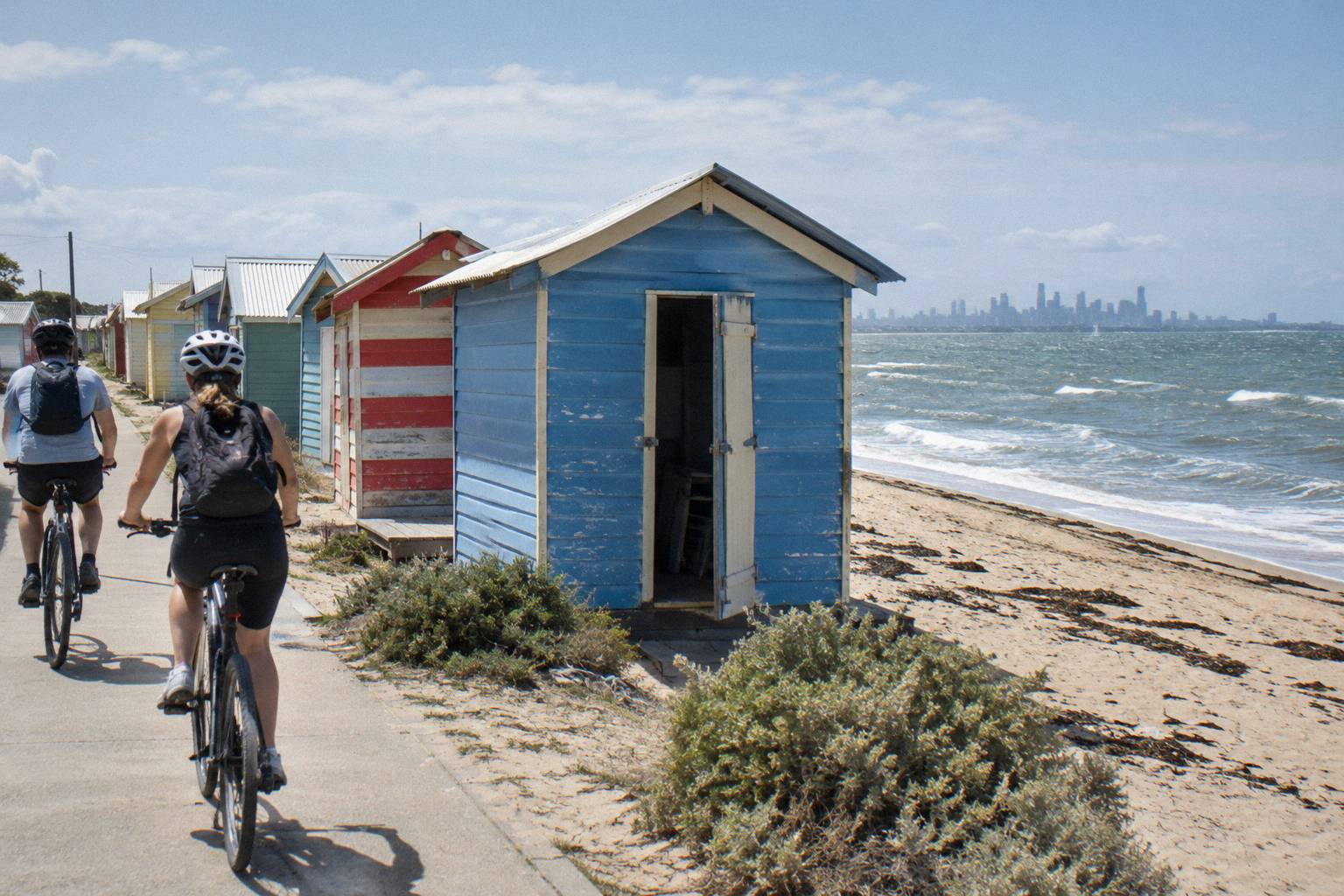
The format is the real decision, more than the operator. A 4 to 4.5 hour city ride with a lunch stop is a half-day commitment that suits a first visit. A 3 hour bayside ride suits a shorter window or a second visit. A private ride suits families or anyone who wants the route and start time arranged with the group, and the Private Melbourne E-Bike Tour does exactly that, with the operator arranging route and start together, and the Fitzroy lunch as an extra fee. The regional trips suit a day when you would rather leave the city entirely.
The Classic Cycling Tour From Batman Park is the standard-bike benchmark for the city format: 4 hours from a 10am start, about 16 km including stops, up to 10 riders, own lunch in Fitzroy. For anyone weighing the format question in more depth, our comparison of bike hire versus a guided ride breaks down what you give up going alone.
Is An E-Bike The Easier Way To Cover The City?
The e-bike options supply the pedal-assist bike and helmet, run from A$139 per person for the 4 hour Melbourne E-Bike Tour With Local Guide, and assist only while you pedal, cutting out at 25 km/h under Victorian law. They cover roughly the same city ground as the standard rides with less effort, and the Famous city tour offers an e-bike upgrade at A$40 per person.
E-bikes change the calculus for riders who are unsure of their fitness or simply want to arrive at the last stop feeling fresh. In Victoria a legal e-bike has a 250 W motor that assists only while pedalling and cuts off at 25 km/h, so an e-bike tour is not a faster tour, it is an easier one; a rider can still exceed 25 km/h by pedalling alone. The technical rules are on the Transport Victoria e-bikes page. The Melbourne E-Bike Tour With Local Guide, run by Blue Tongue Bikes from its Batman Park shop, is rated 4.9 from 300+ reviews and takes in the Yarra, the Shrine, the MCG, Cooks' Cottage, Parliament, Fitzroy, the Royal Exhibition Building, Chinatown and Hosier Lane across about 4 hours including a lunch stop.
There are boundaries worth knowing before choosing e-assist. On the Private Melbourne E-Bike Tour, pregnant women and people who cannot ride a bike are listed as not suitable, the minimum age is 12, and it runs in English, German, Spanish, Hungarian and Chinese. The separate Yarra Valley 7-hour e-bike rail trail alternative uses fat-tyre e-bikes not suitable for riders under 155 cm or over 130 kg, and Mornington Peninsula e-bikes are single-rider and for riders over 14. Whether assist suits you at all is worth a moment with our piece on whether electric bikes are hard to ride.
One placement caution from the parks authority: Albert Park's paths bar power-assisted bicycles above 200 W, so an e-bike lap of the lake depends on the machine. This is the kind of detail a guided operator handles for you, and a reason the guided format earns its price for first-time visitors.
What Cycling Rules Should A Visitor Know Before Deciding?
Victoria requires every rider, e-bike riders included, to wear an approved-standard helmet, with fines for non-compliance; riders stay on the road rather than the footpath unless aged 12 or under or supervising someone who is; and on shared paths riders give way to pedestrians, keep left and use a bell or voice to overtake. Tours supply helmets, and a guide leads the group through traffic.
These rules are the background to the bike-versus-walking question, because they are the cost of the speed. A walking day carries none of them. The full road rules, published by Transport Victoria, also cover night lighting, a white front light and red rear light visible from 200 m, and minimum passing distances of 1 m on roads up to 60 km/h and 1.5 m above that. Two cyclists may ride two abreast no more than 1.5 m apart, which is how guided groups often travel.
The detail visitors ask about most is tram tracks, and the practical answer is that a guide leads the group and the operator can tell you how the ride handles them. Ask the operator before booking if this is a worry. Our primer on tram tracks and cycling safety collects the official road rules.
Riding impaired is unsafe and illegal in Victoria; check the official rules before you ride. A guided ride with a lunch stop at a market is built around food, not drinking, and that is the safe way to keep it.
When Does Walking Or A Tram Beat A Bike?
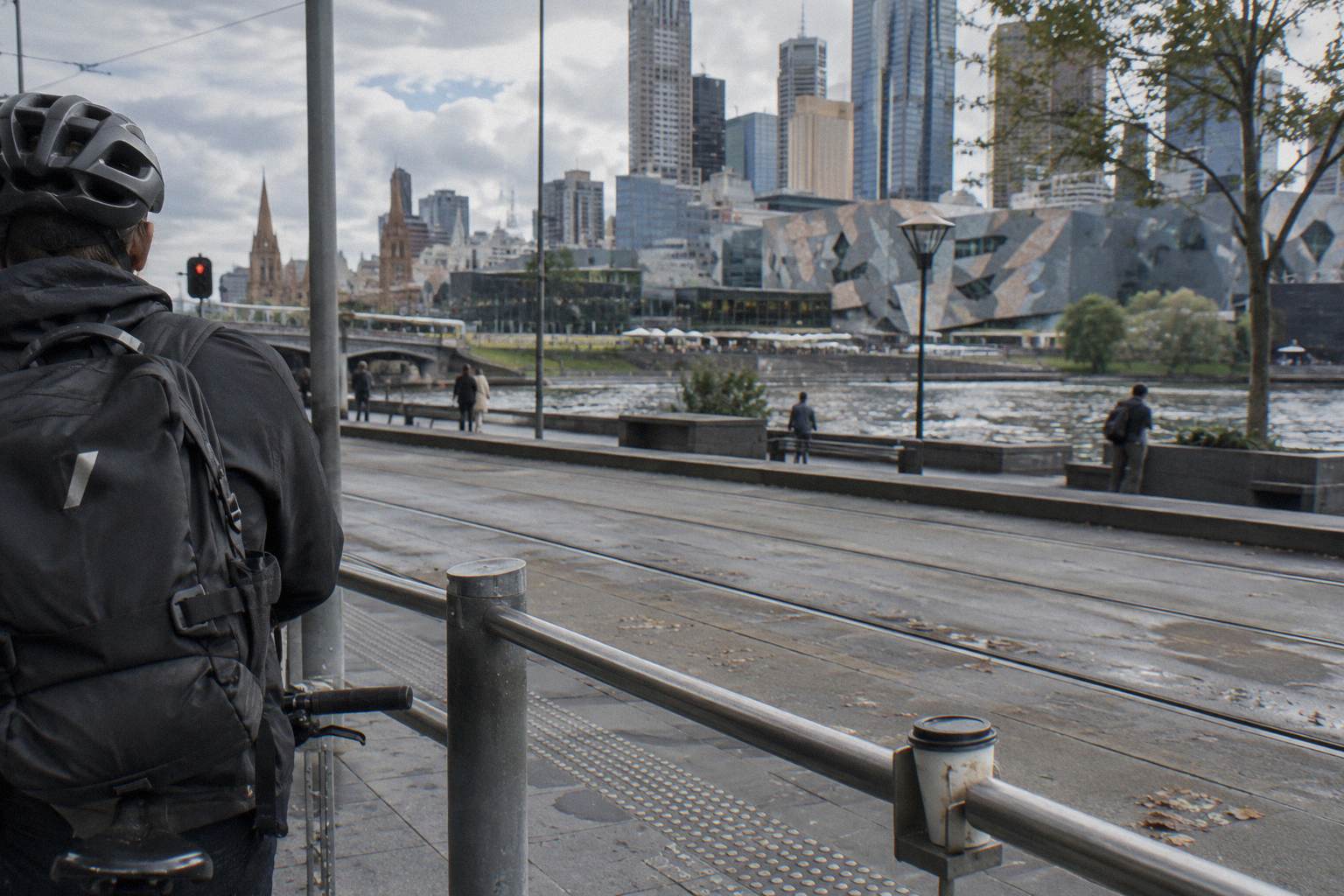
Walking wins inside the CBD grid on short winter days or tight schedules, since the central lanes, arcades and street art sit within a compact walkable area the Free Tram Zone also covers. A tram wins for point-to-point trips in the inner city, and it is the only option of the three when rain sets in steadily. A guided ride wins whenever the day's sights stretch along the river or out to the bay.
| Your day | Better fit | Why, on the stated facts |
|---|---|---|
| Laneways, arcades, one or two galleries | Walking | The CBD grid is compact and the Free Tram Zone covers it |
| River trail, bayside suburbs, inner north | Guided ride | 16 km-plus routes a walking day cannot reach, helmet and guide supplied |
| Point-to-point CBD trips, sore legs | Tram | Trams run the grid all day; a standard bike cannot board one |
| First visit, one free morning | Guided city ride | 3 to 4.5 hour formats cover the headline sights with a guide |
| A full day out of the city | Regional ride | Yarra Valley guided ride 6 hours or Mornington Peninsula 2.5 hours, train-accessible starts |
| Steady rain | Tram or walking | Showers are the Melbourne norm, but tours run in rain with ponchos supplied |
The fair version of this comparison admits the bike's losses. A guided ride is a booking, a fixed start time and a half-day block; trams and walking are not. A ride in the rain is possible, the Classic tour supplies a poncho if needed, but a wet tram is drier. And a ride is not for everyone: the Bayside tour listing states that people who cannot ride a bike or with mobility impairments are not suitable, and the Famous tour lists moderate fitness. None of that is hidden, it is on every listing, and it is the difference between deciding and discovering on the day.
Where the guided ride earns the choice is efficiency of ground. In 4 hours the Classic tour covers about 16 km including stops, from the Yarra to Fitzroy; on foot that ground is a full day, and by tram it is a series of waits and transfers with none of the riverside path in between. The famous tour's 4.5 hours buys the same span plus a market lunch stop. Melbourne By Bike, the operator behind it, has been serving visitors since 2002, and the tour carries 4.9 from 900+ reviews on its live listing, with Famous City Ride, 4.5 Hours on the tour page alongside our Famous city cycling tour overview.
How Do You Choose Between The Riding Options?
Pick by duration and format first: a 3 to 4.5 hour city ride for a first visit, an e-bike version for easier pedalling, a private ride for families or a set itinerary, and a regional trip for a day out. Then pick by start point: Batman Park for the central city, Federation Square with pickup included for privates, Brighton Beach station for the bay, and Woori Yallock or the Peninsula for the country.
Start with the limits of each choice. The Classic tour and the e-bike tour both start at Blue Tongue Bikes, 2 Rebecca Walk at Batman Park, at 10am, in groups up to 10. The Famous tour's meeting point is simply "details come in your booking confirmation", which is worth knowing before you plan your morning. The Bayside tour needs a metro train to Brighton Beach station first, which adds time but the train carries your group there in one legal move. The Guydeez private ride includes pickup at Federation Square itself.
Family fit follows the same logic. The Famous tour welcomes children, with solo riding recommended from 12 and buggies or tagalongs available for small children, and it needs a minimum of two riders on the public tour. The Private Melbourne E-Bike Tour sets a minimum age of 12, and the Yarra Valley trip requires riders to be 18 and over. For a fuller walk-through of riding with kids, our guide to family bike rides with kids covers the terrain and the formats.
Cost is the last filter, and the span is wide: from A$120 per person for the Mornington Peninsula half-day to A$500 per person for a private e-bike ride whose price depends on group size and is shown on the booking page for the group. Every tour carries free cancellation up to 24 hours before on its booking page, which softens the commitment, none of them locks you into a set lunch cost, and no ride requires you to bring your own bike or helmet.
Which Planning Mistakes Trip People Up When Seeing Melbourne By Bike?
The classic slip is planning to ride until tired, then hop on a tram. A standard bike cannot board a tram or bus at all, since only folding bikes up to 82 x 69 x 39 cm are allowed. Helmets are mandatory for every rider, tours run to fixed start times, and a ride is a half-day booking, not a spur-of-the-moment choice.
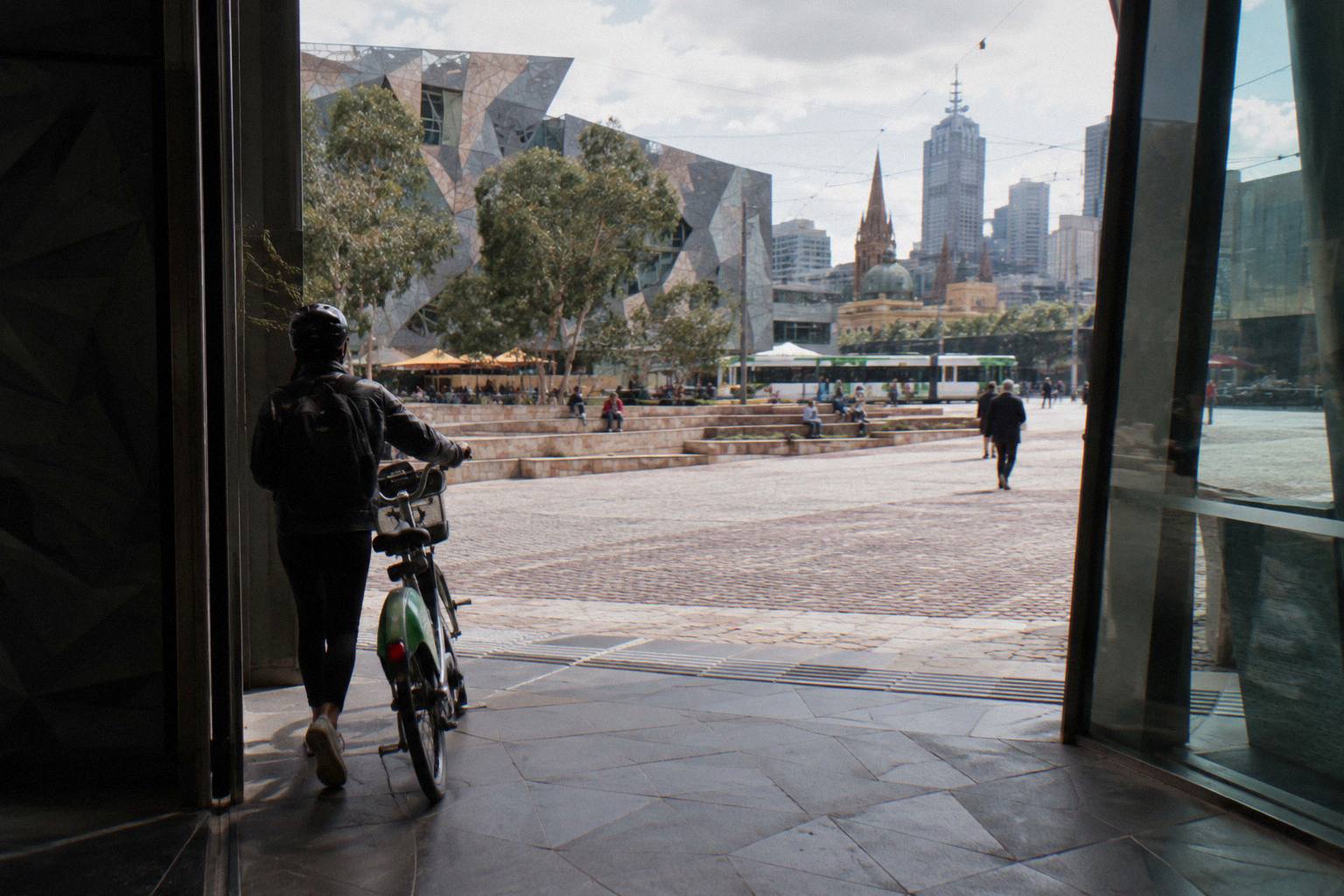
- Counting on a city bike share scheme. Melbourne Bike Share closed on 30 November 2019, so there is no dock-based fallback if a tour does not suit your day.
- Assuming an e-bike is a shortcut. Assist cuts out at 25 km/h and works only while you pedal, so you trade effort for comfort, not speed.
- Ignoring the start-point logistics. The Famous tour sends meeting details in your booking confirmation, and the Bayside tour needs a train leg to Brighton Beach station first.
- Forgetting the weather variable. Rain falls across all months, roughly 100 rain days a year, so pack for fast-changing showers; the Classic tour supplies a poncho if needed.
- Overlooking route-specific bans. Albert Park paths bar power-assisted bicycles above 200 W, so an e-bike lap of the lake depends on the machine.
Common Questions About Seeing Melbourne By Bike
Is A Guided Bike Ride The Best Way To See Melbourne?
It is the most efficient way to cover the city's spread in one block of time: the guided rides run 2.5 to 4.5 hours, supply bike, helmet and guide, and reach river, bay and inner-north ground walking cannot. It is not automatically the answer, since trams cover the CBD grid and a standard bike cannot board one. Decide by what your day needs to cover.
Can I Take My Bike On A Melbourne Tram?
No. Only folding bikes, folding e-bikes and folding e-scooters up to 82 x 69 x 39 cm with wheel rims up to 51 cm may travel on trams and buses. Metro trains take full-size bikes and factory-built e-bikes, with e-bikes switched off and not ridden or charged on board.
Do I Need To Bring A Helmet On A Guided Bike Ride?
No. Helmets are normally supplied on these tours, and helmet wearing is mandatory for every rider in Victoria, e-bike riders included. Helmets must carry an approved-standard label, and the exemptions are religious headdress or a carried medical certificate.
How Long Does A Guided Melbourne Bike Ride Take?
The city formats run 3 to 4.5 hours, the Bayside tour 3 hours from Brighton Beach railway station, and the regional options 6 hours in the Yarra Valley or 2.5 hours on the Mornington Peninsula. The Famous Melbourne City Cycling Tour With Local Guide runs 4.5 hours including a lunch stop at Queen Victoria Market.
Is An E-Bike Tour Faster Than A Standard Bike Tour?
No. Victorian law limits e-bike assistance to a 250 W motor that works only while you pedal and cuts out at 25 km/h. An e-bike tour covers similar ground to a standard tour with less pedalling effort, not at higher speed. The Famous city tour also offers an e-bike upgrade at A$40 per person.
What Happens If It Rains On My Ride Day?
The tours run in rain, and the Classic Cycling Tour From Batman Park supplies a rain poncho if needed. Melbourne averages about 650 mm of rain a year spread across every month, roughly 100 rain days, usually as fast-changing showers. Every tour offers free cancellation up to 24 hours before on its booking page.
The short version of this whole page: a guided ride from Melbourne Bike Tours is a decision you make by distance and time, not a title anyone can hand you. Cover the grid on foot or by tram, and hand the longer ground to a guide.