Best Season For A Bike Ride In Melbourne
Melbourne's weather decides more bike tour dates than any guidebook admits. Here is what the Bureau of Meteorology averages actually say, month by month, and how the city's guided rides handle rain.
Short answer
Bureau of Meteorology averages put Melbourne's mean maximum at 25.9 °C in January and 13.5 °C in July, with about 650 mm of rain spread across every month and about 100 rain days a year. No month is dry, so pick a date for temperature comfort and daylight, then book a tour that runs in the weather you get.
What Is The Best Season For A Bike Ride In Melbourne?
There is no dry season to aim for. Melbourne averages about 650 mm of rain a year, spread through all twelve months, with monthly means between 46.8 mm and 66.0 mm and about 100 rain days annually. The practical answer is to choose by temperature and daylight: warm months bring mean maximums of 25.9 °C, cool months sit near 13.5 °C, and every month carries some shower risk.
The lack of a simple calendar instruction frustrates visitors, but the climate record is what it is. The Bureau of Meteorology averages for the old Melbourne Regional Office station, which recorded continuously from 1855 until the station closed in 2015, show a city where rain arrives in every season rather than settling into a wet half and a dry half of the year. February, one of the drier months on those averages, still records a mean of 48.0 mm. August and September, the wettest, average 66.0 mm and 58.0 mm. The spread between the driest and wettest month is small enough that timing a trip around rainfall alone barely changes your odds.
What the seasons do change, sharply, is heat and cold. Melbourne's mean maximum climbs from 13.5 °C in July to 25.9 °C in January, and the record books include a 46.4 °C day on 7 February 2009 and a rare low of minus 2.8 °C. A rider choosing between February and July is really choosing between two different wardrobes, two different ride lengths and two different comfort levels on a 4.5 hour tour.
The changeable character of the city matters as much as the averages. Melbourne is known for fast-moving showers and quick swings in conditions, sometimes several shifts within a single ride. Locals plan for it by layering, and the guided-tour operators plan for it with rain ponchos and all-weather running policies, detailed further down. If you are still deciding between seeing the city on two wheels or another way, the question of whether a bike is the best way to see Melbourne is worth settling before you pick a date.
Below, the numbers run month by month, an explanation of what roughly 100 rain days a year feels like on a handlebar, the weather policies of Melbourne's guided rides, and what to wear and how the seasons shape rides beyond the city boundary.
Melbourne Weather By Month: What The Averages Say
January and February are the warmest months, both averaging a 25.9 °C maximum, while July is the coldest at a 13.5 °C maximum and 6.0 °C minimum. Rain falls in every month, from 46.8 mm in February to 66.0 mm in August. These are Bureau of Meteorology averages drawn from more than a century and a half of records, not forecasts.
The table below sets out the two numbers that matter most to a cyclist choosing a month: the mean daily maximum, which is roughly what you will feel at midday in the middle of a ride, and the mean daily minimum, which shapes early morning starts and evening finishes.
| Month | Mean maximum (C) | Mean minimum (C) |
|---|---|---|
| January | 25.9 | 14.3 |
| February | 25.9 | 14.6 |
| March | 23.9 | 13.3 |
| April | 20.3 | 10.8 |
| May | 16.7 | 8.7 |
| June | 14.1 | 6.9 |
| July | 13.5 | 6.0 |
| August | 15.0 | 6.7 |
| September | 17.3 | 8.0 |
| October | 19.7 | 9.6 |
| November | 22.0 | 11.3 |
| December | 24.2 | 13.0 |
Read that as a curve rather than twelve separate facts. The warm shoulder from December through March keeps maximums at 23.9 °C or above, which most riders find comfortable on a moving bike with a breeze, though January and February carry the small but real risk of a genuinely hot day at the top of that range. The cool half from June through August holds maximums in the 13.5 to 15.0 °C band: cold enough to want gloves and a windproof layer, but nowhere near unrideable for anyone who cycles at home in winter. The in-between months, April, May, September, October and November, sit in the 16.7 to 22.0 °C range that many riders consider the most comfortable band of all, though no month on this list can be called the best one, because the rain counter never resets to zero.
For the raw climate record behind these figures, the Bureau of Meteorology publishes the full averages table for the Melbourne Regional Office station at its climate averages page. The station itself closed in January 2015, so the averages are drawn from the long historical record rather than a rolling recent window; that makes them stable reference points for planning, not a description of any single year you might visit. Averages smooth out the extremes by design, which is why the record high and low are quoted alongside them: knowing the range, not just the mean, is what lets you pack sensibly for a ride in any month.
Whichever month you land on, a guided ride removes most of the planning burden: the route, the bike and the guide come with the booking. These three city rides cover the formats most visitors choose between.
How Much Rain Should You Actually Expect On A Ride?
Melbourne averages about 100 rain days a year, from about 5 days with at least 1 mm in February to about 10 in August and September. Rain is spread evenly rather than concentrated, so any given ride carries a modest but real chance of a shower, and the odds only roughly double between the quietest and wettest months.
That "about 100 rain days" figure deserves unpacking, because it is the single most useful planning number here. It counts days with at least 1 mm of rain, which means drizzle and brief showers that barely wet the road often do not register at all. In February you might average five such days across the whole month. In August and September, the peak, it is closer to ten. Even in the wettest month, that leaves roughly two days in three completely dry by this measure, and Melbourne's showers are famously fast-moving rather than the all-day soakers of tropical climates.
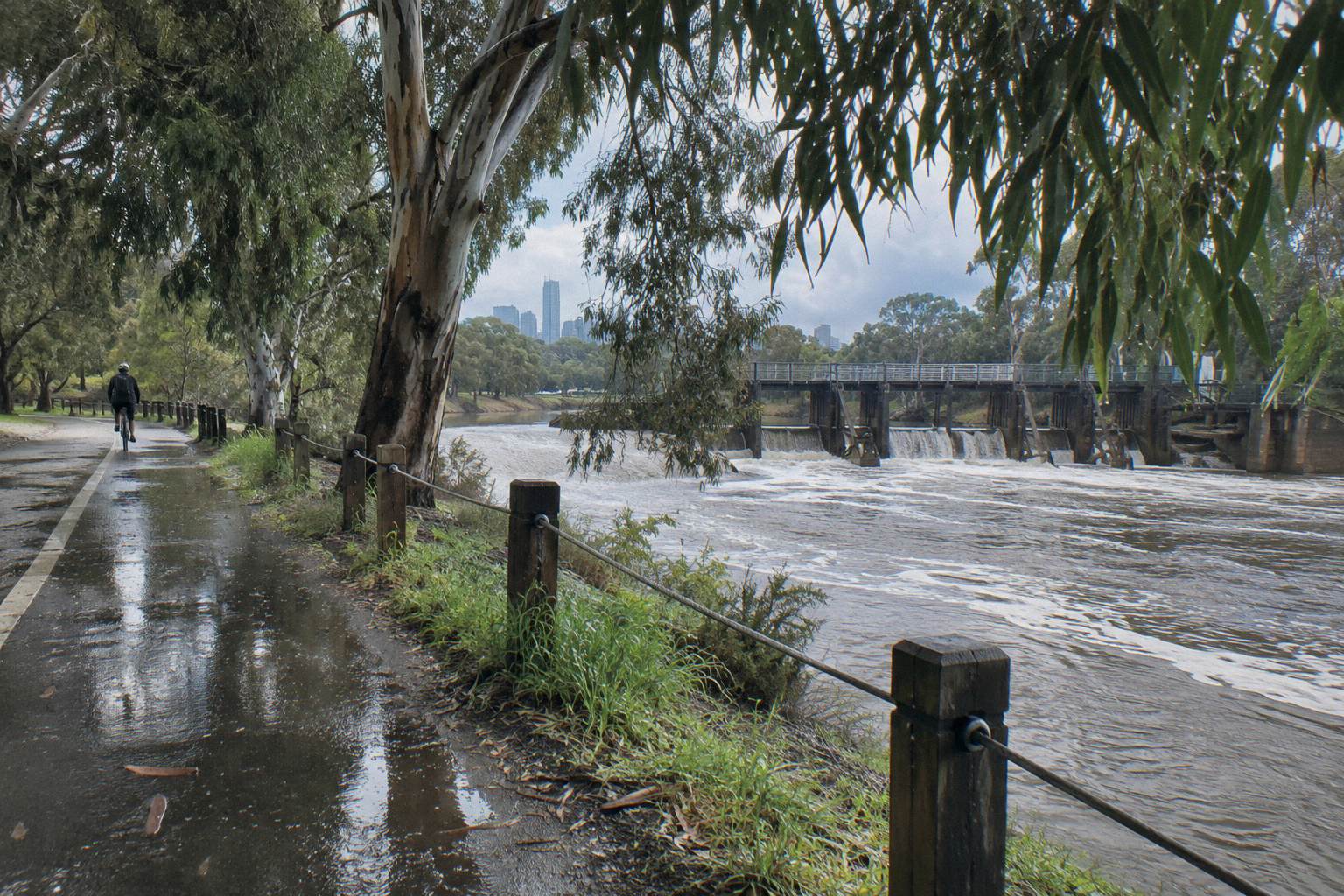
Here is the same story in millimetres, month by month. Notice how narrow the band is: no month averages less than 46.8 mm and none more than 66.0 mm.
| Month | Mean rainfall (mm) |
|---|---|
| January | 46.8 |
| February | 48.0 |
| March | 50.1 |
| April | 57.3 |
| May | 55.7 |
| June | 49.5 |
| July | 47.5 |
| August | 66.0 |
| September | 58.0 |
| October | 60.3 |
| November | 59.1 |
| December | 59.1 |
Two things follow from this table. First, winter is not Melbourne's wettest stretch by these averages; late winter and spring, from August through November, carry the higher monthly totals. Second, the difference between the driest and wettest month works out to well under a centimetre of extra rain spread across an entire month, which on any single three or four hour ride is a difference you would barely notice in practice. The practical planning move is not to chase a dry month but to pick a tour whose wet-weather arrangements you are comfortable with, and to keep a layer in reach.
If a shower-bound day would ruin a tight itinerary, the cancellation terms matter as much as the forecast. Every tour offers free cancellation up to 24 hours before the ride on its booking page, so a booking made weeks ahead can still be shifted when the outlook sours, provided you act before that window closes.
Do Guided Bike Rides Run When It Rains?
Yes, in most conditions. The Melbourne E-Bike Tour With Local Guide runs rain or shine unless conditions become dangerous, with ponchos available at the shop, and its Classic sibling also lists a rain poncho among inclusions when needed. The Yarra Valley guided ride operates in all weather. Tours that state no weather policy at all should be checked with the operator before you book a winter date.
That split matters when you are choosing between formats. A pedal-assist ride and a standard guided city ride both come with wet-weather gear, which tells you the operators expect to run through ordinary Melbourne showers rather than cancel them away. The table below summarises what each tour states.
| Tour | Stated weather approach |
|---|---|
| Famous Melbourne City Cycling Tour With Local Guide | No stated weather policy; ask the operator when booking |
| Classic Cycling Tour From Batman Park | Rain poncho listed among inclusions if needed |
| Melbourne E-Bike Tour With Local Guide | Runs rain or shine unless conditions are dangerous; ponchos at the shop |
| St Kilda And Brighton Bayside Bike Tour | No stated weather policy; ask the operator when booking |
| Private Melbourne E-Bike Tour | No stated weather policy; ask the operator when booking |
| Private Cycling Tour From Federation Square | No stated weather policy; ask the operator when booking |
| Yarra Valley Guided And E-Bike Rail Trail Cycling | Operates in all weather |
| Mornington Peninsula Small-Group Bike Tour | No stated weather policy; ask the operator when booking |
Two caveats sit behind that table. "Rain or shine unless dangerous" is an operator's standard phrasing, and the line where weather becomes dangerous, think strong winds, thunderstorms or heat extremes, is drawn by the operator on the day, not by a published rule. And the tours with no stated policy are not fair-weather-only rides; it simply means the question is worth asking directly when you book, especially for a coastal ride like the St Kilda and Brighton route, where a cold onshore wind changes the feel of the day far more than the temperature figure suggests. The bayside ride runs 3 hours from Brighton Beach Railway Station and is the shortest guided option at from A$124 per person, but its operator publishes nothing about wet-weather running, so a winter booking deserves a quick question first.
One rule that applies in every season and every drizzle: helmets. Victoria requires every rider to wear one, e-bike riders included, and the requirement is spelled out at Transport Victoria's helmet page. Tour operators supply helmets with their bikes, so this is a non-issue on a guided ride, but it is worth knowing that a fine applies to bare-headed riding if you ever head out on your own between tours. The same official road-rules pages set out the rest of what a visiting cyclist should know, from giving way to pedestrians on shared paths to the lights required in low light, and a guided tour handles all of it for you anyway.
Summer Heat, Winter Cold And How They Change A Ride
Summer mean maximums of 25.9 °C in January and February can stretch into extreme heat, with the record at 46.4 °C, while July's 13.5 °C mean maximum and 6.0 °C mean minimum demand gloves and layers. A 4.5 hour tour feels very different at each end of that range, so match the tour length to the season.
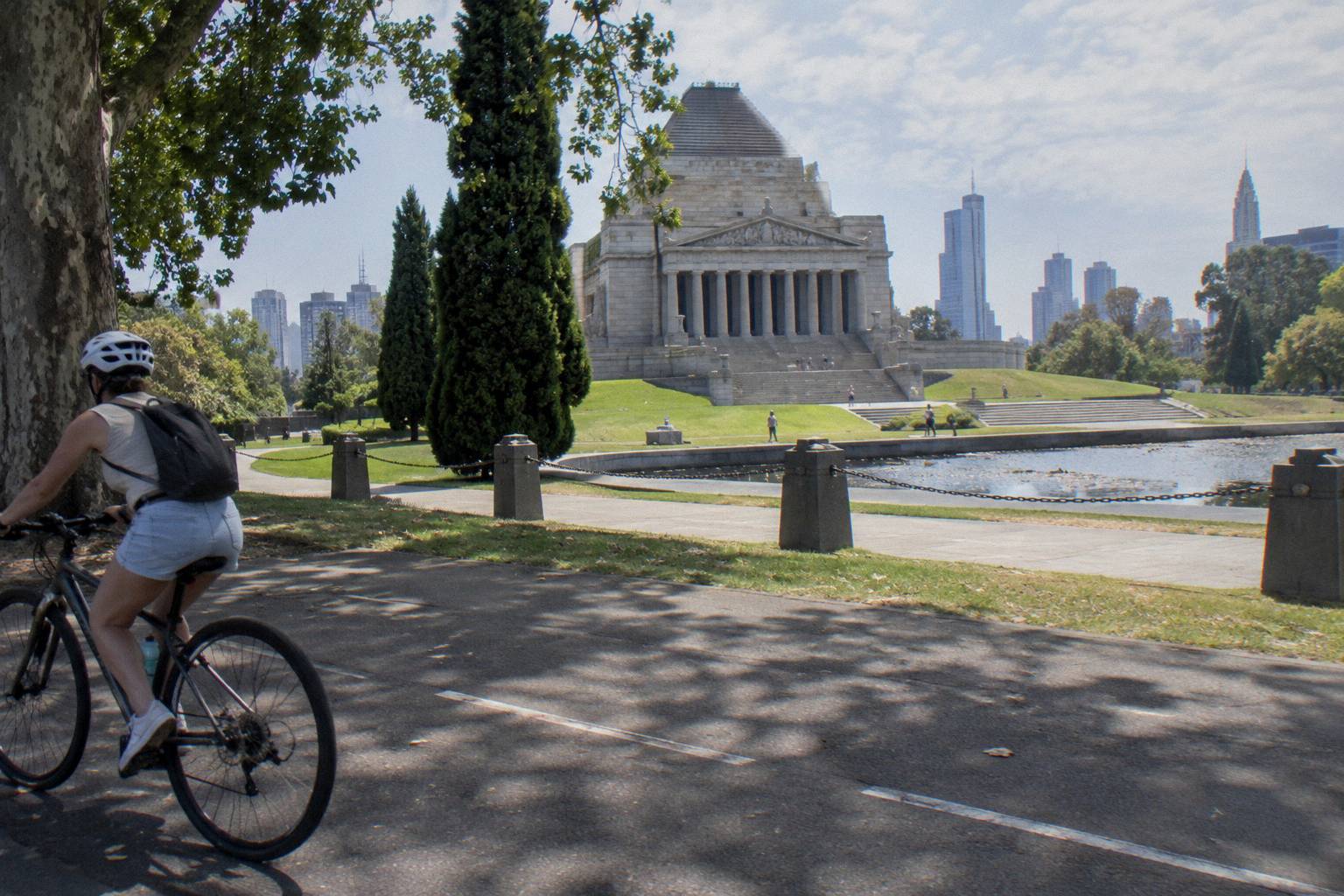
Heat is the underrated planning factor in the warm months. The mean maximum is one thing; the tail of the distribution is another. Melbourne has recorded 46.4 °C, and even an ordinary January hot spell can push a midday ride from pleasant to draining. On a moving bike you generate your own cooling breeze, which helps until you stop, and a long tour with a market lunch stop, such as the Famous Melbourne City Cycling Tour With Local Guide, naturally builds in an off-saddle break during the warmest hours. That tour runs 4.5 hours at from A$140 per person, rated 4.9 from 900+ reviews, with an optional e-bike upgrade at A$40 per person for riders who want to spend less energy in the heat. Riders sensitive to heat often prefer the 2.5 hour Mornington Peninsula Small-Group Bike Tour format in summer, or an e-bike that reduces pedalling effort. You can read more about how electric bikes ride and how fast they go, noting that legal assist in Victoria cuts out at 25 km/h, so an e-bike is easier, not faster.
Winter flips the problem. A 13.5 °C maximum with a 6.0 °C minimum is comfortable riding weather for anyone with a windproof jacket and gloves, and Melbourne's winter rain totals are mid-range on the yearly table, but the short daylight window compresses the day. A 6 hour ride such as the Yarra Valley Guided And E-Bike Rail Trail Cycling, with its 10am start and included lunch, fits winter daylight comfortably, while a summer departure of the same ride has hours to spare. If a long country ride is the goal, the seasons genuinely change what is comfortable. The Classic Cycling Tour From Batman Park, at 4 hours and from A$129 per person, splits the difference nicely, long enough to cover the city's highlights and short enough that winter daylight never pressures the route.
Cold-weather riding suits some riders far better than others, and age and fitness play into it. For a sense of reasonable distances for older riders in the cooler months, the question of how far an older rider should comfortably ride is a useful companion read.
What To Wear For Melbourne's Changeable Weather
Dress in layers you can shed and stuff in a pocket: a base layer, something warm and a light rain shell, with gloves from May to September when mean minimums sit between 6.7 °C and 9.6 °C. Helmets are mandatory in Victoria for every rider, and tours supply them, so your only wardrobe question is what goes under and over the rest of you.
The changeability, not the average, is what catches visitors out. A day that opens cool can climb through the morning and drop again with a southerly change, all without a drop of rain. Layers solve this completely: a light merino or synthetic base, a warm mid-layer for the first hour, and a shell that doubles as wind and shower protection. Full touring waterproofs are usually overkill for a city ride, where fast-moving showers pass in minutes and ponchos are available on several of the tours anyway. The site's dedicated guide to what to wear on a bike ride covers the full kit list, and it applies in every season here.
Footwear and visibility close the loop. Comfortable closed shoes with a bit of grip suit the flat, mostly sealed paths Melbourne tours use, and if you are riding near dusk outside summer, Victoria's road rules require a white front light and red rear light, though a guided tour will not schedule a night departure in the first place. Nothing about the wardrobe needs to be technical or expensive; the same clothes you would pack for a changeable walking city break will ride a bike fine.
Seasonal Timing For Rides Beyond The City
The Yarra Valley guided ride and the Mornington Peninsula small-group tour both run year-round, with the valley ride operating in all weather by its own policy, so season affects comfort rather than availability. Summer suits the peninsula's coastal air, cooler months suit the valley's sheltered rail trail, and neither region offers a rain-free window.
The two out-of-city rides answer to the same climate numbers as Melbourne itself, with the valley a few degrees cooler in the warmer months in general terms. The Yarra Valley Guided And E-Bike Rail Trail Cycling runs 6 hours from Woori Yallock Station, or with free pickup from Lilydale railway station, takes riders aged 18 and over in groups of up to 8, includes coffee, tea, snacks and lunch, and operates in all weather. That last phrase is the season-shopper's friend: whatever month you choose, the ride goes. It is from A$350 per person, and there is a 7 hour fat-tyre e-bike rail trail alternative that excludes riders under 155 cm or over 130 kg. It is a cycling day, not a tasting day; a deeper look at the route is in the site's guide to the Yarra Valley rail trail by e-bike.
The Mornington Peninsula Small-Group Bike Tour takes a different shape: 2.5 hours, groups of up to 15, from A$120 per person, meeting at the Point Nepean Information Centre with bike, helmet, lock, park map and local guide included. Minimum riding age is 7 and children must ride confidently, with an e-bike option restricted to riders over 14. There is no food or drink available at the meeting point or on the route, so bring water in every season, and doubly so in summer. The site's guide to Mornington Peninsula e-bike day rides covers the region in full.
One seasonal bonus sits at the end of a St Kilda ride if you time an evening right: the pier's little penguin colony now has a 150 m viewing boardwalk, opened in October 2025, with two free ticketed sessions nightly for 150 people each, booked through Phillip Island Nature Parks. Sessions shift with last light through the year, and Parks Victoria explains the arrangements at its little penguins page. Penguin viewing is not guaranteed and needs a separate booking from any bike tour, but a long summer evening is the natural season to pair a bayside ride with it. If the weather turns genuinely bad on a peninsula day, note that only folding bikes may ride trams and buses, so plan a train or a lift home rather than assuming you can board a tram with a hire bike.
What Timing Mistakes Do People Make When Picking A Season To Ride?
The biggest mistake is chasing a dry month that does not exist. Rain falls in all twelve months here, roughly 650 mm a year across about 100 rain days, so picking "the dry season" just shrinks your options. The second mistake is ignoring temperature: a July ride at a 13.5 °C mean maximum and a January ride at 25.9 °C demand different clothing and energy. Choose by comfort, not by rainfall.
Plenty of riders also bet everything on one perfect day. Melbourne is the cloudiest Australian capital, with about 48.6 clear days a year, and showers arrive and clear fast. If you book a single day and refuse any flexibility, one passing front can feel like a ruined trip. Build in a backup day if you can.
- Packing for the average, not the day. Mean figures hide extremes. The record books include 46.4 °C on 7 February 2009 and a rare low of minus 2.8 °C. Check the actual forecast the night before, not the monthly table.
- Assuming a wet morning means a cancelled ride. Tours generally run when it rains; one operator's policy says tours go ahead rain or shine unless conditions are dangerous, with ponchos available. Drizzle is not a dealbreaker.
- Forgetting daylight and ride length. A 4.5 hour tour feels different in short winter light versus long summer evenings. If you hate riding in gloom, lean toward the warmer months.
- Dressing wrong for changeability. Layers beat a single heavy jacket. A warm month can still hand you a cold southerly change mid-ride.
First-time riders often compound this by worrying about distance rather than weather. A guided ride at an easy pace handles most conditions, and if heat or hills concern you, an e-bike option takes the sting out of a warm afternoon.
Keep reading: Once you have picked your window, match it to a route: the bayside stretch suits summer, and the Capital City Trail loop works year round. For what a guided day actually involves, see what to expect on a guided ride, and if rain is still on your mind, our piece on bike hire versus a guided ride explains who supplies wet-weather gear. Spring's mild days make it easy to coast through the city on the Famous Melbourne City Bike Tour, while the Bayside Bike Tour pairs seaside air with beachside views.
Common Questions About The Best Season To Cycle Melbourne
What Is The Best Season For A Bike Ride In Melbourne?
There is no dry season: Melbourne averages about 650 mm of rain spread across all months, with monthly means between 46.8 mm and 66.0 mm. Choose by temperature instead, with mean maximums ranging from 13.5 °C in July to 25.9 °C in January, and layer for changeable conditions in any month.
What Is The Best Time To Cycle Melbourne?
Any month works with the right clothing, since rain risk never disappears. The months with mean maximums between about 17 °C and 24 °C, spanning autumn and spring, suit most riders, but tours run all year and several supply rain ponchos when showers arrive.
Does It Rain A Lot In Melbourne?
About 650 mm a year, spread evenly: roughly 100 rain days with at least 1 mm, from about 5 such days in February to about 10 in August and September. Showers are typically fast-moving rather than persistent all-day rain.
Do Guided Bike Rides In Melbourne Get Cancelled For Rain?
The Melbourne E-Bike Tour With Local Guide runs rain or shine unless conditions are dangerous, with ponchos at the shop, the Classic tour lists a poncho among inclusions if needed, and the Yarra Valley guided ride operates in all weather. Tours with no stated policy should be asked directly, and every tour allows free cancellation up to 24 hours before.
Is Melbourne Too Cold To Cycle In Winter?
July averages a 13.5 °C maximum and 6.0 °C minimum, which is comfortable riding weather with a windproof layer and gloves. Winter is not even the wettest stretch; August through November carries higher monthly rain totals on the long-run averages.
Is Melbourne Too Hot To Cycle In Summer?
January and February average a 25.9 °C maximum, pleasant on a moving bike, but extreme heat days occur and the record is 46.4 °C. On hot forecasts, choose a shorter tour, an e-bike to cut effort, or a ride with a built-in lunch stop out of the midday sun.
Whatever month you settle on, Melbourne Bike Tours exists to close the gap between the forecast and the ride: pick the format first, hold the date loosely with the 24 hour cancellation window, and let the layered jacket handle the rest.