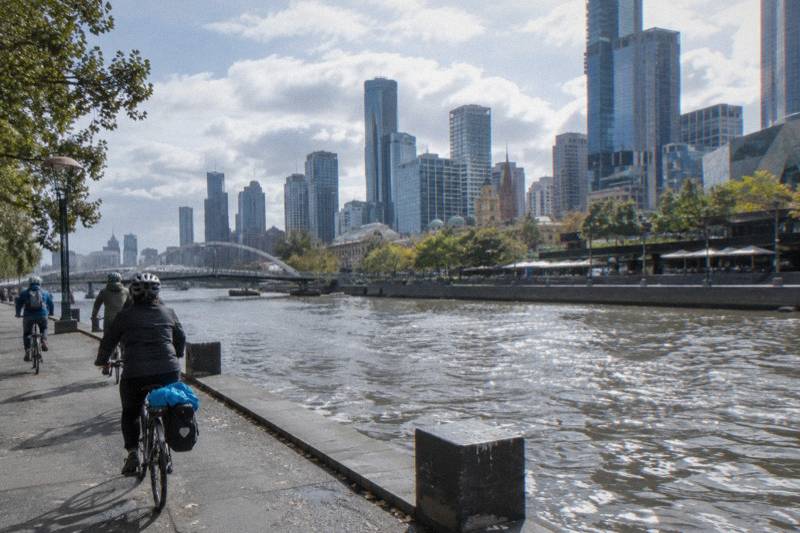
Riding The Capital City Trail: Plan The Loop Or Join A Guided Section
The Capital City Trail loops Melbourne's inner suburbs along the river, the port and the parklands, and it is the ride most visitors picture when they imagine seeing the city on two wheels. Here is how to plan it yourself, what the path rules demand, and when a guided city ride does the job better.
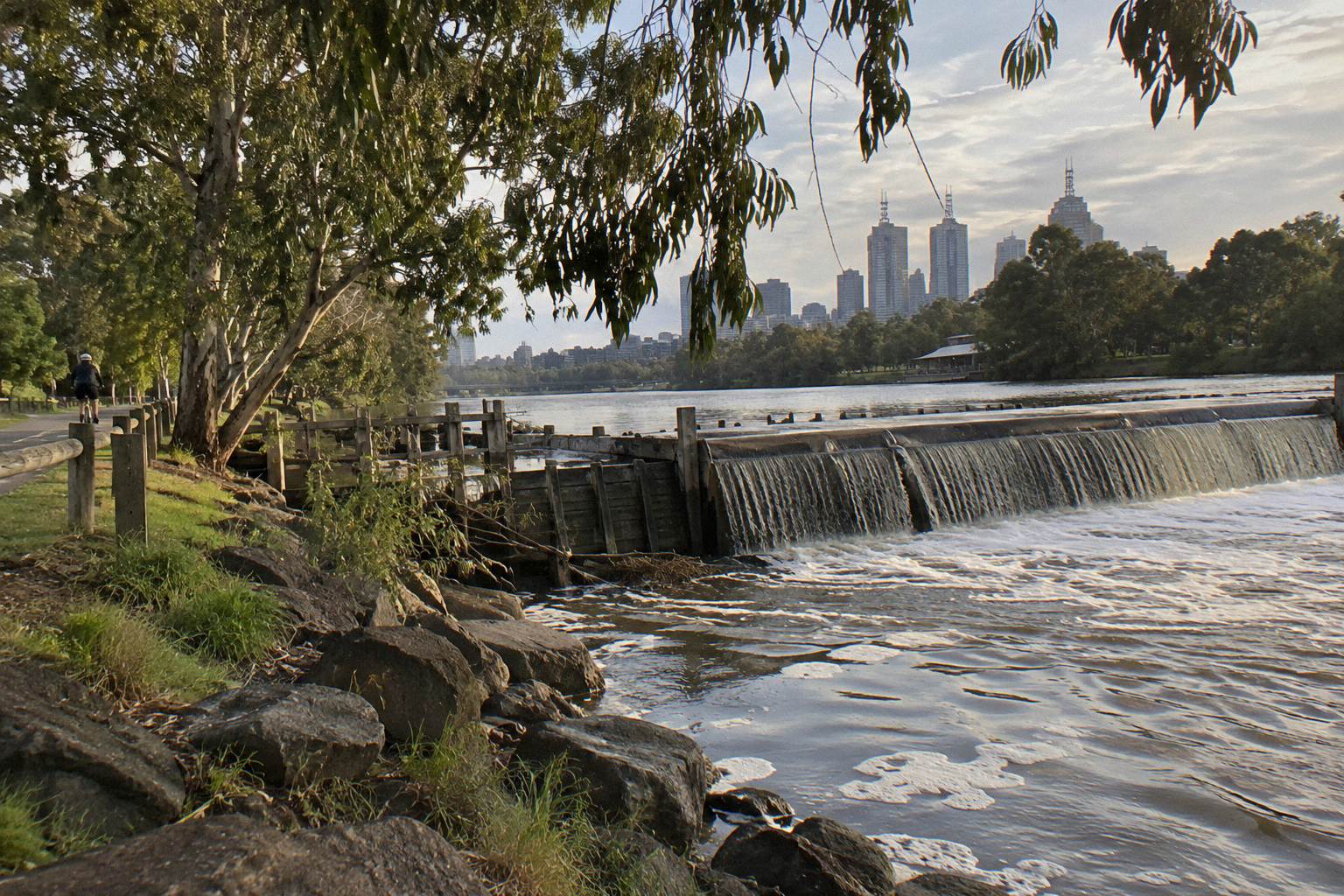
Short answer
The Capital City Trail is an easy, signposted loop largely built from sections of other trails, hugging the Yarra River, the port and inner parklands. No guided tour rides it as a named product. Ride it alone if you want the full loop at your own pace, or book a guided city ride, from A$129 per person, for a curated version with a local guide.
The Capital City Trail is the ride that draws most first-time cycling visitors to Melbourne: a signposted shared path that circles the inner city, following the Yarra River out east, threading past the port and the wetlands, and closing the loop through the inner northern suburbs. It is easy going, largely flat, and described on Wikipedia as a loop largely built from sections of other trails, stitched together into one continuous signed route. You can ride it in a morning or stretch it into a full day with coffee stops.
What it is not is a tour product. No operator runs the Capital City Trail as a named, guided ride, which surprises a lot of visitors who assume there must be a guided loop. What exists instead is a set of guided city rides that cover much of the same waterfront and parkland territory in a curated three to four and a half hour format, with a local guide, a bike and a helmet supplied. Both options are covered below: how to plan the loop yourself, and which guided ride does the same job when you would rather not navigate.
What Exactly Is The Capital City Trail?
The Capital City Trail is a signposted, easy shared-path loop around Melbourne's inner suburbs, built largely by linking sections of existing trails along the Yarra River, the port and the inner north. It carries no car traffic, passes drinking fountains at regular intervals, and suits riders of ordinary fitness. With no official length figure available, plan it as a half-day commitment rather than a quick spin.
The trail's character comes from its patchwork origins. Rather than being purpose-built end to end, it borrows riverside path, parkland trail and converted rail corridor, joined by signage into one recognisable loop. That is worth knowing because the surface and width change as you move between borrowed sections: wide riverside concrete in places, narrower parkland track in others, and short road-linked joins where the loop hops between neighbourhoods. None of it is technical, but a rider expecting a uniform boulevard the whole way will notice the joins.
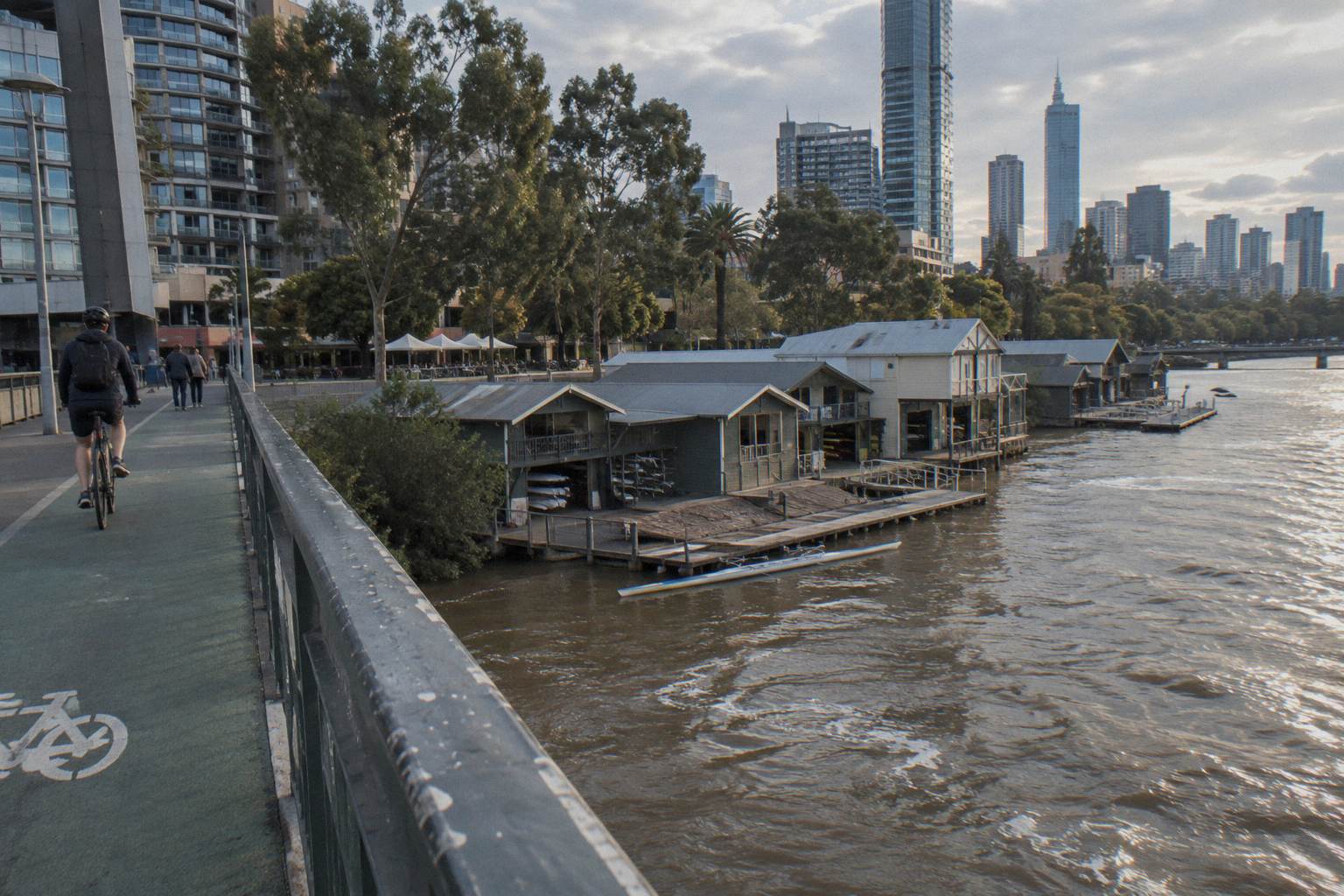
The loop touches the parts of Melbourne most visitors come to see. The Yarra River corridor anchors the eastern half, the port and its maritime landscape sit on the western side, and the inner north's parklands and creek lines carry you home. Drinking fountains appear about every 2 km along the route according to trail documentation, which matters more than it sounds on a warm February afternoon when the mean maximum sits at 25.9 °C. You will pass other commuters, joggers, dog walkers and families, because this is a working transport route as much as a visitor attraction.
For riders weighing this against other rides around the city, the riverside stretch is part of what makes the Yarra River bike ride such a reliable half-day outing, and the full loop features in our broader sightseeing by bike day plan.
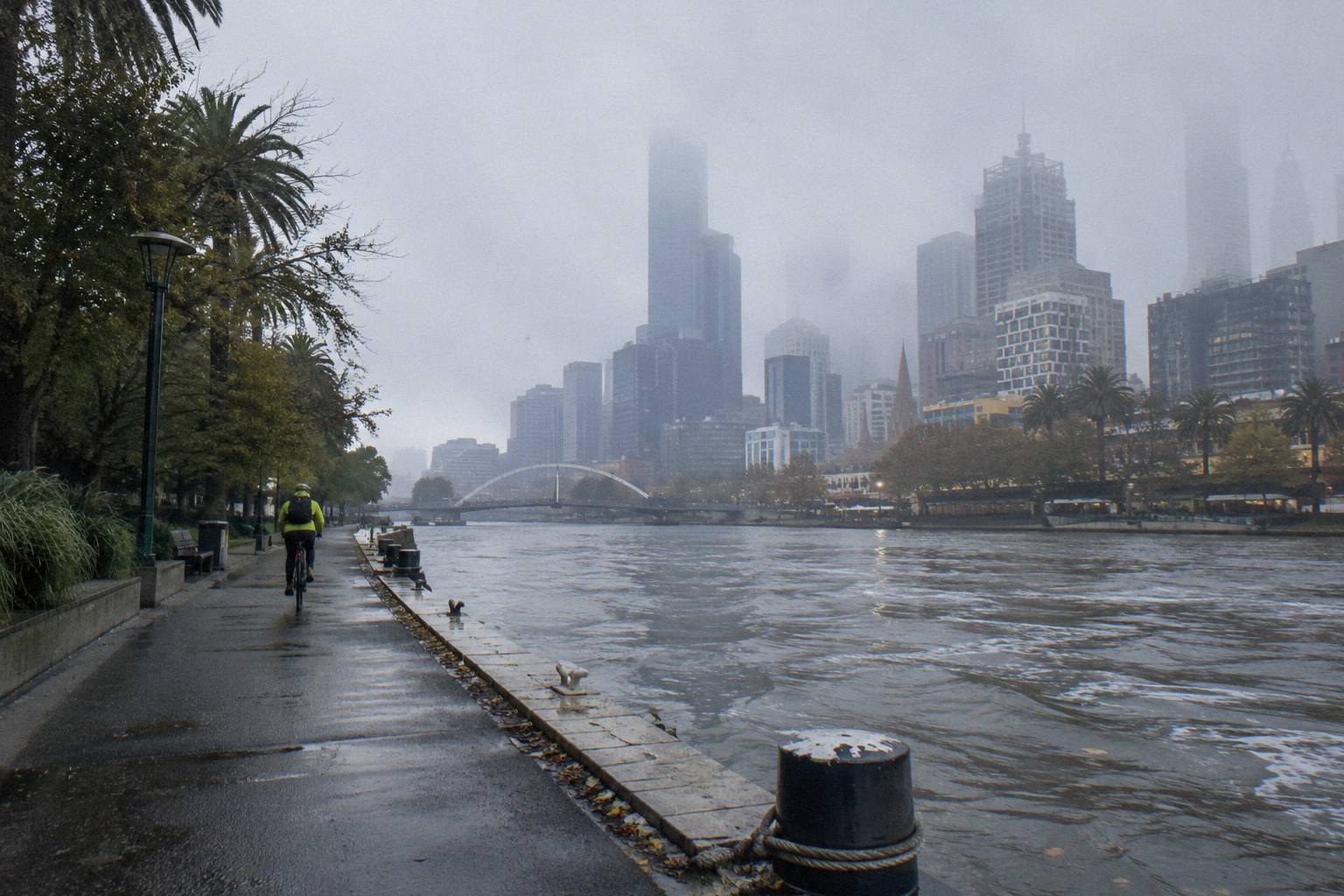
Should You Ride The Loop Alone Or Book A Guided City Ride?
Ride it alone if you want the full loop, your own pace and your own stops; you need only a bike, a helmet and basic path sense. Book a guided ride if you want the stories behind what you are passing, a route chosen for interest rather than completeness, or company on a first ride in a new city. Guided city rides run from A$129 per person, while the self-guided loop costs only your bike hire and time.
The trade-off is completeness versus depth. The loop exists to encircle the inner city, and a self-guided rider gets the satisfaction of the whole circuit, port to river to parkland. A guided ride deliberately does not attempt the full circuit: it picks the highlights, the laneways, the riverbank, the market lunch stop, and spends its three or four hours on places worth lingering. Riders who finish a guided tour often say the commentary was the part they could not have replicated alone.
There is a practical case for guided too. Melbourne's changeable weather, its tram tracks and its hook turns unsettled some first-time visitors, and a guide absorbs all of that. Our guide on whether a bike is the best way to see Melbourne goes deeper on that question. On the other side, confident riders who already know how a shared path works will find the loop perfectly manageable alone, and there is a full comparison in bike hire or a guided ride.
If a guided section of city riding appeals, these city riding tour formats are the three that sit closest to what the loop delivers: the Famous city ride, a private ride, and a bayside alternative for riders who want water on both sides.
The Classic Cycling Tour From Batman Park, run by Blue Tongue Bikes from its shop at 2 Rebecca Walk on the river's edge, is the closest thing to a guided version of the inner-city experience: four hours, a group of up to 10, and a route that touches the river, the Shrine and the Fitzroy lunch stop where you buy your own. It is rated 4.9 from 680+ reviews and costs from A$129 per person, with free cancellation up to 24 hours before on the booking page. You can check availability on the operator's live listing, or read the full Classic Cycling Tour From Batman Park page first.
What Do The Road And Path Rules Require On The Loop?
On shared paths, riders give way to pedestrians, keep left, and use a bell or their voice to overtake, and a helmet is mandatory for every rider including e-bike riders, with fines for non-compliance. Adults stay off footpaths unless supervising a child aged 12 or under or carrying a medical certificate. At night you need a white front light, a red rear light and a rear reflector, though most daytime loop riders will never need lights at all.
These rules come from Transport Victoria and they apply on every metre of the loop, because almost all of it is shared path rather than exclusive bike path. The give-way rule is the one that changes behaviour most: pedestrians have priority, and the accepted practice is an early bell ring or a friendly call of "passing on your right" well before you reach anyone. Riders also keep left, in both directions, exactly like a road.
Helmets are not negotiable. Victoria requires an approved-standard helmet for every bicycle rider, and the approved standards, including AS/NZS 2063 and EN 1078, are listed on the official bicycle helmet requirements page. The only exemptions are religious headdress or a medical certificate carried while riding. If you hire a bike, helmets are normally supplied; if you ride with a tour, the listing inclusions on most tours include one. Our longer Victoria bike helmet law guide covers the detail.
| Rule | What it means on the loop |
|---|---|
| Give way to pedestrians | Slow for walkers, ring the bell early, pass with space |
| Keep left | Ride on the left in both directions, like a road |
| Helmet mandatory | Approved standard required, e-bike riders included, fines apply |
| Footpath ban | Adults ride on the path or road, not the footpath, unless supervising a child 12 or under |
| Night lighting | White front light and red rear light visible from 200 m, plus a red rear reflector |
| Riding impaired | Unsafe and illegal; no bicycle-specific limit applies |
One more loop-relevant quirk: a green bicycle signal at a crossing means you may ride across, but a pedestrian-only signal means dismounting and walking. The loop crosses enough roads on its western and northern sides that you will meet both. Riders who want the full rule set can read the official bicycle road rules page.
How Hard Is The Ride, And Who Is It Suitable For?
The loop is rated easy: it is almost entirely flat off-road shared path, with no climbs and no technical sections, and it suits anyone who can ride a bike comfortably, including older riders and families with competent children. The challenge is distance and time rather than difficulty. If a half-day of steady pedalling with stops sounds fine, the loop is within reach; if it does not, a shorter guided ride is the better fit.
Because the trail borrows its corridor from the river and the rail lines, the gradient barely exists. Rail corridors were built flat, rivers were already flat, and the joins between sections are gentle. What riders should plan for instead is the accumulation: a full loop with sightseeing stops is a commitment measured in half a day, and Melbourne's changeable weather means a warm start can turn showery by lunch. The city averages about 650 mm of rain a year spread across every month, roughly 100 rain days, so packing a light layer is simply the local habit.
Older riders wondering about sensible daily distances can read our guide on a comfortable riding distance for older riders, and families weighing the loop against shorter options have a dedicated family bike rides with kids guide. The short version for both groups: the loop's flatness makes it unusually forgiving, but nothing forces you to complete it. Riding a river section and turning back is a completely normal Melbourne outing.
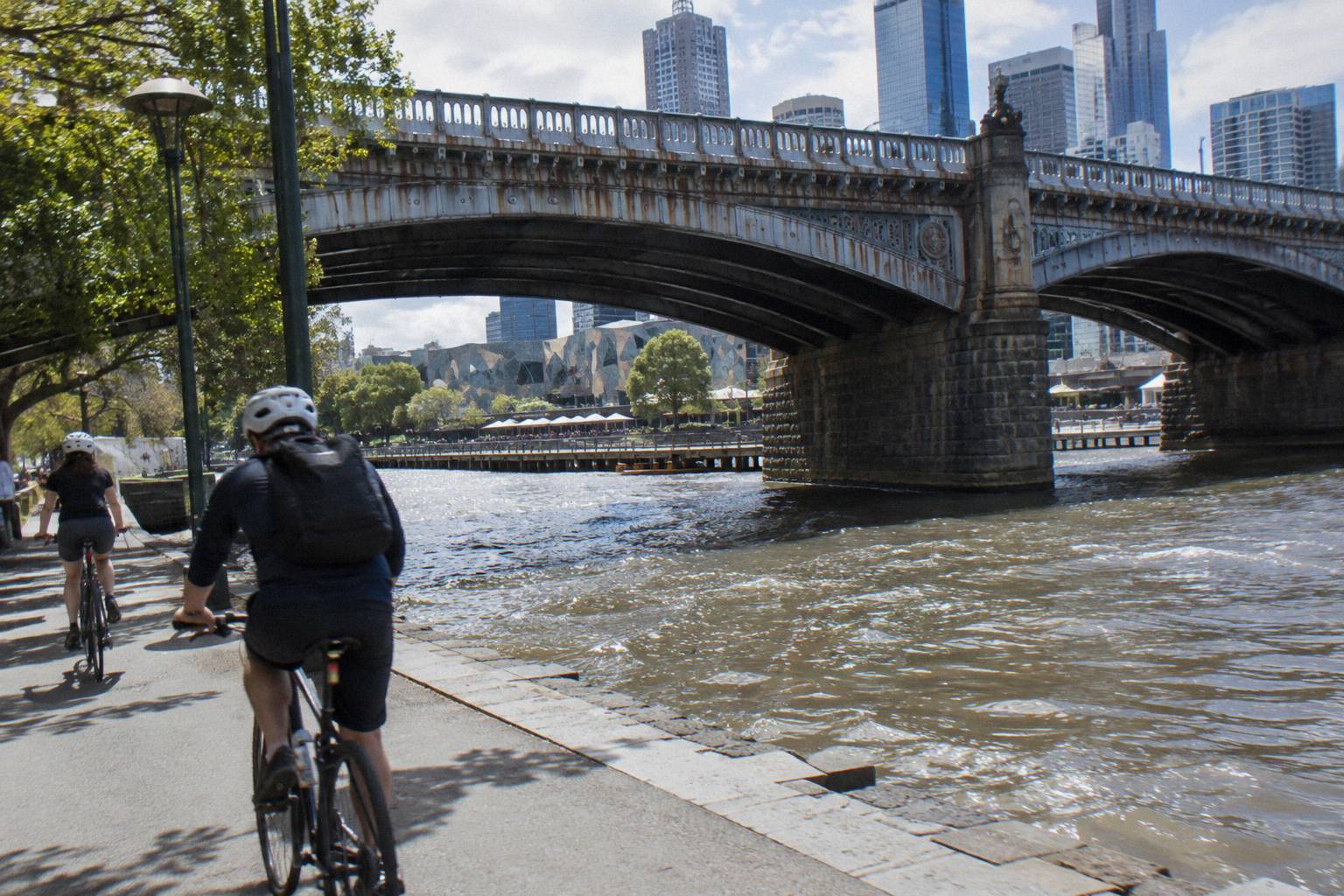
For riders who want the guided equivalent of an easy few hours rather than the whole loop, the e-bike format lowers the effort further still.
The Melbourne E-Bike Tour With Local Guide, also from Blue Tongue Bikes, runs about four hours including a lunch stop, covers roughly 16 km of city ground including the Yarra River stretch, and is rated 4.9 from 300+ reviews. Anyone under 18 rides with an adult. The pedal-assist bikes are the legal 250 W type that cuts off assistance at 25 km/h, which flattens the few rises the city has and leaves energy for the walking parts. Our wider piece on e-bike rides around Melbourne covers the format in depth.
Which Sections Do Guided Tours Actually Cover?
No tour rides the Capital City Trail as a named product, but guided city tours cover overlapping ground: the Yarra River corridor appears on the Melbourne E-Bike Tour route, the Classic tour starts on the riverbank at Batman Park, and the Famous tour's lap of city landmarks shares the trail's inner-city territory. Riders wanting the loop's riverside character with a guide should pick a route that names the Yarra.
This is the single most useful thing to understand when planning. The trail is a public asset, not a product, and tour operators build their routes around the stories they can tell: the laneway art, the market lunch, the MCG, the Shrine, the penguins at St Kilda. That means a guided ride gives you the riverbank and the landmarks, while the working port landscape on the loop's western side, genuinely interesting in its own industrial way, remains something you ride alone.
The riverside stretch deserves special mention because it is where the loop and the tours genuinely converge. Our best bike paths for a relaxed ride guide ranks it among the city's easiest riding, and it is no accident that two tour operators start their rides within sight of it. Riders who book a guided morning and then ride the port section alone in the afternoon get, in effect, the complete loop with commentary on the parts that benefit most from it.
| Guided ride | What it covers that the loop also passes | Duration | Format |
|---|---|---|---|
| Classic Cycling Tour From Batman Park | Riverbank start, Shrine, inner-city landmarks, Fitzroy lunch stop | 4 hours | Small group up to 10 |
| Famous Melbourne City Cycling Tour | City landmarks, Queen Victoria Market lunch stop | 4.5 hours | Small group, usually 8 to 10 or fewer |
| Melbourne E-Bike Tour With Local Guide | Yarra River stretch, MCG, Exhibition Building, Chinatown | 4 hours | E-bike, group up to 10 |
| St Kilda And Brighton Bayside Bike Tour | Bayside coastline south of the loop | 3 hours | Small group, starts at Brighton Beach |
What About Riding Out Beyond The Loop?
The loop is a contained inner-city circuit, but the same trail network continues outward: the riverside path extends upstream toward Yarra Bend and the outer suburbs, and regional rail trails reachable by train open up full-day and overnight riding. Park restrictions matter out here, with some parks barring e-bikes above 200 W and one riverside section at Yarra Bend temporarily closed for structural damage, so check before you promise yourself a specific outer route.
Two cautions from Parks Victoria are worth printing in full. Albert Park's paths bar power-assisted bicycles above 200 W, which matters because a legal 250 W pedal-assist e-bike exceeds that threshold, so an Albert Park lap is off the table on a standard e-bike, as noted on the official Albert Park page. And at Yarra Bend Park, the riverside trail linking from the Bushland Circuit Trail is temporarily closed for structural damage, with a detour in place, so a full riverside loop out that way is not currently on offer.
Beyond the city, the options widen considerably. The Yarra Valley rail trail by e-bike and the Mornington Peninsula e-bike day rides guides cover the two classic regional rides, and there is a longer discussion of cycling from Melbourne to the Yarra Valley for the ambitious. Public transport helps here: metro trains take bikes and factory-built e-bikes switched off, though trams and buses accept only folding bikes, a rule that catches plenty of visitors.
For riders who want the regional experience with logistics handled, the Yarra Valley rail trail by e-bike format is the one to know about.
The Yarra Valley Guided And E-Bike Rail Trail Cycling day, run by Cycling Vine Tours, runs six hours, takes a maximum of eight riders aged 18 and over, includes a meal, and costs from A$350 per person. It departs from Woori Yallock Station with free pickup from Lilydale railway station available, which removes the train-with-a-bike puzzle entirely. Free cancellation up to 24 hours before applies on the booking page.
When Is The Best Time Of Year To Ride?
Melbourne is rideable year round, with mean maximums running from 25.9 °C in January down to 13.5 °C in July, and rain spread fairly evenly across all months rather than concentrated in a wet season. The practical planning advice is layered clothing and a rain layer in any season, because conditions change fast, and morning starts in summer to avoid the peak heat. There is no month when the loop closes.
The Bureau of Meteorology averages for the city tell a steadier story than Melbourne's reputation suggests: rain arrives in modest, steady amounts every single month rather than in a burst, and the annual total of about 650 mm falls across roughly 100 rain days. In other words, any given day has roughly a one-in-three chance of measurable rain, summer or winter, which is why locals carry a light rain layer on every ride and why the Classic tour's rain poncho provision is not a gimmick.
Season choice is therefore about comfort rather than feasibility. Summer riders get long daylight and warm evenings but should start early; winter riders get quiet paths and green parklands in exchange for chilly fingers. Our best season for a bike ride guide works through the trade-offs month by month, and what to wear on a bike ride handles the layering question in detail.
| Season | Conditions on the loop | Planning note |
|---|---|---|
| Summer (Dec-Feb) | Mean maximum around 25.9 °C, occasional hot extremes | Start morning, carry water; fountains about every 2 km |
| Autumn (Mar-May) | Mild, mean maximums easing through the low twenties | Widely considered the most comfortable riding window |
| Winter (Jun-Aug) | Mean maximum around 13.5 °C, coldest mornings | Layers and gloves; quietest paths of the year |
| Spring (Sep-Nov) | Warming, mean maximums climbing back through the teens | Changeable, with some of the year's wettest months |
What Does A Day Combining Both Options Look Like?
A combined day pairs a guided morning through the city highlights and along the riverbank with a self-guided afternoon on the port and northern loop sections no tour covers, splitting the two halves with a market lunch stop; you ride the tour's supplied bike where hire terms allow or arrange separate hire otherwise, and anyone preferring a single commitment can ride the full loop alone or save it for another visit.
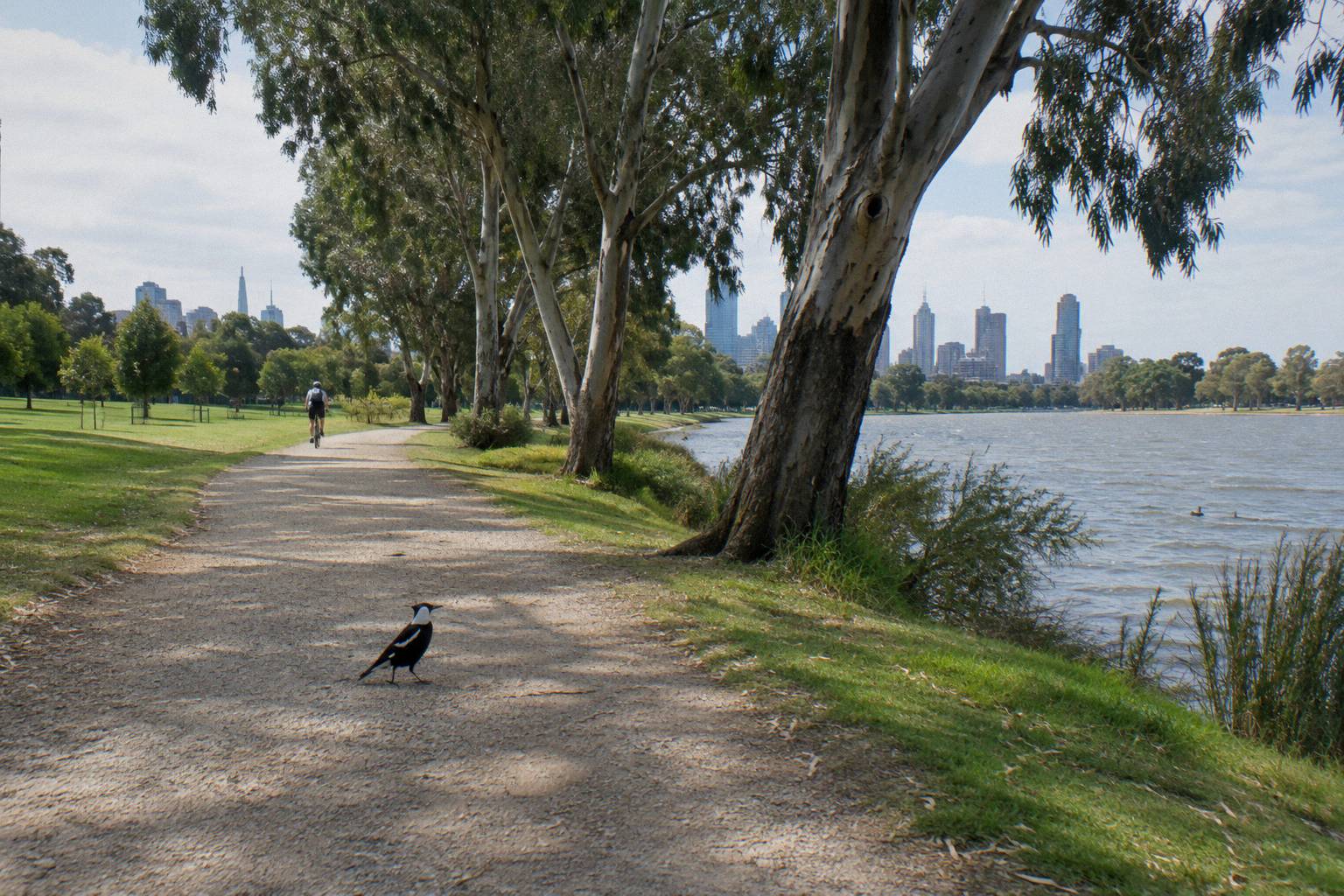
The guided-then-solo pattern works because of geography. The tour routes concentrate on the eastern and central city, and the loop's distinctive western and northern sections, the port, the creek lines and the inner-north parklands, are exactly the parts a confident rider can manage alone after a morning of orientation. A rider who has spent four hours with a local guide has also absorbed the path etiquette, the give-way habits and the tram-track awareness that make the solo afternoon straightforward.
For riders building the whole day around the most-reviewed guided option, the Famous tour is the anchor.
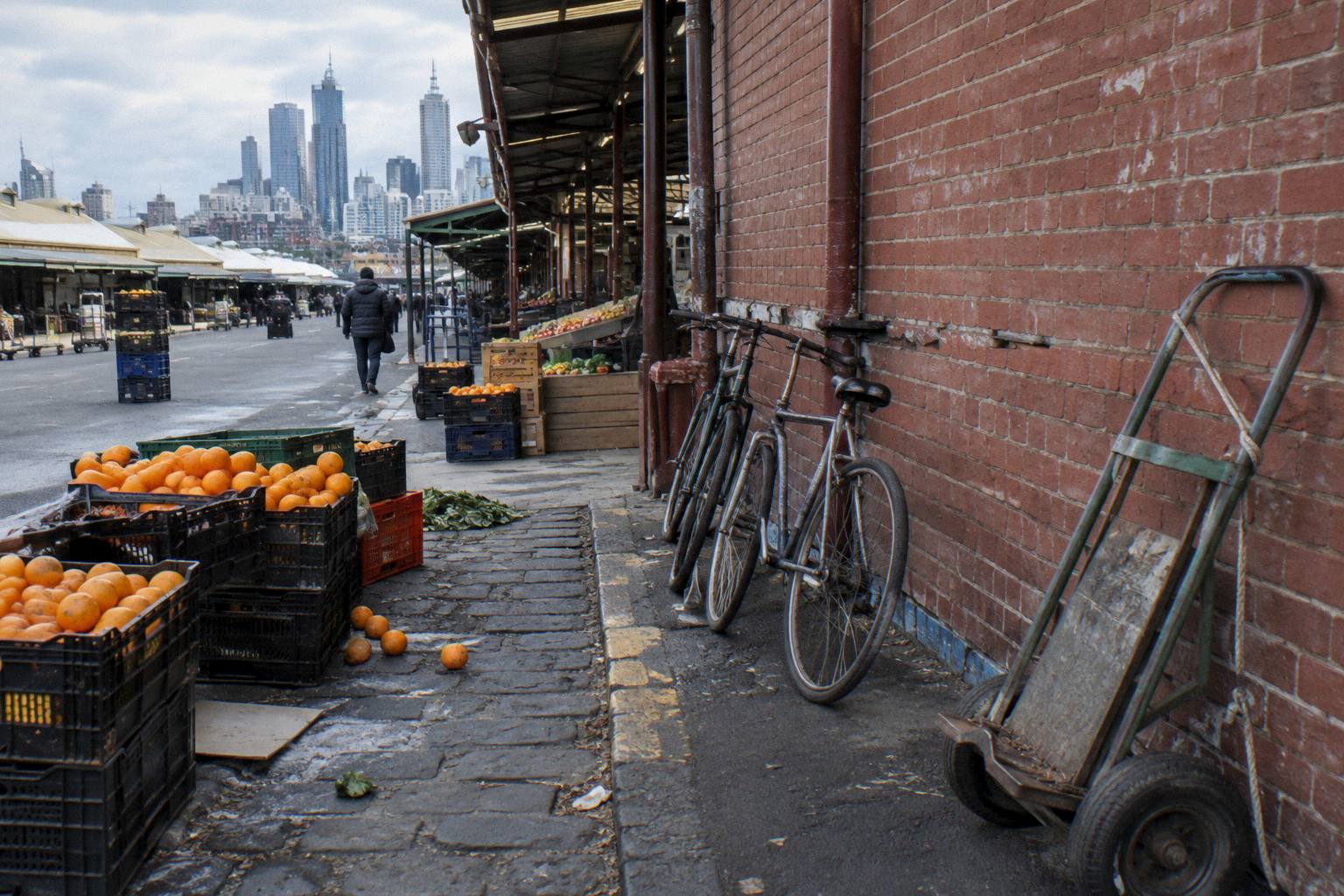
The Famous Melbourne City Cycling Tour With Local Guide, run by Melbourne By Bike, an operator serving visitors since 2002, runs 4.5 hours in a group usually of 8 to 10 or fewer, with a minimum of two riders on the public tour. It is rated 4.9 from 900+ reviews and costs from A$140 per person, with an e-bike upgrade of A$40 per person. Bicycle, helmet and bottled water are included; lunch at the Queen Victoria Market stop is bought by you, and the market stop moves elsewhere on Mondays and Wednesdays when the market is closed. Meeting details come in your booking confirmation. Free cancellation up to 24 hours before applies on the booking page.
A private format suits riders who want the same territory without the group. The Private Cycling Tour From Federation Square, run by Guydeez, runs three hours with pickup and the meeting point at Federation Square, from A$255 per person, and there is more on formats in our private guided bike rides guide. Melbourne Bike Tours covers every one of these options in detail, including the bayside rides that pair well with a second day in the city.
Whether you ride the full loop under your own steam or let a guide carry you through the highlights, the same territory rewards both approaches: flat water and parkland, a city that has thought hard about cycling, and a trail stitched together from the best of what was already there. These three rides are the ones that sit closest to the loop's home ground.
Mistakes That Trip Up Loop Riders
The classic mistakes are expecting a purpose-built, uniform path, waiting for a guided version of the loop that does not exist, and treating an "about" distance as a fixed figure you can race around in an hour. The trail is stitched from borrowed sections, so surfaces and width change, and the ride is a genuine half-day commitment with its own rules and weather to respect.
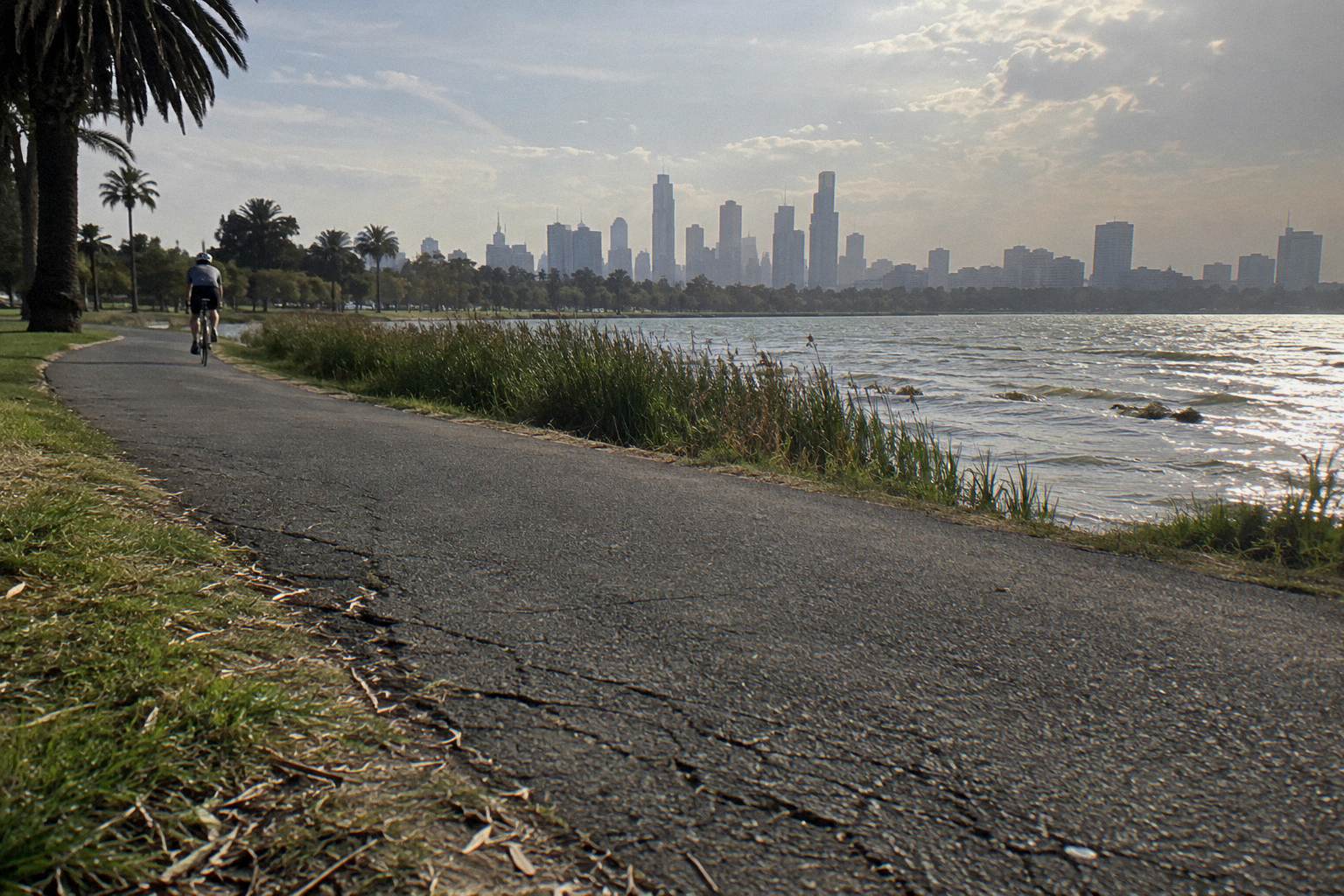
Expecting one uniform surface: Because the loop is largely built from sections of other trails, wide riverside concrete gives way to narrower parkland track and short road-linked joins. Ride it as a varied route, not a boulevard.
Searching for a guided loop: No operator runs the Capital City Trail as a named guided ride. If you want a guide, book a curated city tour that covers the same waterfront and parkland territory.
Treating the distance as fixed: Reported figures for the loop, and for the Main Yarra Trail beyond it, vary by definition. Plan by time and daylight rather than a single precise number.
Ignoring shared-path rules: Give way to pedestrians, keep left, and use your bell or voice to overtake. Where a pedestrian-only light appears, dismount and walk across.
Underestimating the weather: Melbourne is changeable, the cloudiest Australian capital, with rain spread across every month. Pack a layer and a jacket even on a mild morning.
Common Questions About The Capital City Trail
What Exactly Is The Capital City Trail?
It is a signposted, easy shared-path loop around Melbourne's inner suburbs, built largely by linking sections of existing trails along the Yarra River, the port side and the inner-north parklands. It carries no car traffic and suits riders of ordinary fitness. No official length figure can be verified, so plan it as a half-day outing rather than a quick circuit.
Can You Do The Capital City Trail As A Guided Tour?
No tour rides the Capital City Trail as a named product. Guided city rides cover overlapping ground instead: the riverbank, the landmarks and the market stops. If a guided experience matters to you, choose a city tour whose route includes the Yarra River, and ride the loop's quieter port and northern sections on your own.
Is The Capital City Trail Hard To Ride?
No. It is rated easy, almost entirely flat, and entirely off-road shared path. The real commitment is time rather than effort, since a full loop with stops occupies half a day. Anyone comfortable on a bike can ride it, and turning back partway is a normal and pleasant option.
Do You Have To Wear A Helmet On The Trail?
Yes. Helmets are mandatory for every bicycle rider in Victoria, e-bike riders included, and you can be fined for riding without one that carries an approved standard label. Exemptions exist only for religious headdress or a medical certificate carried while riding. Hire bikes and guided tours normally supply a helmet.
Can You Take A Hire Bike On A Tram To Reach The Trail?
No. Trams and buses in Victoria accept only folding bikes and folding e-bikes, within a maximum folded size of 82 x 69 x 39 cm. Full-size bikes and e-bikes travel only on metro trains, with e-bikes switched off and not ridden on platforms. Plan to ride to the trail or take a train.
What Is The Best Time Of Year To Ride The Loop?
Any season works. Mean maximums run from 25.9 °C in January to 13.5 °C in July, and rain arrives fairly evenly, roughly 100 rain days and about 650 mm across the year. Start early in summer, layer up in winter, and carry a light rain layer in every season, which is simply the Melbourne habit.