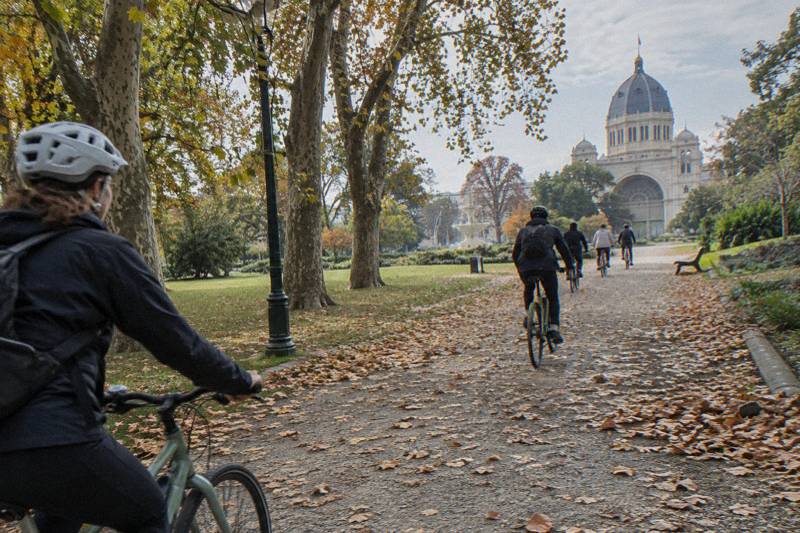
Lime Bikes And Bike Share In Melbourne: Good For Sightseeing?
Melbourne's docked bike share scheme closed years ago, an app-based e-bike trial is described by the City of Melbourne but its current status is unverified, and in the meantime the rules that govern any ride here, from helmets to park restrictions, shape the shared-bike-versus-guided-tour decision more than the app does.
Short answer
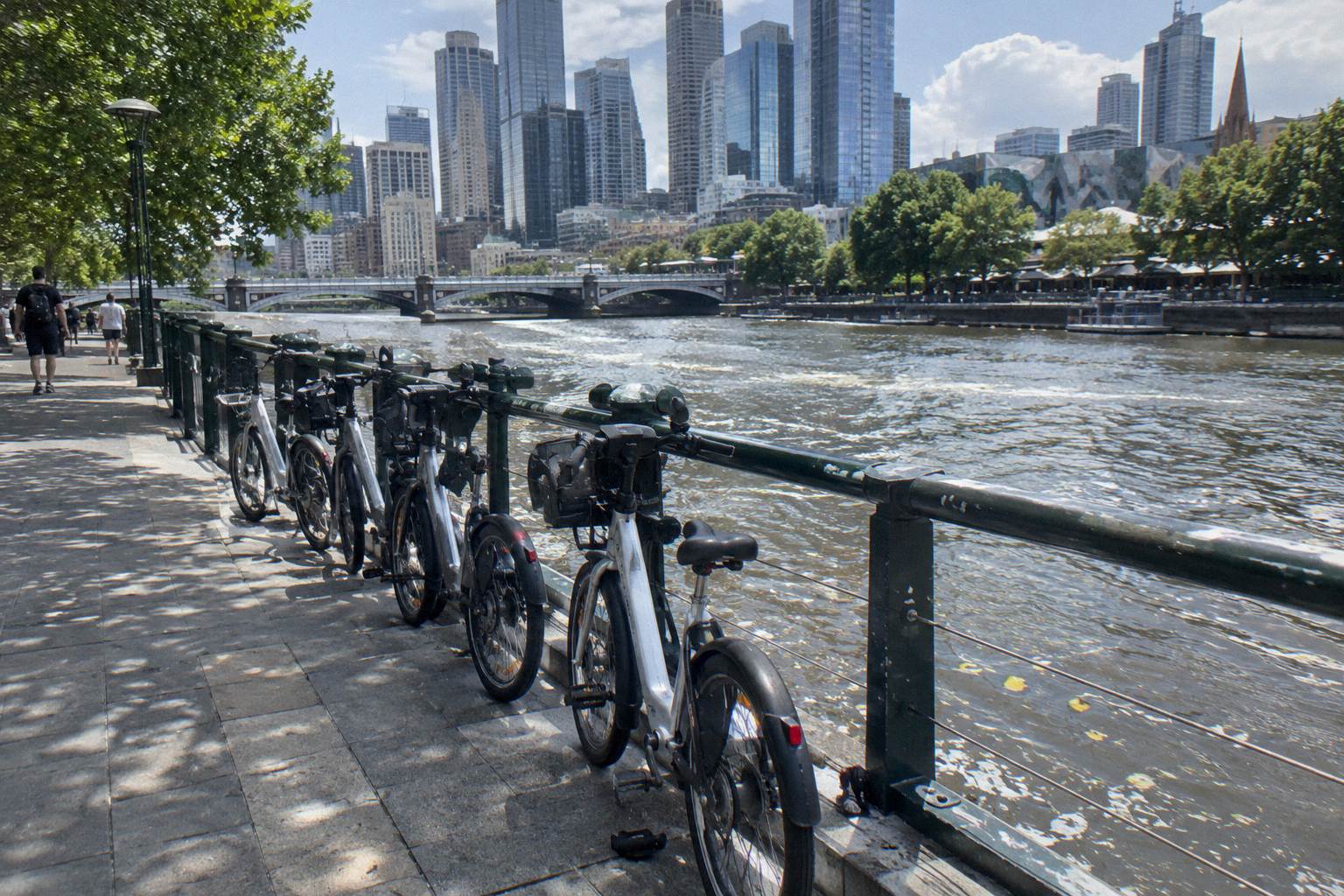
Melbourne Bike Share closed on 30 November 2019. A City of Melbourne page describes a trial arrangement with Lime e-bikes, but the page is undated and current status is unverified. Helmets are mandatory for every rider, trams refuse standard bikes, and guided tours from A$124 per person include the bike, helmet and route.
Melbourne's experiment with public bike share is a story with a firm ending, a cloudy middle, and a lesson in it for anyone planning sightseeing by bike in the city. The docked scheme that once put hundreds of bikes on Melbourne streets shut down on 30 November 2019. A City of Melbourne page describes a trial arrangement with Lime e-bikes, but that page carries no date, so check the City of Melbourne's own page or the app before planning around a shared e-bike. What can be stated with certainty is the framework around any ride you take here: helmets are compulsory for everyone, trams refuse standard bicycles, several parks bar power-assisted bikes outright, and the road rules apply to a borrowed app bike exactly as they apply to a tour bike.
That framework is where the real decision lives. A shared bike, where one is available, hands you a machine and leaves the rest to you. A guided tour hands you a machine plus a helmet, a route, a leader and a set of stops chosen by someone who rides these streets for a living. The history, the rules, the park restrictions and the practical comparison below let you decide with facts rather than with whatever an app map happens to show.
What Happened To Melbourne's Bike Share Scheme?
Melbourne Bike Share launched in 2010 with 600 bikes at 51 stations and closed on 30 November 2019, roughly nine years after it began. The mandatory helmet law was widely cited when the scheme ended. No docked public bike share scheme has replaced it, so the phrase "city bike" has no working referent in Melbourne today, and any travel advice telling you to grab one is out of date.
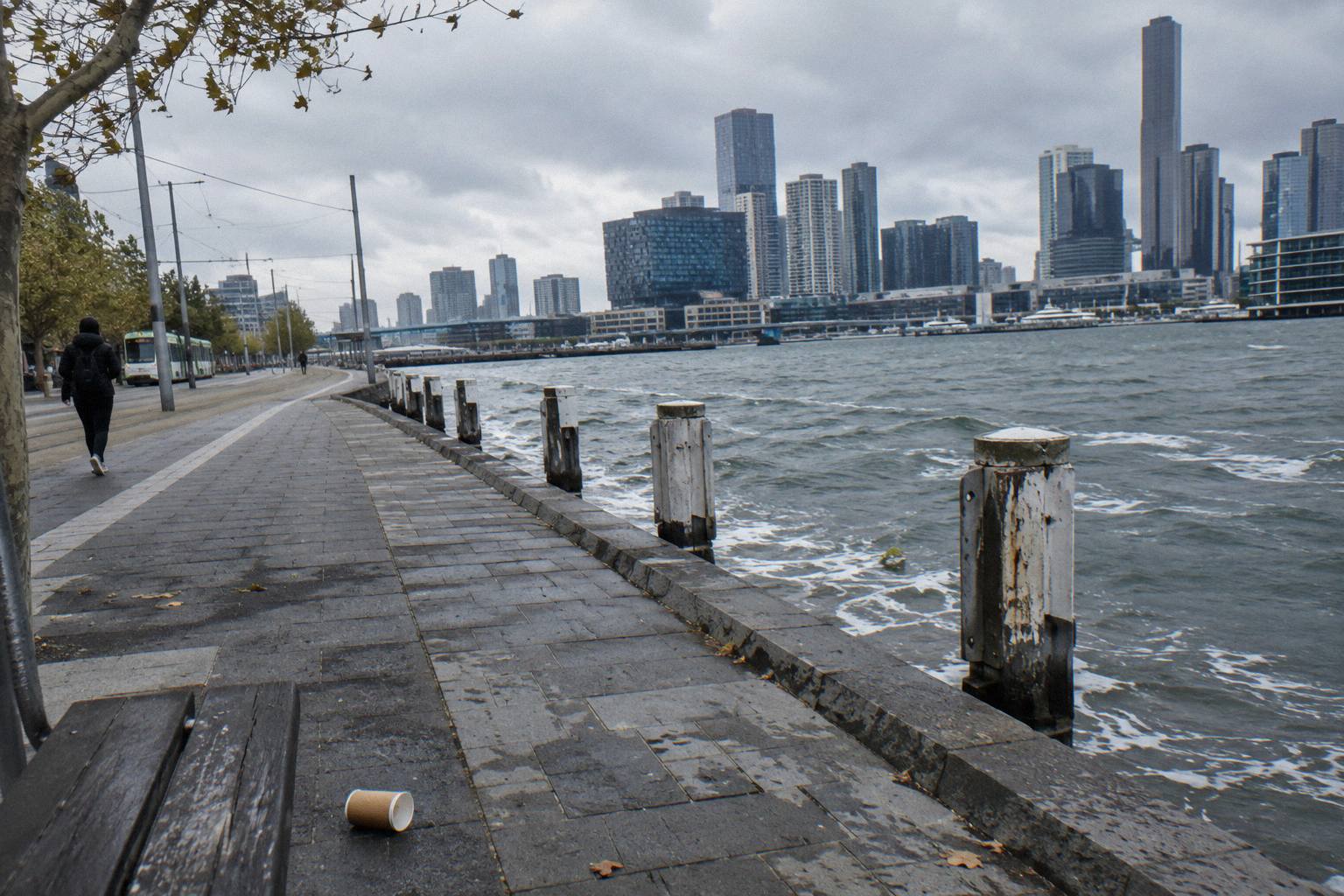
The scheme was one of the later arrivals among Australian bike share systems, and it ran into the problem everyone predicted: a state that fines riders for going helmetless is a hard place to run a spontaneous hire product. Riders faced a choice between carrying a helmet all day on the chance they might want a bike, or risking a fine for a ten minute ride. Usage stayed low for years, and the operator and the state government pulled the plug at the end of November 2019.
For a visitor, the practical consequence is simple. Advice columns, older guidebooks and plenty of blog posts still mention "Melbourne's city bikes" as though the docks are staffed and waiting. They are not. The stations were removed. If a page you are reading tells you to pick up a share bike at Southern Cross Station, that page was written before December 2019 and its other claims deserve the same scepticism.
What replaced docked share in most cities worldwide was dockless: bikes and e-bikes dropped on footpaths and unlocked with a phone. Melbourne's relationship with that model is where the story gets murky, and it is worth being precise about what is and is not known before you build a sightseeing plan around it.
Is A Lime E-Bike Available In Melbourne Right Now?
A City of Melbourne page describes a trial arrangement with Lime e-bikes, but the page is undated, so check the City of Melbourne's own page or the app itself before planning around the service. No claim is made here that shared e-bikes are available, and none that they have ended. Shared e-scooter status is unverified on the same basis. Check the City of Melbourne's own page or the app itself before planning around either.
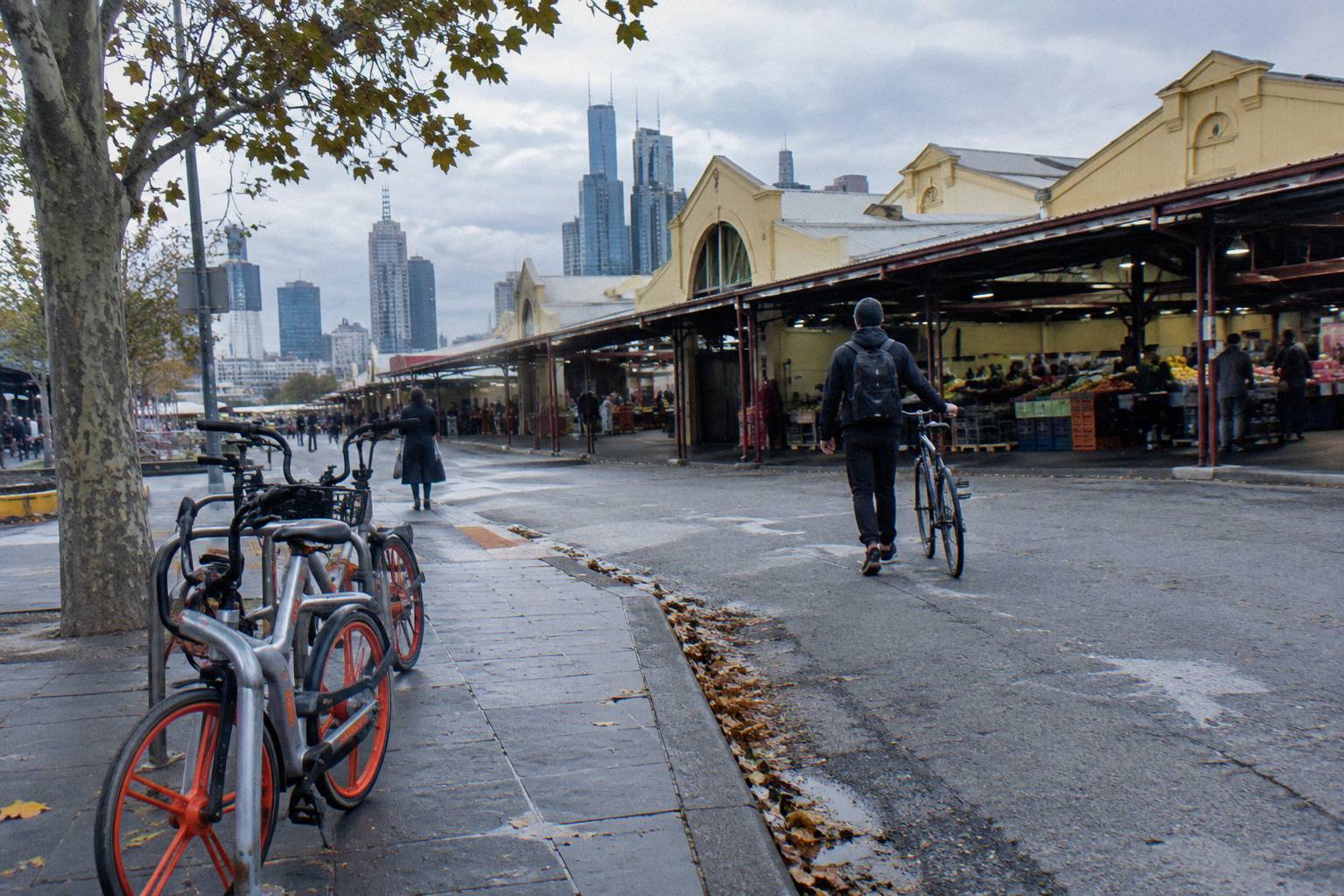
Beyond that council page, no dated official confirmation of the trial's current status exists, and the internet is full of confident claims in both directions. Some posts declare that Lime e-bikes blanket the CBD. Others insist dockless operators were chased out years ago. The verifiable middle ground is that the council has engaged with Lime on a trial basis, described on its own site, with no dated official confirmation of the trial's current status. The question stays open until that confirmation arrives.
If you arrive and find e-bikes in the app, three things still apply before you unlock one. First, the helmet law covers every rider in Victoria, shared bikes included, and the fine is real, so a bike without a helmet in the basket is a bike you cannot legally ride away. Second, a legal e-bike in Victoria has a 250 W motor that assists only while you pedal and cuts out at 25 km/h; the Transport Victoria e-bike rules page sets this out, and it applies regardless of who owns the machine. Third, a shared bike does not exempt you from park restrictions, several of which bar power-assisted bicycles completely.
The alternative to all this uncertainty is a bike that is definitely there at a definite time, with a helmet beside it. That is the guided tour model, and it is the comparison worth setting out properly side by side rather than in passing.
Shared Bike Or Guided Ride: Which Suits Sightseeing?
A guided tour supplies the bike, a helmet, a chosen route, planned stops and a leader who handles the road, from A$124 per person on the tours listed here. A shared bike, where available, supplies only the machine: you carry the helmet question, the route planning and the rules yourself. For a first visit on a tight schedule, the guided format removes the failure points that most often wreck a ride.
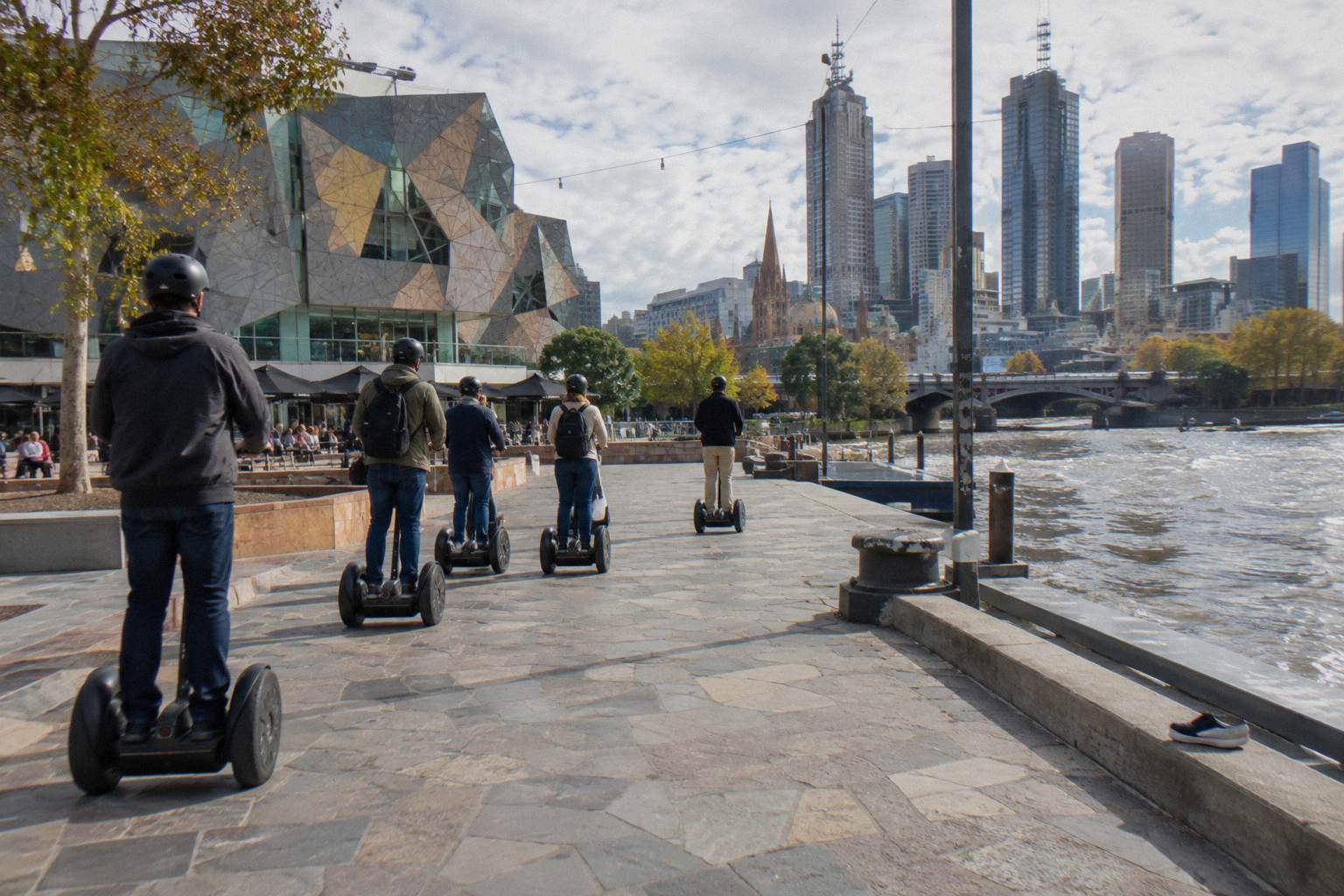
Think through what actually goes wrong with an unguided ride in an unfamiliar city. The machine may not be where the app says. The helmet may be missing, which in Victoria is not a nuisance but a legal stop. The route you pick may run into a park where e-bikes are barred, a stretch where a pedestrian-only signal means dismounting, or a tram corridor you did not expect. None of these is catastrophic, but each one costs time on a holiday, and together they explain why the guided format has held up in Melbourne while share schemes have come and gone.
The comparison is best seen as a table of who carries each burden.
| What the ride needs | Shared bike (where available) | Guided tour |
|---|---|---|
| Bike and charged battery | You find and unlock it | Included, waiting at the start point |
| Helmet | You source one; mandatory by law | Supplied on most tours per listing inclusions |
| Route through the city | You plan it before you ride | Set by the operator, tested over years |
| Stops and sights | You research each one | Chosen and explained by the guide |
| Road rules and tricky crossings | Your responsibility throughout | The guide leads the group; ask the operator how tracks are handled |
| Weather change | Your problem mid-ride | Tour runs or you cancel free up to 24 hours before |
| Cost certainty | Metered by the app, often unclear upfront | A fixed from-price per person |
The Classic Cycling Tour From Batman Park makes the guided case concretely: Blue Tongue Bikes runs it from its shop at 2 Rebecca Walk in Batman Park, from A$129 per person, rated 4.9 from 680+ reviews, over 4 hours. You can read the full Classic Cycling Tour details or Check availability. The point is not that the tour is cheaper or dearer than an app bike, since app pricing varies and cannot be compared here without guessing. The point is that the fixed price buys the removal of every row in that table's middle column.
There is a broader question underneath this one, about whether two wheels are the right way to see this city at all, and the site's own take on whether a bike is the best way to see Melbourne covers it in detail. The short version: the city is flat, its trail network rings the CBD, and a bike covers ground a walker cannot while staying at street level.
If you are still weighing the two formats rather than two specific products, the site's comparison of bike hire versus a guided ride works through the same decision for independent hire shops as well as app bikes, and it reaches the same fork: who carries the helmet, the route and the rules.
What Rules Apply To Every Rider In Victoria?
Helmets are mandatory for every rider, e-bike riders included, and the helmet must carry an approved-standard label; only religious headdress or a carried medical certificate exempts anyone, and fines apply. Riders use the road rather than the footpath unless aged 12 or under or supervising someone who is. At night, a white front light and red rear light visible from 200 m are required, plus a red rear reflector.
The helmet rule is the one that reshapes every other part of the decision. It is why the docked share scheme struggled, it is the first thing to check before unlocking any app bike, and it is the reason tour listings that include a helmet are not offering a perk but a necessity. The official helmet page lists the accepted standards (AS/NZS 2063:2008 or :2020, EN 1078, US CPSC 1203, ASTM F1447-18 and Snell B-95), which matters if you bring your own lid rather than use a supplied one.
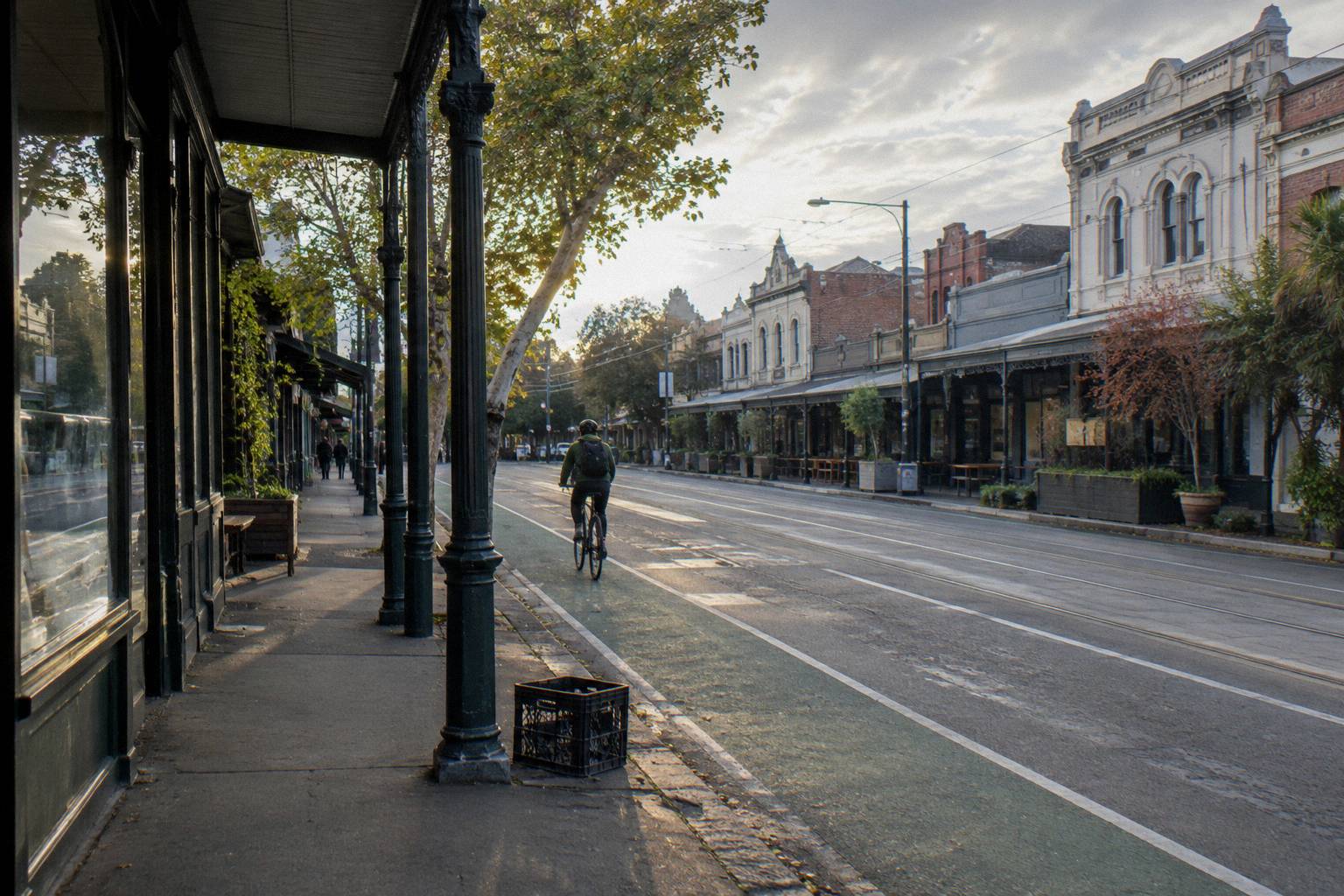
Beyond helmets, the road rules that most affect a sightseeing rider are a compact set. Riders must give way to pedestrians on shared paths, keep left, and use a bell or their voice to overtake. Drivers must leave 1 m when passing on roads up to 60 km/h and 1.5 m above that, and two riders may travel abreast no more than 1.5 m apart. At crossings, a green bicycle signal means you may ride across, while a pedestrian-only signal means dismounting and walking. Riding impaired is unsafe and illegal; Victoria sets no blood-alcohol limit specific to bicycles, it is simply not permitted.
Plenty of Melbourne cycling advice centres on tram tracks, but there is no official guidance on how a group should handle them, so the question to ask a tour operator is simply how their route treats the tram corridors, not what technique to practise beforehand. What can be said is structural: on a guided city highlights ride, the guide leads the group through the city's traffic and the operator sets the approach, so the question to ask a tour operator is simply how their route treats the tram corridors, not what technique to practise beforehand.
Where Are E-Bikes And Shared Bikes Barred?
Albert Park's paths bar power-assisted bicycles above 200 W, Yarra Bend Park lists motorised bicycles as barred on management-vehicle-only tracks and shared-use trails, and St Kilda Pier bans e-bikes and scooters on its management-vehicle-only paths. A shared e-bike rider who plans a lap of Albert Park Lake or a pier ride is planning on ground where the machine is not permitted.
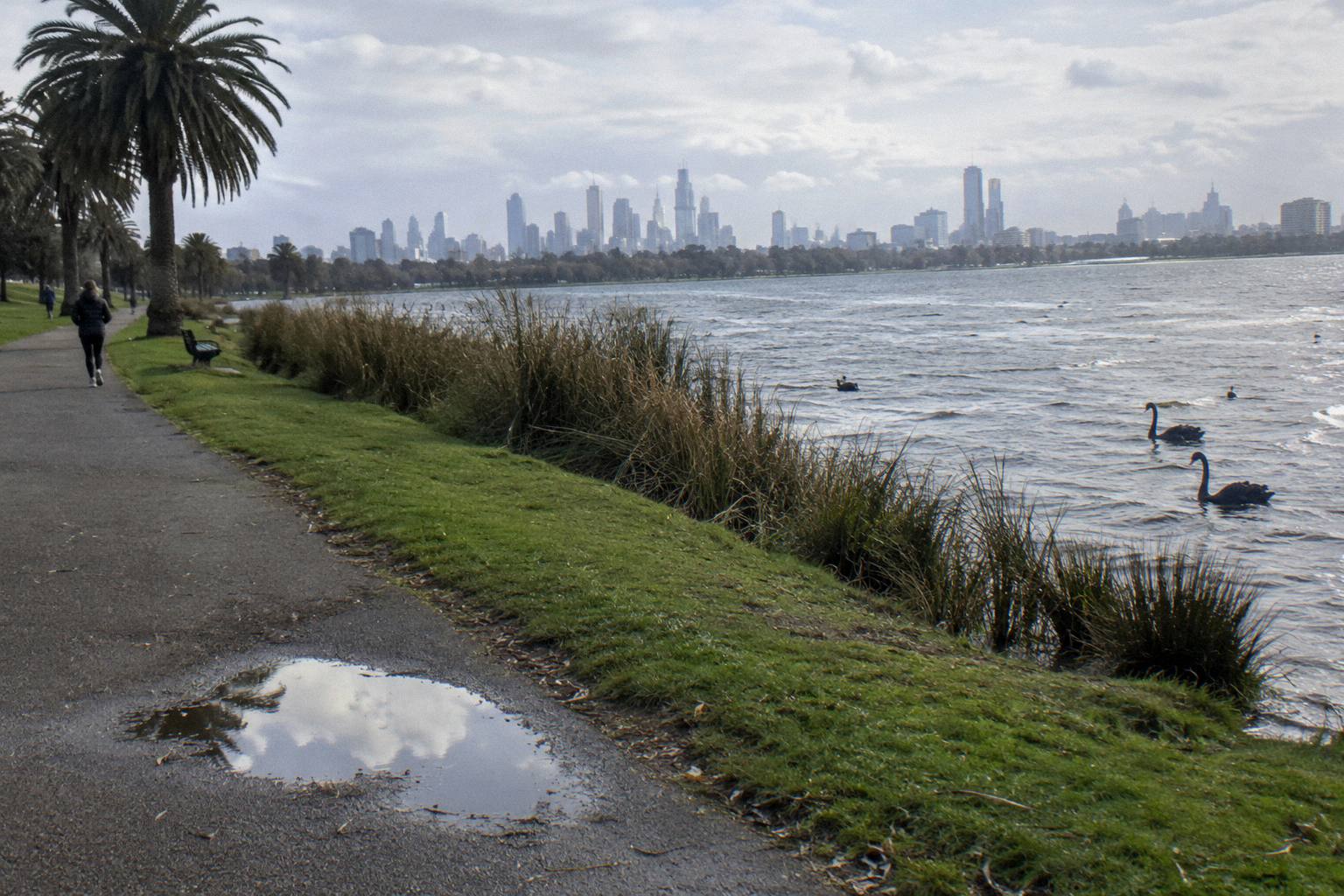
These restrictions come from Parks Victoria and they bite precisely where visitors most want to ride. Albert Park Lake sits about 3 km from the CBD with a 5 km circuit track, an obvious target for an e-bike outing, yet its own park page states that power-assisted bicycles and scooters above 200 W are not allowed on the paths. A standard 250 W pedal-assist e-bike, the kind most tours and any legal share fleet use, is above that threshold. No one can promise you an Albert Park lap on a 250 W e-bike, because the park's rules do not allow it; check with the operator before you book.
St Kilda Pier is the other trap, because the pier is exactly the kind of landmark an unguided ride drifts toward. Motorised vehicles, including e-bikes and scooters, are barred on its management-vehicle-only paths. The pier's real draw is at its far end regardless: a 150 m penguin viewing boardwalk opened in October 2025, with two free ticketed sessions nightly, 150 people per session, booked through Phillip Island Nature Parks. Viewing is not guaranteed, the sessions shift with last light through the year, and the arrangement has nothing to do with any bike operator, so a bayside ride and a penguin session are two separate plans that happen to share a postcode.
Yarra Bend Park rounds out the list, with two separate cautions. Motorised bicycles are barred on its management-vehicle-only tracks and shared-use trails, and the riverside trail linking from the Bushland Circuit Trail is temporarily closed for structural damage, with a detour in place. A full riverside loop there is not something to promise yourself today. The general principle across all three parks is the same: the restriction attaches to the machine, not to who owns it, so a shared e-bike enjoys no exemption.
| Place | Restriction on power-assisted bikes | What it means for a rider |
|---|---|---|
| Albert Park paths | Barred above 200 W | A standard 250 W e-bike cannot ride the lake circuit |
| Yarra Bend Park | Barred on management-vehicle-only tracks and shared-use trails | Riverside trail also temporarily closed; detour exists |
| St Kilda Pier | No motorised vehicles on management-vehicle-only paths | Ride to the pier area, walk the pier itself |
| Footpaths state-wide | Riding barred unless 12 or under, supervising, or with a medical certificate | Tours use roads and shared paths, never footpaths |
For a tour, these restrictions are already priced in: operators plan routes on ground their machines may legally use. For an app bike, they are invisible until a ranger or a sign says otherwise, which is usually at the moment the ride was supposed to be enjoyable.
Can You Take A Bike On Trams And Trains?
Standard bikes cannot board trams or buses at all; only folding bikes, folding e-bikes and folding e-scooters up to 82 x 69 x 39 cm with wheel rims up to 51 cm may. Metro trains take bikes and factory-built e-bikes switched off and not ridden or charged, and converted e-bikes are banned from all trains and ticketed areas. V/Line carries bikes free, with the conductor deciding space.
This cluster of rules quietly kills the classic share-bike plan of riding one way and riding public transport back. In most share-bike cities you can drop the bike anywhere and hop on a tram. In Melbourne you cannot take a non-folding bike on a tram under any circumstances, so an unguided ride is a round trip on the bike or a walk home. Riding to a tram stop and boarding with a standard bicycle is simply not an option, and no itinerary should assume it.
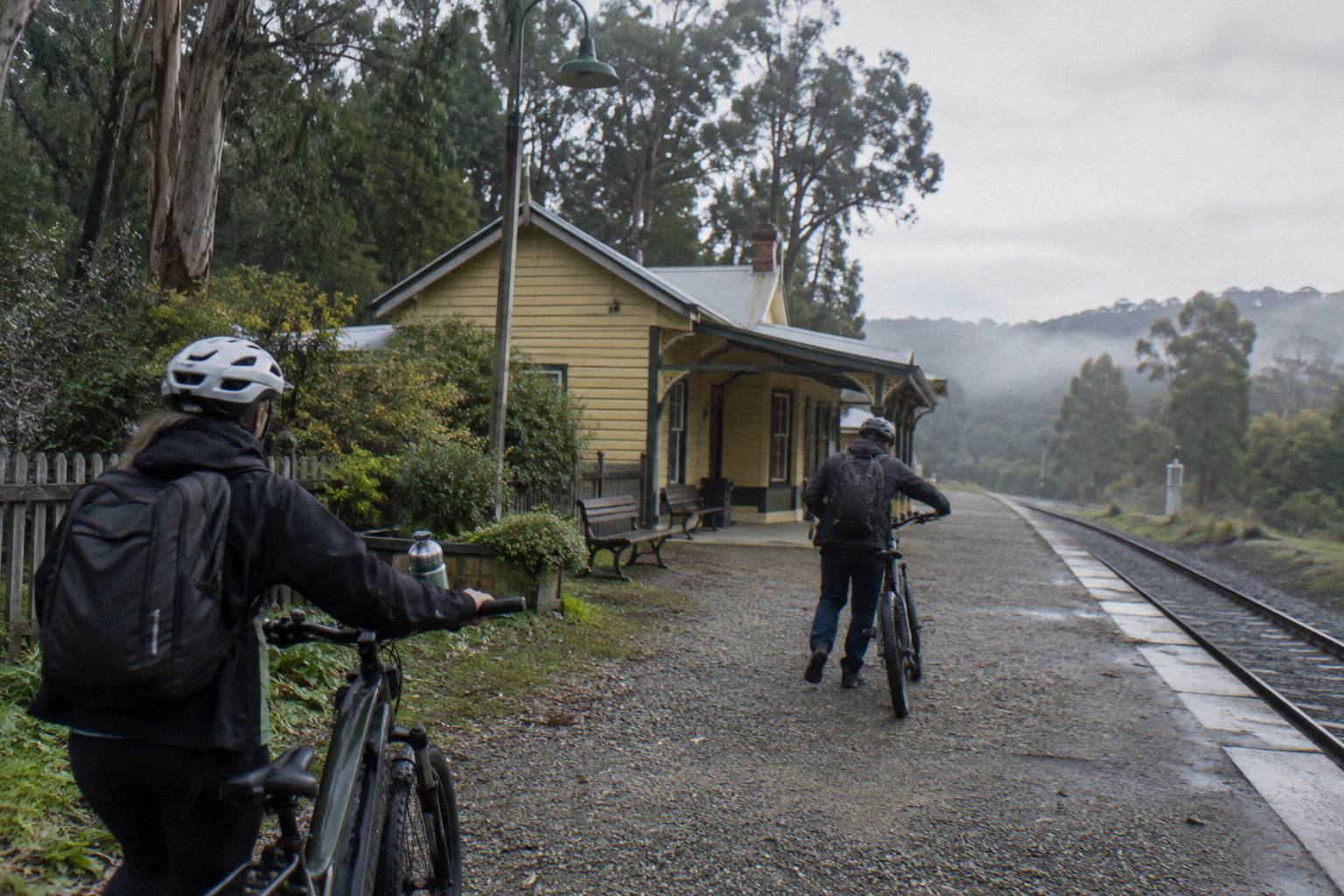
Trains are friendlier but conditional. Metro trains accept bicycles and factory-built e-bikes, with the e-bike switched off, walked on platforms and never charged aboard. Converted e-bikes, machines built up from ordinary frames with add-on motors, are banned from the entire rail system including ticketed areas. V/Line regional services take bikes free of charge and the conductor allocates the space, which is worth knowing for the regional rides out of the city rather than for anything inside the CBD.
For guided tours, all of this is background rather than homework. City tours start and finish at fixed points, from Federation Square or Batman Park or a station in the bayside suburbs, and the operator's logistics assume nobody needs to board a tram with a bike afterward. The regional tours go further: the Yarra Valley Guided And E-Bike Rail Trail Cycling trip departs Woori Yallock Station, or picks riders up free at Lilydale railway station, a combination that only works because the operator has already solved the train question for you.
The Famous Melbourne City Cycling Tour With Local Guide from Melbourne By Bike, runs 4.5 hours with a lunch stop at Queen Victoria Market, from A$140 per person, rated 4.9 from 900+ reviews. An e-bike upgrade is available at A$40 per person on that tour. Like all of Melbourne's guided rides, it carries free cancellation up to 24 hours before on its booking page, which is the kind of certainty no app ride offers.
What Does A Guided Tour Actually Include?
Every guided ride includes the guide, the bike and a helmet, plus a set route with planned stops, and every one carries free cancellation up to 24 hours before on its booking page. What varies is format: group size, duration from 2.5 to 6 hours, pedal or pedal-assist, and extras such as pickups or meals on particular tours. Prices run from A$120 to A$500 per person.
The tours span a wide band of formats, and the spread is easier to read as a table than as prose.
| Tour | Operator | Format | Duration | From price |
|---|---|---|---|---|
| Classic Cycling Tour From Batman Park | Blue Tongue Bikes | Small group, pedal bike | 4 hours | A$129 per person |
| Famous Melbourne City Cycling Tour With Local Guide | Melbourne By Bike | Small group, pedal bike | 4.5 hours | A$140 per person |
| St Kilda And Brighton Bayside Bike Tour | Cycling Vine Tours | Bayside group ride | 3 hours | A$124 per person |
| Melbourne E-Bike Tour With Local Guide | Blue Tongue Bikes | Small group, pedal-assist | 4 hours | A$139 per person |
| Mornington Peninsula Small-Group Bike Tour | Bayplay Adventure Tours | Regional small group | 2.5 hours | A$120 per person |
| Yarra Valley Guided And E-Bike Rail Trail Cycling | Cycling Vine Tours | Regional guided standard-bike ride, meal included | 6 hours | A$350 per person |
| Private Cycling Tour From Federation Square | Guydeez | Private, pickup included | 3 hours | A$255 per person |
| Private Melbourne E-Bike Tour | Blue Tongue Bikes | Private e-bike, ages 12 up | 2 to 4 hours | A$500 per person |
Read that against the shared-bike question and the economics shift. A six hour app rental with a helmet sourced separately, a route researched on the fly and a fine risk if any rule is missed, versus a fixed from-price that already contains the machine, the helmet, the leader and the stops. The comparison is not about which is cheaper in the abstract, since app pricing is unverified here and stays unprinted. It is about which purchase actually delivers a sightseeing ride, and the answer is the Famous City ride with a local guide, tested by hundreds of riders.
The Melbourne E-Bike Tour With Local Guide shows the format at its most instructive. Blue Tongue Bikes runs it over about 4 hours and 16 km with a lunch stop, from A$139 per person, rated 4.9 from 300+ reviews, groups up to 10, and the listing includes the guide, the pedal-assist e-bike, a helmet and a lock, with lunch and drinks bought separately. Under-18s ride with an adult. Every machine is a legal 250 W pedal-assist bike, so the tour's route already respects the parks and pier rules an app rider has to discover for themselves.
For a family, the format question has its own dimensions, ages and tagalongs and pace among them, and the site's guide to family bike rides with kids in Melbourne covers them. The helmet law applies to children as to adults, and tours that welcome children, as Melbourne By Bike's does with buggies and tagalongs for small riders, have already solved the equipment question.
How Should You Decide Between The Two?
Decide by what your trip cannot afford to lose. If your time is short, your first visit, or your confidence on city roads is limited, a guided tour removes the helmet, route and rules burden for a fixed price. If you have a spare half day, want to loop a trail at your own pace and can source a helmet, an unguided ride can work, with the shared-bike option's availability checked first and never assumed.
On the shared-bike side, the answer is a conditional yes. Its two conditions are availability, which is unverified for app e-bikes in Melbourne and cannot be promised here, and legality, which means a helmet from somewhere plus a route that stays off the barred paths and out of tram-lane trouble. Meet both and an independent ride along the Capital City Trail, an easy, fountain-served loop, is a fine day out.
The guided side is an unconditional structure: a bike that exists, a helmet that meets the standard, a route that is legal end to end, and a person whose job is the parts of the city a map will not explain. The St Kilda And Brighton Bayside Bike Tour makes the case at the bayside end of the spectrum, from A$124 per person over 3 hours with Cycling Vine Tours, departing Brighton Beach Railway Station: a train ride out, a guided ride along the bay, and the bathing boxes, with reviews on the listing. Where a shared e-bike could not legally ride the pier paths at St Kilda, a guided group arrives with the route already shaped around what is and is not allowed.
One more layer of decision is pedal versus pedal-assist, and the site has weighed an e-bike against a regular bike for a guided ride elsewhere. Melbourne is mostly flat and a pedal tour suits most riders, but the pedal-assist option widens the door for anyone unsure of their range, and we offer both.
However you ride, carry the framework above: helmet on, road not footpath, lights after dark, and the park and pier restrictions checked before you point the front wheel at them. Those rules govern the app bike, the tour bike and any bike you bring yourself, equally. Melbourne Bike Tours keeps these tour listings and rule summaries maintained so the choice is made on facts, not on an undated council page or a guidebook that still thinks the docks are stocked.
Mistakes That Trip Up Share Bike Riders
The biggest mistakes are planning around a shared bike that may not exist, riding off without a helmet, and carrying a standard bike onto a tram. Melbourne Bike Share closed on 30 November 2019, Lime status is unverified until you check the council page or app, helmets are compulsory for every rider, and trams accept only folding bikes within set size limits.
- Trusting stale advice: Older guides still say grab a city bike. The docks were removed in 2019, so verify any current service through the City of Melbourne page or the app.
- Riding helmetless: The helmet law covers shared and app bikes exactly like tour bikes, and you can be fined. A bike without a helmet in the basket is not rideable.
- Boarding trams: Only folding bikes and folding e-scooters travel on trams and buses. Standard bikes are limited to trains, switched off in the case of e-bikes.
- Ignoring park bans: Albert Park bars power-assisted bicycles above 200 W and several parks restrict e-bikes on paths, so check your machine before entering.
- Riding the wrong machine: Bikes with no pedals, or tampered limits above 250 W or 25 km/h assist, belong on private property only, with fines for public use.
Common Questions About Lime Bikes And Bike Share In Melbourne
Is A Lime E-Bike Available In Melbourne Right Now?
A City of Melbourne page describes a trial arrangement with Lime e-bikes, but the page is undated and current status is unverified. Whether the service is running today cannot be confirmed, so check the City of Melbourne's own page or the app before planning around it. Check the City of Melbourne's own page or the app before planning around it.
What Happened To Melbourne Bike Share?
The docked scheme launched in 2010 with 600 bikes at 51 stations and closed on 30 November 2019. The mandatory helmet law was cited when it ended. Nothing has replaced it, so advice telling you to "grab a city bike" is out of date.
Do I Need A Helmet On A Shared Bike In Melbourne?
Yes. Helmets are mandatory for every rider in Victoria, e-bike and shared-bike riders included, and the helmet must carry an approved-standard label. Only religious headdress or a carried medical certificate exempts a rider, and fines apply.
Can I Take A Bike On A Melbourne Tram?
No, not a standard bike. Only folding bikes, folding e-bikes and folding e-scooters up to 82 x 69 x 39 cm with wheel rims up to 51 cm may board trams and buses. Metro trains take bikes and factory-built e-bikes switched off; converted e-bikes are banned from all trains.
Are E-Bikes Allowed In Melbourne's Parks?
It varies by park. Albert Park's paths bar power-assisted bicycles above 200 W, Yarra Bend Park bars motorised bicycles on management-vehicle-only tracks and shared-use trails, and St Kilda Pier bars e-bikes on its management-vehicle-only paths. A standard 250 W e-bike is above Albert Park's threshold, so check before planning a lake circuit.
Is A Guided Tour Better Than A Shared Bike For Sightseeing?
For most first-time visitors, yes in practice. A guided tour includes the bike, helmet, route and guide from A$124 per person, with free cancellation up to 24 hours before, while a shared bike leaves the helmet, route and every road rule to you. Riders with spare time and confidence can enjoy an independent ride, provided availability is confirmed rather than assumed.