Do Electric Bikes Charge Themselves While Pedaling? What It Means On An E-Bike Tour
Whether a tour e-bike recharges its battery while you pedal is not published on the Melbourne listings, so this article covers what the Victorian rules say, what remains unpublished, and the questions to ask before you book.
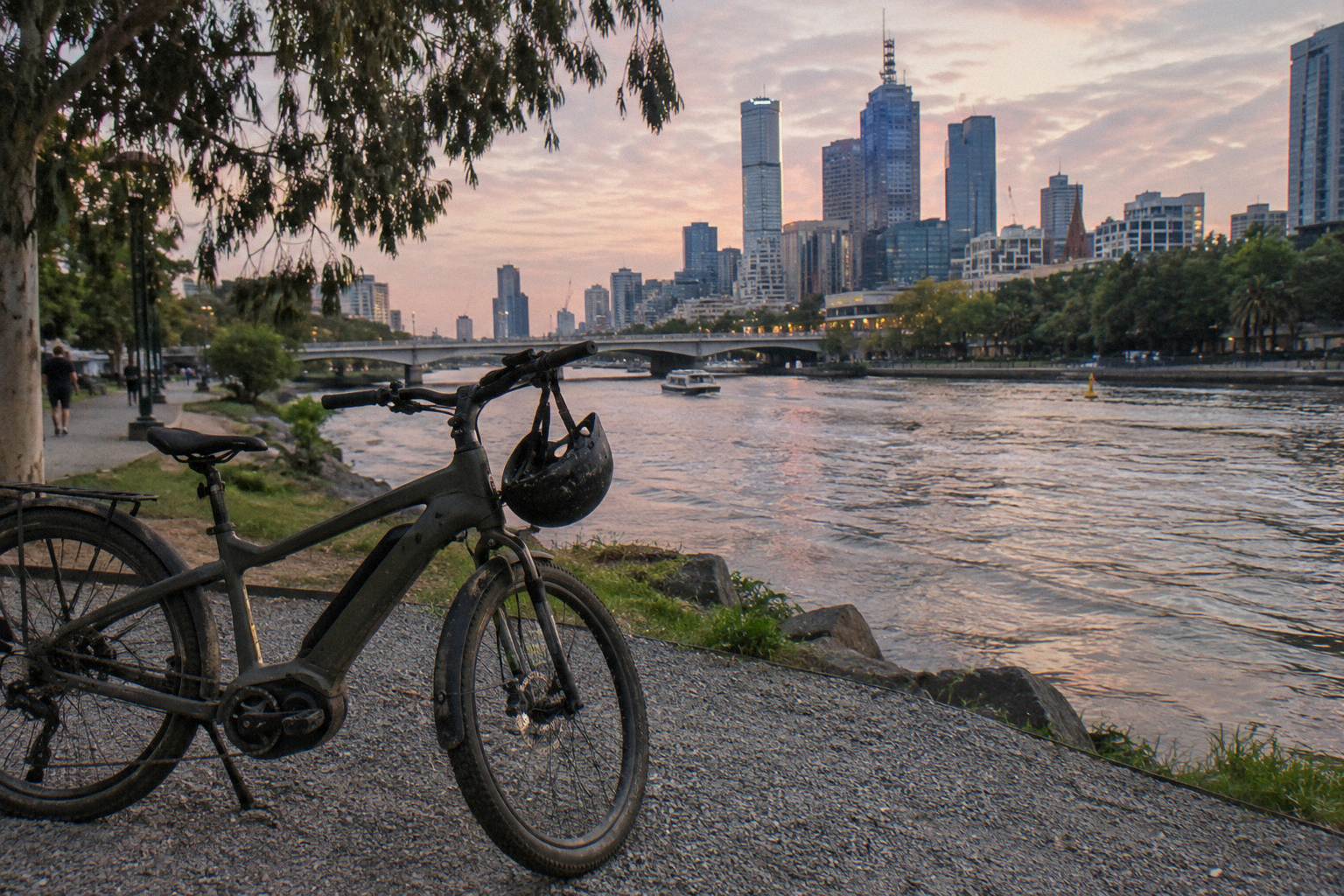
No Melbourne tour operator publishes a claim that its e-bike batteries recharge while you pedal, and none publishes battery range or charge times either, so assume the answer for your tour is no and ask before you book. Victorian law is clear on one point: the motor assists only while you pedal and stops assisting at 25 km/h.
The question usually arrives from a sensible place. Someone planning a longer ride, maybe the 4-hour Melbourne E-Bike Tour With Local Guide or the 7-hour Yarra Valley e-bike rail trail alternative, starts wondering whether the battery will last, and whether pedalling gives anything back. It is a fair instinct: on a normal bike, every pedal stroke moves you forward, so surely some of that effort could top the battery up too.
Some e-bikes elsewhere in the world do exactly that, through what manufacturers call regenerative braking or a regen mode, mostly on direct-drive motor systems. But that is a statement about categories of bikes, not about any bike you will actually be handed in Melbourne. The tour listings here describe pedal assistance, supplied helmets and routes, and they stop there. No operator page or booking page we read states a battery capacity, a range in kilometres, a recharge time, or a regenerative function.
That gap is worth respecting rather than papering over. If a sales page anywhere tells you a Melbourne tour e-bike "recharges as you ride", that is a claim the operator itself has not made in its own listing, and you should treat it with suspicion. The reliable route is shorter: read what the law says the motor may do, understand what pedal assist feels like in practice, and put two or three direct questions to the operator before you pay. Read what the law says the motor may do, understand what pedal assist feels like in practice, and put two or three direct questions to the operator before you pay. The tours whose formats make the battery question matter most are named below.
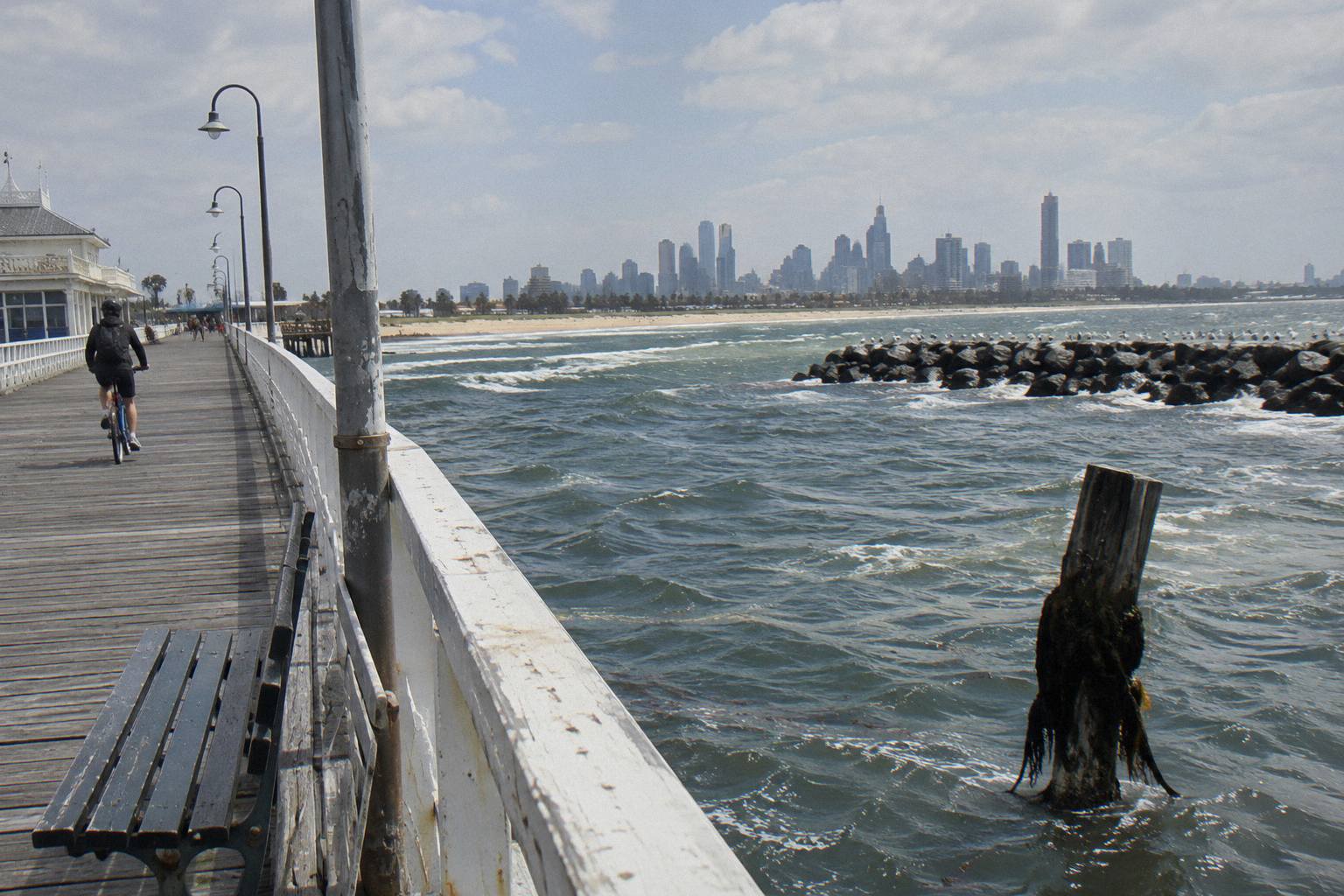
If you are new to the concept generally, the companion piece on how pedal assist works on a moving bike walks through the mechanics of what the motor does stroke by stroke, without the Melbourne specifics.
What Victorian Law Says An E-Bike Motor May Do
Victoria recognises two legal e-bike types, and neither is defined by any charging behaviour. The main type, the EPAC, has a motor of at most 250 W continuous rated power, assists only while you pedal, and the assist cuts off at 25 km/h; working pedals are required, and a throttle is permitted only up to 6 km/h in walk mode. A second type, the Power-Assisted Pedal Cycle, is limited to 200 W or less peak output.
Notice what is absent from that definition. Transport Victoria's e-bike rules describe power, pedal interaction and the speed at which assist ends; they say nothing about regeneration, because the law does not need to. A bike that happens to feed a little energy back while you brake is still legal if it sits inside those limits. The rules do close other doors hard: e-bikes with no pedals, or with tampered limits pushing assist above 25 km/h or 250 W, may only be used on private property, and riding them on public roads and paths attracts fines.
For a tour rider, the practical reading is that every bike a licensed Melbourne operator hands you is built around pedal assistance, not a throttle you can lean on, and not a motor that carries you unaided. The assist is felt while your legs are turning, and it fades as you pass 25 km/h so that faster riding is your own work. A rider can of course exceed 25 km/h by pedalling hard alone; the ceiling applies to the motor, not the cyclist. The full definition, including the EN15194 marking to look for on a compliant frame, is on the official Transport Victoria e-bike page.
| Legal e-bike type in Victoria | Power limit | How assist works | Speed limit on assist | Notes for tour riders |
|---|---|---|---|---|
| EPAC (the tour standard) | 250 W continuous rated | Assists only while pedalling | Cuts off at 25 km/h | Throttle allowed only to 6 km/h in walk mode; EN15194 marking |
| Power-Assisted Pedal Cycle | 200 W or less peak | Throttle with pedalling allowed | Not defined the same way | Rare on guided city tours |
| Illegal on public roads and paths | Above 250 W, or no pedals | Tampered or throttle-driven | Assist past 25 km/h | Private property only; fines apply on roads and paths |
One parks rule adds a wrinkle worth knowing even though no city tour currently routes through it: Albert Park's paths bar power-assisted bicycles above 200 W, per Parks Victoria's Albert Park page, so check your e-bike's motor spec with the operator before riding there. It is a neat illustration that e-bike legality is patchwork: legal on the road is not automatically legal on every path.
How Pedal Assist Actually Feels On A Guided Ride
On a guided Melbourne e-bike tour the motor is a tailwind you can switch feeling on and off, not a second engine. It responds to your pedalling, so coasting delivers nothing, and on the flat you still do real work at a gentler effort. Guides set the pace, lead the group through the city's turns, and adjust assistance expectations at the start, which is why riders who rarely cycle still finish these tours comfortably.
The best-documented example is the Melbourne E-Bike Tour With Local Guide, run by Blue Tongue Bikes from its shop at 2 Rebecca Walk in Batman Park. The ride covers about 16 km over roughly 4 hours including stops and a lunch break, runs with groups of up to 10 from a 10am start, and asks only that you can already ride a bike; the listing's own words note that the electric assistance makes the ride manageable even if you do not ride often. Height and weight guidance applies, riders about 150 cm or taller and up to 113 kg, and anyone under 18 rides with an adult. It rates 4.9 from 300+ reviews and costs from A$139 per person.
The reason the battery question matters less on this format than people fear is arithmetic of terrain. Sixteen kilometres of largely flat city riding, split by stops and a lunch, is a gentle draw on any legal 250 W system. The battery anxiety that bites is the one you should carry into hillier or longer days, which is where the operator question in the next section earns its keep. Still, none of that removes the base uncertainty: whether that specific bike recovers any charge while pedalling is simply not published, so ask Blue Tongue Bikes directly when you book rather than assuming either way.
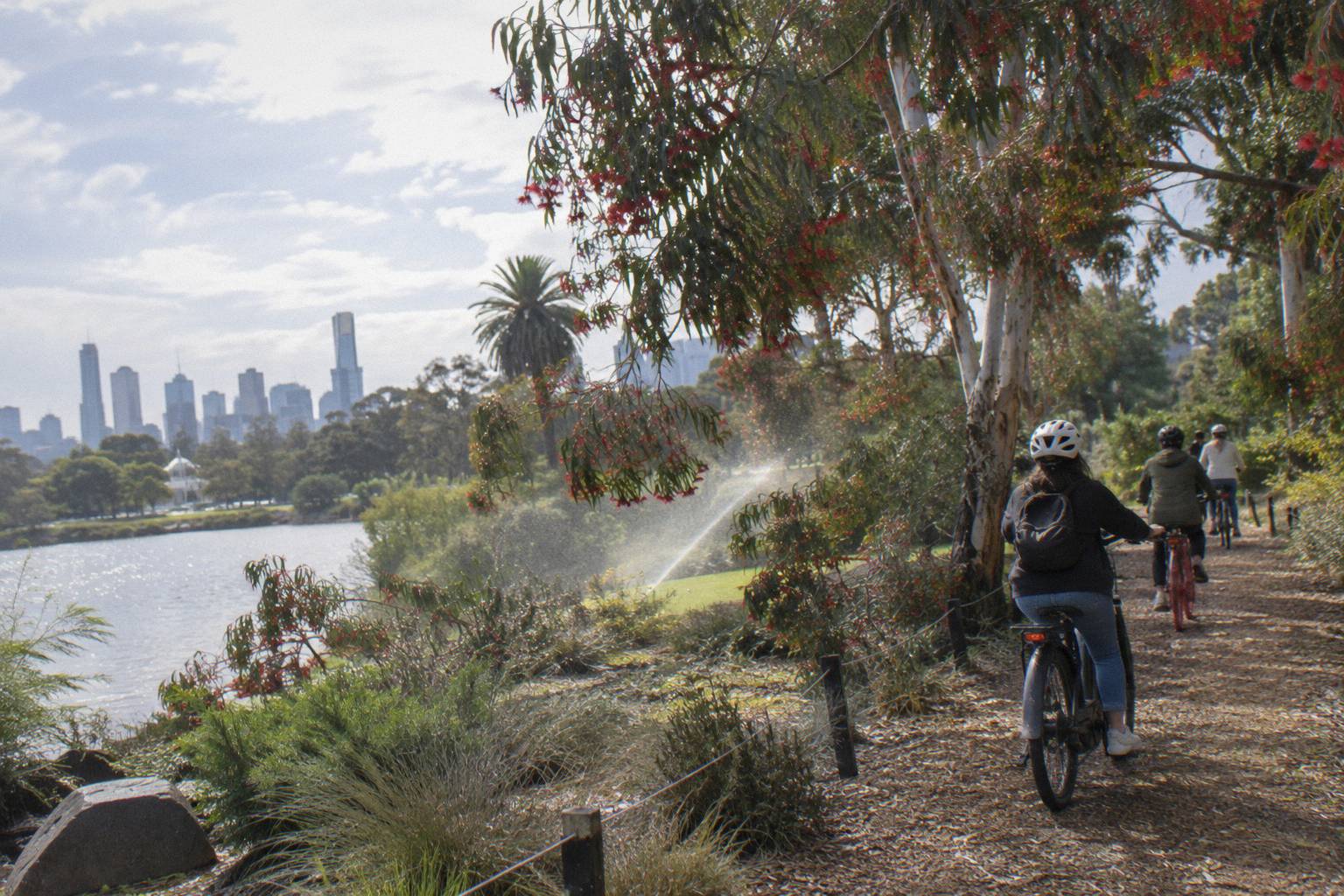
For riders weighing whether the format suits them at all, the companion question is whether electric bikes are hard to ride, and the short version is that pedal assist makes the entry easier, not harder, than a heavy commuter bike.
What Is Not Published, And How To Ask About It
No Melbourne tour operator publishes battery range, charge time, motor weight or any regenerative claim for the e-bikes on its rides. That is a single, consistent gap across every listing we read, and the only responsible move is to say so plainly and give you the questions to put to the operator. Anyone, on any platform, who states a kilometre range or a recharge figure for these specific bikes is guessing.
The gap is not negligence on the operators' part; it reflects how these tours actually run. City rides are short and flat enough that range rarely becomes the deciding factor, and the Yarra Valley guided day, 6 hours from A$350 per person on standard bikes with helmet included, is led by a guide who plans around the fleet's real capacities. The 7-hour e-bike alternative on the rail trail is a separate product at from A$395 per person. The operator, Cycling Vine Tours, publishes the format and the meeting point at Woori Yallock Station, with free pickup from Lilydale railway station, not the battery spec sheet. The full index of guides sits on Melbourne Bike Tours.
So the checklist before you pay is short. First, ask directly: does the motor put any charge back into the battery while pedalling or braking, and if so how much difference does it make on this route? Second, ask for the realistic assisted range on the route you are booking, in the words of the person running it. Third, ask what happens if a battery runs low mid-ride, because a support plan tells you more about the operator than a wattage ever will. Fourth, if you are booking the private option, confirm the route length, since the Private Melbourne E-Bike Tour runs 2 to 4 hours and the operator arranges the route and start time with the group.
The private format is the one where the battery question most deserves asking. It costs from A$500 per person with the price shown for the group on the booking page, gives you a dedicated guide and a route built around your group, carries a minimum age of 12, and lists pregnant women and people who cannot ride a bike as not suitable. Guides work in English, German, Spanish, Hungarian and Chinese. A tailored route can mean more distance than a fixed one, and on a private day nobody wants the battery conversation happening at kilometre three.
For planning beyond the ride itself, e-bike battery life on a day ride covers the same unknowns from the renter's side of the counter.
Getting To The Start With An E-Bike, Legally
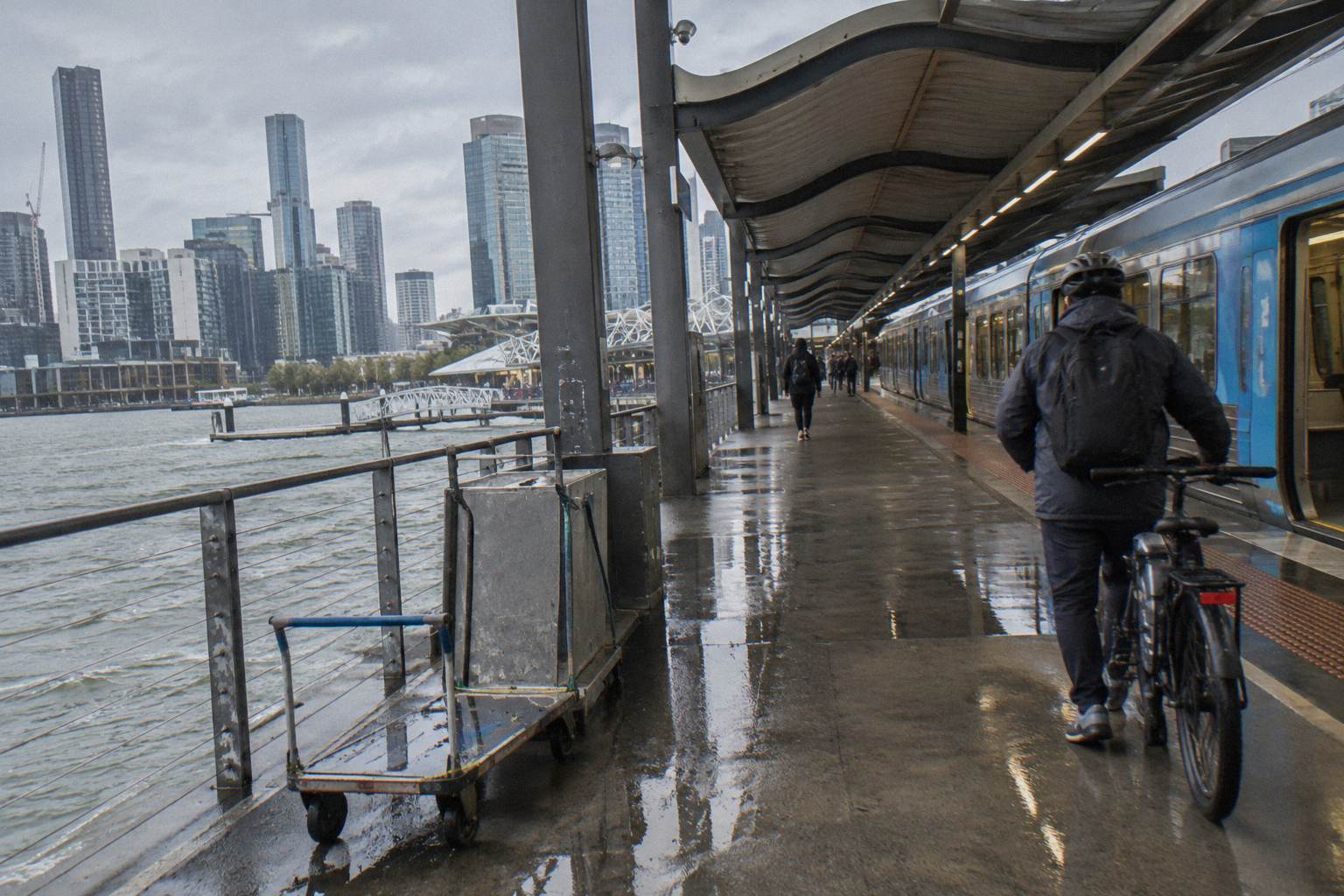
You cannot take a full-size e-bike on a Melbourne tram or bus at all; only folding bikes, folding e-bikes and folding e-scooters up to 82 x 69 x 39 cm with wheel rims up to 51 cm may board. Metro trains accept bikes and factory-built e-bikes, but the e-bike must be switched off, not ridden and never charged on board, and converted e-bikes are banned from all trains and ticketed areas.
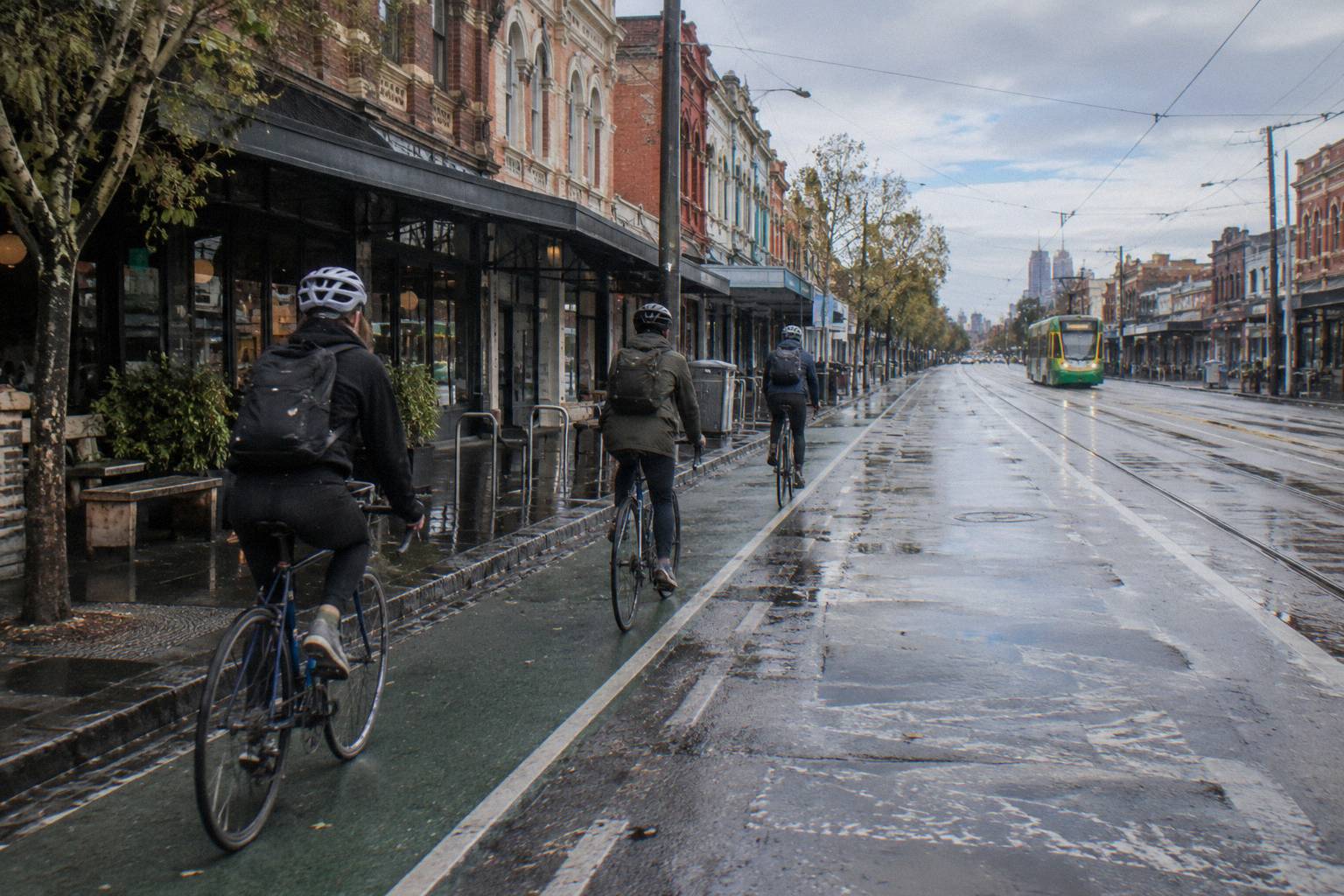
This matters for tour logistics more than you might expect. The Melbourne e-bike rides start at Batman Park, an easy walk or short train hop from the CBD, so most riders never need to move a bike by public transport at all: the operator supplies the e-bike at the meeting point. The rules bite when riders imagine combining a self-guided hire with a tram across town, which simply is not available for a full-size e-bike. On V/Line regional services bikes travel free, with the conductor deciding the space, which is the route many riders use to reach the Yarra Valley rail trail day at Woori Yallock, one station past Lilydale.
| Transport | Full-size e-bike allowed? | Conditions |
|---|---|---|
| Metro trains | Yes, factory-built only | Switched off, not ridden or charged, walked on platforms |
| V/Line regional trains | Yes | Free for bikes; conductor decides available space |
| Trams | No | Folding e-bikes only, up to 82 x 69 x 39 cm, wheel rims up to 51 cm |
| Buses | No | Folding bikes and folding e-bikes only, same size limits |
| Converted e-bikes | No, anywhere | Banned on all trains and in ticketed areas |
The "not charged on board" clause in the train rules speaks directly to the charging theme: the system treats charging as a managed activity with rules around it, not something that passively happens wherever the bike goes. The full provisions are on Transport Victoria's bicycles and public transport page. Melbourne Bike Tours keeps the practical side of all this, including which rides start where, in one place, which is faster than stitching operator sites together yourself.
Choosing Between A Regular Bike, An Upgrade And A Full E-Bike Tour
Melbourne offers three paths: a regular-bike guided tour from A$129 per person, the Famous tour with an optional e-bike upgrade at A$40 per person on top of its A$140 from-price, or a dedicated e-bike tour from A$139 per person. The battery and charging question only attaches to the latter two, and the choice usually comes down to how much you want to pedal, not how far the battery goes.
The Famous Melbourne City Cycling Tour With Local Guide is the most-reviewed ride in this comparison, rated 4.9 from 900+ reviews over 4.5 hours, run by Melbourne By Bike. It runs on regular bikes by default, with the e-bike available as an option at A$40 per person if you would rather arrive at the Queen Victoria Market lunch stop with drier legs. It is a small-group ride, usually 8 to 10 or fewer riders, and meeting details come in your booking confirmation. Its Classic sibling from Batman Park, the Classic Cycling Tour From Batman Park at from A$129 per person and rated 4.9 from 680+ reviews over 4 hours, is the regular-bike value pick.
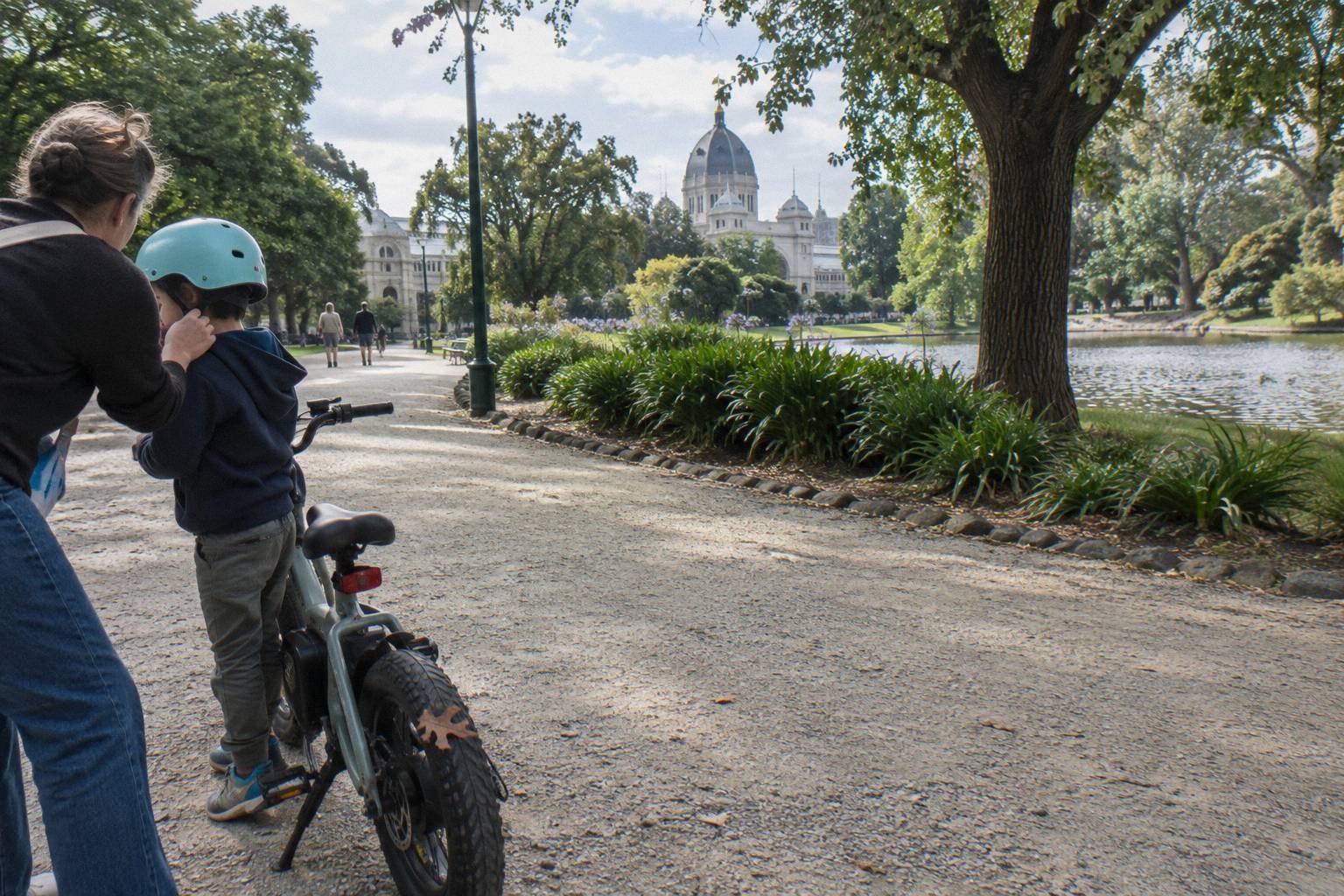
The dedicated e-bike tour at from A$139 per person, 4 hours and 4.9 from 300+ reviews, gives you the pedal-assist machine, helmet, lock and guide as the standard setup rather than an add-on, with the route running from the Yarra past the Shrine, the MCG, Cooks' Cottage, Parliament, Fitzroy, the Royal Exhibition Building, Chinatown and Hosier Lane. And the private e-bike option at from A$500 per person buys route control and a dedicated guide.
| Format | Tour | From-price per person | Duration | Who it suits |
|---|---|---|---|---|
| Regular bike, small group | Classic Cycling Tour From Batman Park | A$129 | 4 hours | Confident riders on a budget |
| Regular bike, optional e-bike upgrade | Famous Melbourne City Cycling Tour | A$140, upgrade A$40 | 4.5 hours | Riders undecided until the day |
| E-bike, small group | Melbourne E-Bike Tour With Local Guide | A$139 | 4 hours | Occasional riders, flat-city comfort |
| E-bike, private | Private Melbourne E-Bike Tour | A$500, price per group on the page | 2 to 4 hours | Families and custom routes |
Free cancellation up to 24 hours before applies on the booking page of every tour above, so asking your battery questions before the deadline is a genuinely low-risk move.
What To Ask Before You Book, In Order
Put four questions to the operator in this order: whether the bike returns any charge while pedalling, the realistic assisted range for your route, the plan if a battery runs low mid-ride, and which assistance level the guide recommends for a rider of your experience. None of these appears on any Melbourne listing, so the answers you get, or do not get, are real information about the operator as much as the bike.
The order is deliberate. The charging question comes first not because regenerative assistance is likely, but because the way an operator answers it tells you how they handle every other technical question. A shop that says plainly "no, our bikes do not regen, but here is the range we plan around" is a shop that knows its fleet. A vague answer about "the battery lasts all day" is the point at which you keep looking.
Range and rescue questions come next because they bound your worst day. On the flat 16 km city route the answers will reassure you; on the full-day Yarra Valley rides they genuinely matter. The 6-hour guided ride from A$350 per person runs on standard bikes with a minimum age of 18 and groups of up to 8, while the separate 7-hour e-bike alternative from A$395 per person uses fat-tyre e-bikes not offered to riders under 155 cm or over 130 kg. The Mornington Peninsula small-group ride supplies single-rider e-bikes for riders over 14 across 2.5 hours from A$120 per person, a short-draw format where the battery is close to a non-issue. The assistance-level question, last, is the one that makes the day pleasant, and it is a better conversation to have before your card is charged than after your legs are tired.
All eight tours carry the same 24-hour free cancellation terms on their booking pages, so the questions cost you nothing but a message. That is the quiet advantage of asking early: every answer arrives while you can still change your mind.
What Mistakes Do People Make About E-Bike Charging On Tours?
The biggest mistake is assuming that "pedal assist" means "pedal charging". It does not. In Victoria the motor only helps while you pedal and stops helping at 25 km/h, and no Melbourne tour operator claims its batteries recharge from your effort, so plan as though every watt you use comes out of the battery and none goes back in. The second mistake is trusting a sales page that promises regenerative charging the operator itself has never stated.
Here is how the errors usually play out.
- Confusing assist with regen. Pedal assist draws power from the battery to make your strokes easier. Regenerative braking, which some e-bikes elsewhere offer, feeds power back. Nothing published about Melbourne tour bikes mentions regen, so treat any such promise as unverified at best.
- Budgeting the battery on hope. Because no operator publishes a battery range or charge time, you cannot check whether a 4-hour city ride or a 7-hour Yarra Valley e-bike day will run the battery flat. Ask the operator directly before you book: what is the range on the bikes you hand out, and what happens on your route if the assist runs low?
- Believing a middleman over the operator. A reseller page may imply things the operator's own listing never says. If the two disagree, the operator's listing and your booking confirmation are what count.
- Forgetting the 25 km/h cutoff. Riders sometimes expect the motor to keep pushing on flat straights. Legally it cannot. Above 25 km/h it is just you and the pedals, which is worth knowing if you are comparing an e-bike upgrade against a regular bike on an e-bike or regular bike guided ride.
- Assuming the highest assist level is free. Running full assist the whole way drains the battery faster than a lower setting. If battery life worries you, ask the guide at the start which setting suits the day.
One more practical error: arriving with questions you never asked. Operators answer battery questions happily, but only if you raise them before payment. Put range, charging on site, and what happens if the battery dies mid-ride on your list, in writing, when you book.
Keep reading: If the battery question has you weighing your options, our comparison of e-bike tours versus regular bikes breaks down who benefits from the motor, and the guide to how e-bike tours work around Melbourne covers what a typical day on an assisted ride involves. Curious about trying an e-bike yourself? Explore the city on the E-Bike Tour of Melbourne or enjoy a personalized ride with the Private E-Bike Tour of Melbourne and see how the battery works in practice.
Common Questions About E-Bike Charging And Pedalling
Do Electric Bikes Charge Themselves While Pedaling? What It Means On An E-Bike Tour
No Melbourne tour operator publishes a claim either way about the bikes on its rides, so ask the operator directly. Victorian law defines e-bike motors by power and pedal interaction, 250 W maximum with assist only while pedalling and a 25 km/h cutoff, not by any charging behaviour.
How Far Can A Melbourne E-Bike Tour Go On One Charge?
Battery range is not published for any tour e-bike in this city, so no figure can be responsibly quoted. The Melbourne E-Bike Tour With Local Guide covers about 16 km in roughly 4 hours including stops, which is a light demand on a legal pedal-assist system; for longer days such as the 7-hour Yarra Valley e-bike rail trail alternative, ask the operator for the range they plan around.
Can I Take A Tour E-Bike On A Tram Or Train In Melbourne?
Trams and buses carry only folding bikes and folding e-bikes up to 82 x 69 x 39 cm with wheel rims up to 51 cm, so a full-size e-bike cannot board. Metro trains accept factory-built e-bikes switched off, never ridden or charged on board, and tour riders rarely need this anyway since operators supply e-bikes at the meeting point.
Do I Still Have To Pedal On An E-Bike Tour?
Yes. The legal EPAC motor assists only while you are pedalling, with a throttle permitted only up to 6 km/h in walk mode, and the assist stops at 25 km/h. The Melbourne E-Bike Tour listing asks only that you can ride a bike, noting the assistance makes the ride manageable even if you do not ride often.
Is An E-Bike Upgrade Worth It On A Regular Bike Tour?
The Famous Melbourne City Cycling Tour offers an e-bike upgrade at A$40 per person on top of its from A$140 per person price, over 4.5 hours. Riders who cycle rarely, or who want fresher legs for the rest of the day, tend to value it; confident riders on the 4-hour, from A$129 Classic tour often skip it. It is a comfort choice, not a range necessity on flat city routes.
Are Helmets Required On E-Bike Tours In Victoria?
Yes, helmets are mandatory for every rider in Victoria, e-bike riders included, and they must meet an approved standard. Tour operators normally supply helmets with the bike, though the specific type supplied varies, so confirm with the operator if you prefer to bring your own.