Do You Have To Pedal All The Time On An Electric Bike? What A Guided E-Bike Tour Asks Of You
How much pedalling a guided Melbourne e-bike tour actually asks of you: pedal assist explained, when the motor stops, coasting, throttles and who the ride suits.
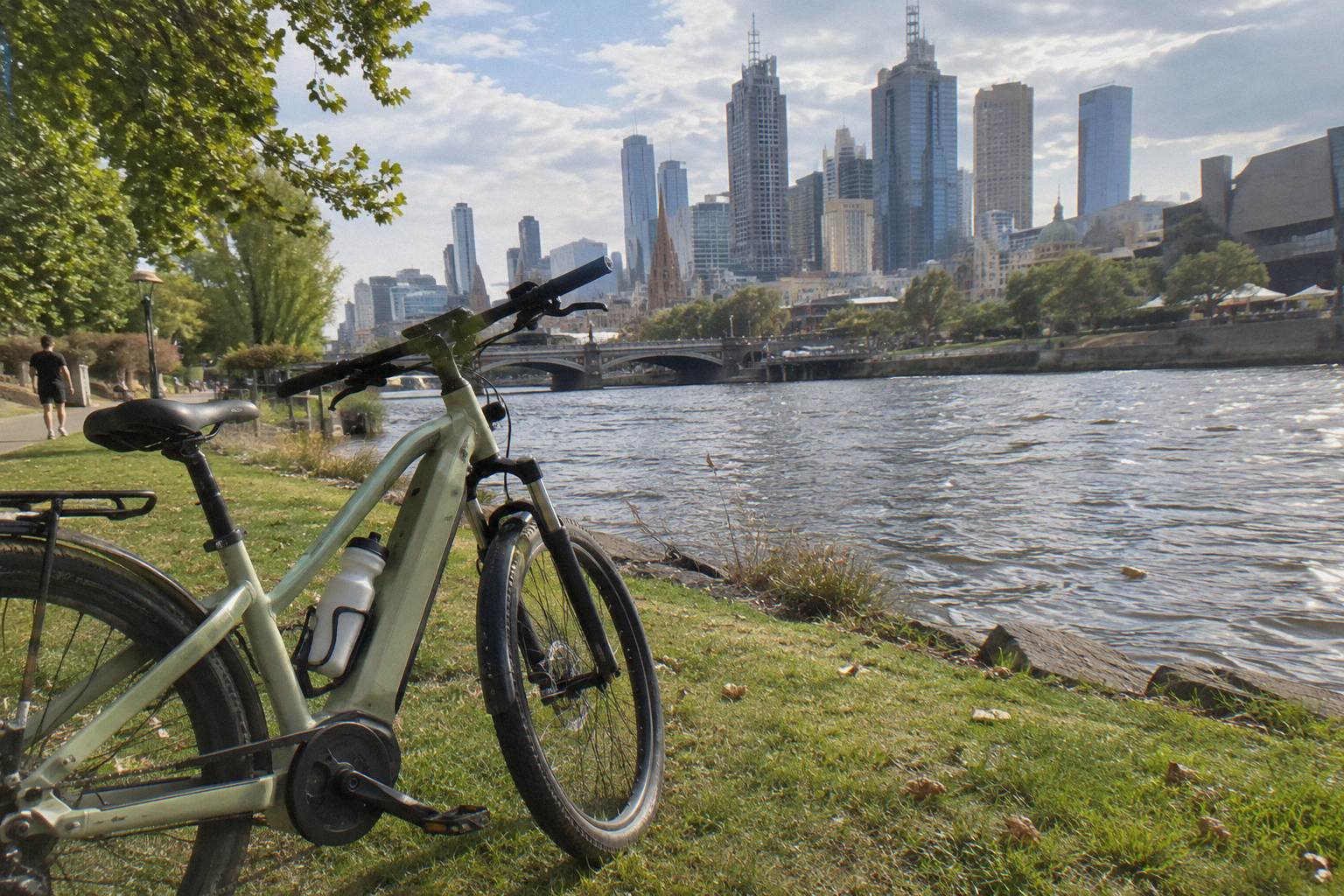
No, and yes, in a specific way. A legal Australian e-bike only pushes the pedals while you are turning them, so there is no throttle-only riding above walking pace, but you never have to grind. Stop pedalling and the motor simply goes quiet while you coast or freewheel. On a guided tour, the realistic rhythm is light spinning with regular breaks, photo stops and a lunch pause, not a continuous hard effort.
That distinction is the single thing most first-time e-bike riders misunderstand, and it decides whether the format is right for you. If you are picturing a scooter, where you stand on a platform and twist a grip, that is not what a guided tour in Melbourne hands you. If you are picturing a normal bicycle with an invisible hand helping you up every rise, that is much closer to the truth.
The reason sits in Victorian law rather than in any tour operator's preference. Transport Victoria defines a legal electric bike as a machine with a motor of at most 250 W continuous rated power that assists only while you pedal and stops assisting at 25 km/h. Anything with no pedals, or tampered so it pushes harder or faster, may only be used on private property and attracts fines on public roads and paths. No operator or listing states the motor specs of its tour bikes, so confirm the e-bike spec with the operator before you book; either way, an e-bike needs your legs.
That said, "needs your legs" is not the same as "tests your legs". The Melbourne E-Bike Tour With Local Guide, run by Blue Tongue Bikes from its Batman Park shop, describes its own ride plainly: the electric assistance makes the ride manageable even if you do not ride often. The tour covers about 16 km over roughly four hours, and that distance includes stops and a lunch break, so the moving time is a fraction of the total. The only stated requirement is that you can ride a bike.
If the question behind your question is "will I be the one holding the group up", pedal assist flattens exactly that gap. The rider who cycles weekly and the rider who has not touched a bike in a decade settle into much the same comfortable pace when both machines are helping. A guided group ride moves at conversational speed or it does not work as a group ride.
Whether you want a shared tour or your own guide is the first real fork in the decision.
How Does Pedal Assist Actually Work?
Pedal assist reads your pedalling through a sensor and adds motor power on top of whatever your legs produce, in proportion, every stroke. Push lightly and the motor helps lightly. Push hard, or point the bike up a hill, and it works harder alongside you. The motor is a helper for your effort rather than a replacement for it, and the whole arrangement goes silent the instant you stop turning the cranks.
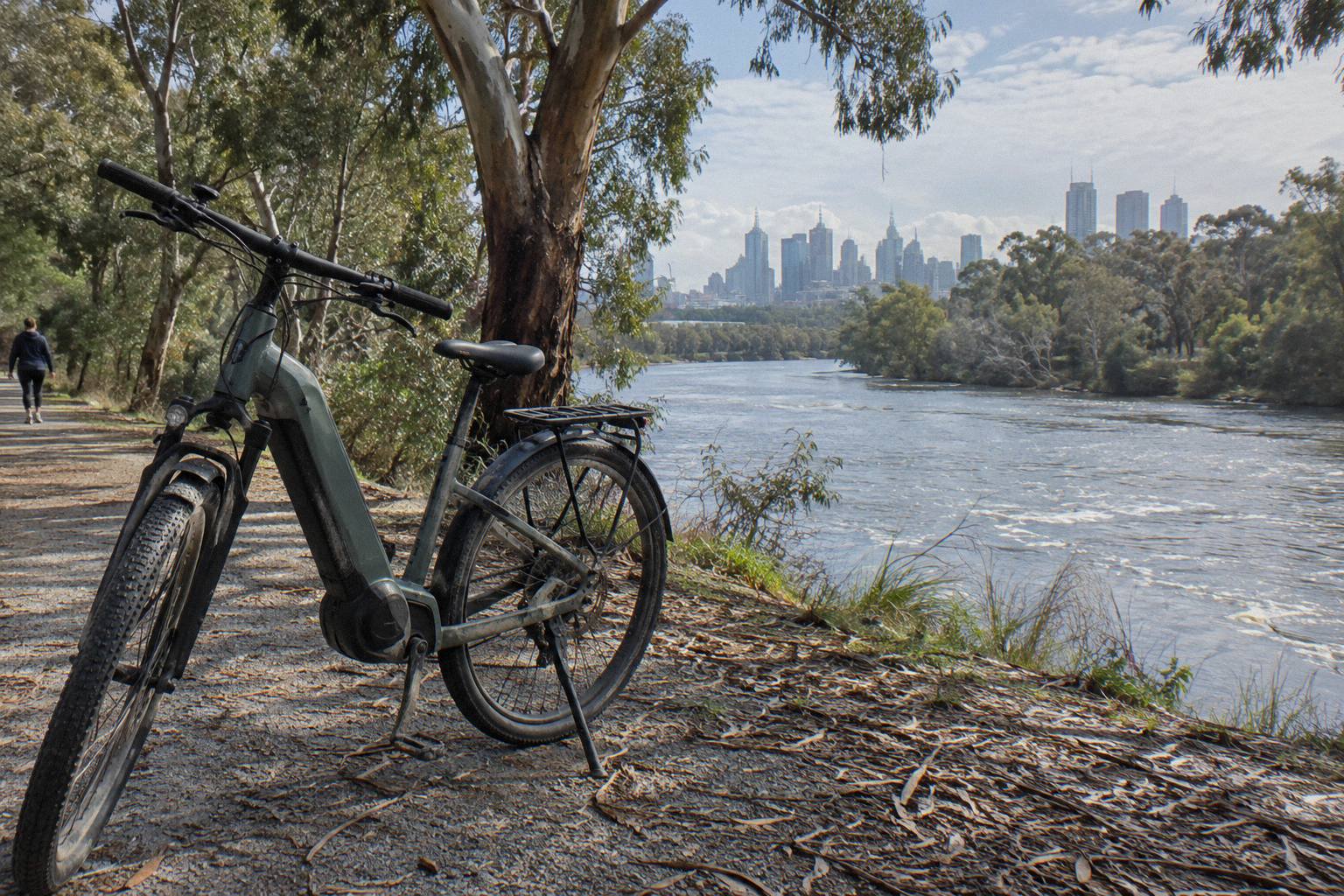
Think of it as power steering for your legs. A car with power steering still needs you to turn the wheel; the system just multiplies the force you apply. Pedal assist does the same job for pedalling. You remain the on switch, the throttle and the cruise control all at once, because the sensor only fires when the cranks rotate.
The legal frame matters here because it explains why tour bikes behave the way they do. Victorian rules recognise two types of power-assisted bicycle: the EPAC, with a 250 W motor that assists only while pedalling and cuts out at 25 km/h, and the Power-Assisted Pedal Cycle, with a peak output of 200 W or less. Both require working pedals. A rider can pass 25 km/h by pedalling alone, downhill or with enthusiasm, but the motor will not carry anyone beyond that point, and tour marketing never promises otherwise. The full definition sits on the Transport Victoria electric bikes page, which is worth two minutes of anyone's time before a first ride.
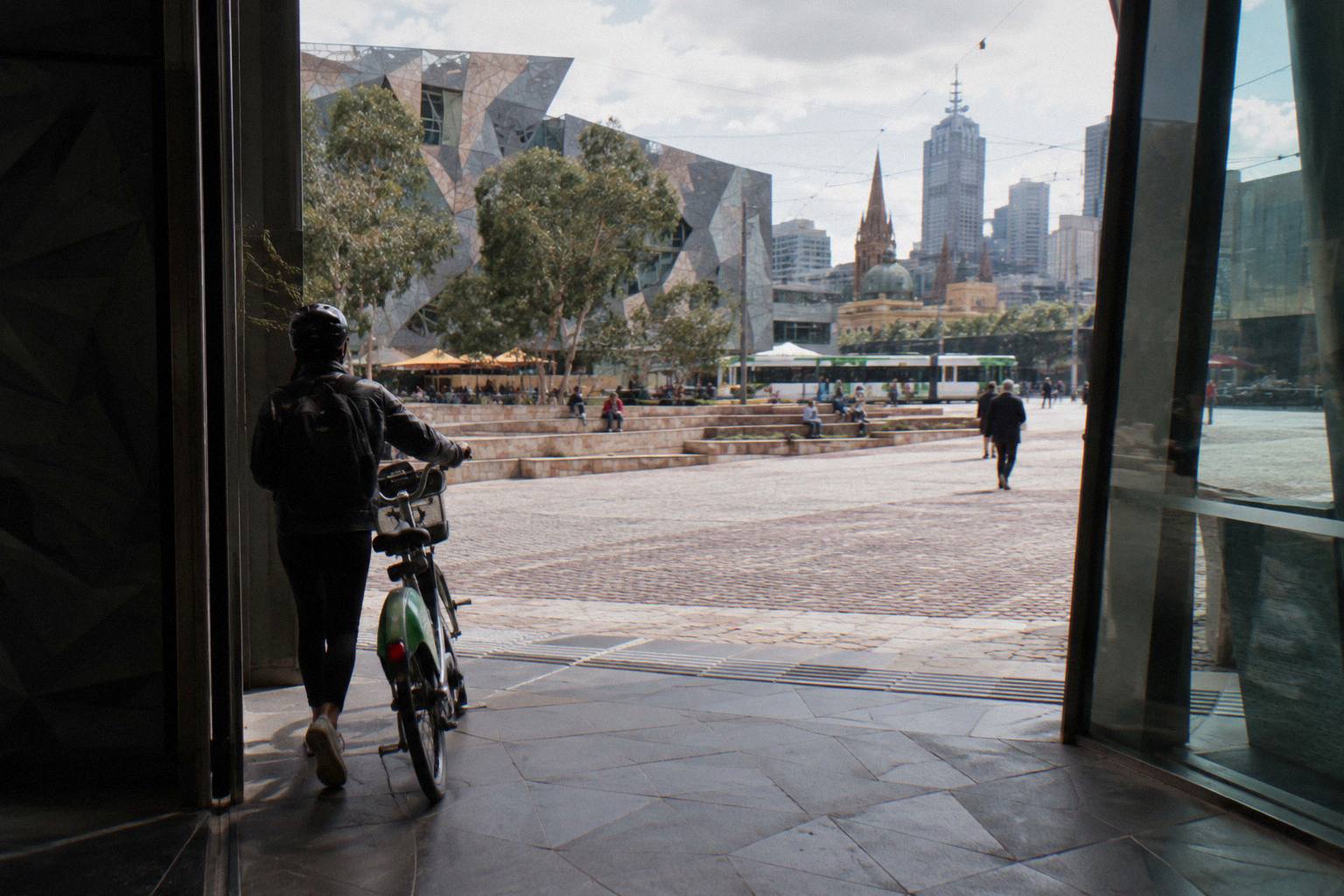
What this means on a Melbourne route is simple. The city is mostly flat, with short rises along the Yarra banks and a couple of gentle climbs toward the Shrine and Fitzroy. With assist, those rises feel like the flat, and the flat feels like a glide. Your feet keep turning the whole time you are moving, but the pressure under them stays mild. Riders who worry about arriving sweaty usually find the opposite: the effort level is closer to a stroll than a workout.
Battery questions follow naturally, and battery life, range, charging time and bike weight are not published for any tour e-bike in the city, so ask the operator when booking. Ask the operator when booking; nobody else can quote you a real number. If you want the general background on how far an e-bike battery tends to carry a rider, our piece on e-bike battery life on a day ride covers what drains a charge and what preserves it without inventing tour-specific figures.
Do Tour E-Bikes Have A Throttle?
Not in the sense most riders mean. On a legal Australian e-bike, the only throttle is a small walk-mode button that pushes the bike up to 6 km/h, designed for walking it beside you up a ramp or into a lift. There is no sit-and-twist throttle that carries you at riding speed, so if you want to move faster than walking pace, your pedals are the only throttle on the bike.
This surprises people who have ridden e-bikes overseas, particularly in parts of the United States and Asia where throttle-controlled machines are common and legal. In Victoria the division is deliberate: machines that move without pedalling are treated closer to scooters and mopeds, with the licensing and rules that follow, while the pedal-assist bicycle stays a bicycle. The tour fleet sits firmly on the bicycle side of that line.
So the practical picture on a guided ride is this. At the start of the tour you will likely get a short briefing: how to switch the bike on, where the display sits, how the assist behaves, and how the walk mode works if you need to push the bike anywhere. Then you ride, and the pedalling does the talking. Guides also cover the rules that apply to everyone, and helmets are supplied on most tours, since every rider in Victoria must wear one, e-bike riders included, with a helmet carrying an approved-standard label. The official wording, including the exemption rules, is on the Transport Victoria helmet page.
The no-throttle design is worth embracing rather than tolerating. Because the motor follows your legs instead of replacing them, you stay in control of the speed in a very direct way, and the bike never lurches forward on its own. Riders nervous about e-bikes usually relax within the first ten minutes for exactly this reason: nothing happens that you did not start. If the underlying worry is whether the machine itself is manageable, our longer answer is in whether electric bikes are hard to ride, and the short version is that if you can ride a bicycle, the e-bike version adds help without adding difficulty.
How Much Pedalling Does A Guided E-Bike Tour Involve?
On the Melbourne E-Bike Tour With Local Guide, about 16 km over roughly four hours, including stops and a lunch break, which works out to a gentle, stop-start rhythm rather than a sustained pedal. You spin between landmarks, pause for the guide's commentary, roll on to the next stop, and sit down for lunch partway through. The moving segments are short, and each one is assisted.
It helps to picture the shape of the day. The operator's own route description for its e-bike tour runs through the Yarra paths, the Shrine, the MCG, Cooks' Cottage, Parliament, Fitzroy, the Royal Exhibition Building, Chinatown and Hosier Lane. A route stitched from those landmarks is not a point-to-point grind; it is a chain of short rides between things worth stopping at. A guided city tour that never stopped would be a strange product, since the stopping is most of the point.
Who is on the bike beside you matters too. The Melbourne E-Bike Tour With Local Guide runs with groups of up to 10, starting at 10am, meeting at Batman Park. Anyone under 18 rides with an adult. The stated rider guidelines ask for a height of about 150 cm or taller and a weight up to 113 kg. None of those numbers describe fitness; they describe fitting the bike. There is no fitness screen, because pedal assist has made one unnecessary at this distance and pace.
For comparison, the same operator's Classic Cycling Tour From Batman Park covers the same kind of city ground on regular bikes, from A$129 per person, rated 4.9 from 680+ reviews, over about four hours. The Melbourne E-Bike Tour With Local Guide, from A$139 per person, is rated 4.9 from 300+ reviews over about the same duration. The price difference between the two is small; the effort difference is not, and that is the entire case for paying the extra for the motor. The most-reviewed tour is the Famous Melbourne City Cycling Tour With Local Guide, from A$140 per person with 4.9 from 900+ reviews, which also offers an e-bike upgrade at A$40 per person if you would rather join the biggest-group format with a motor under you.
Here is the comparison in one view. All prices are booking-page from-prices per person in Australian dollars.
| Tour | Format | Duration | From price | Reviews |
|---|---|---|---|---|
| Melbourne E-Bike Tour With Local Guide | Shared e-bike, up to 10 | About 4 hours | A$139 | 4.9 from 300+ |
| Classic Cycling Tour From Batman Park | Shared regular bike, up to 10 | About 4 hours | A$129 | 4.9 from 680+ |
| Famous Melbourne City Cycling Tour With Local Guide | Shared regular bike or e-bike upgrade, up to 10 | About 4.5 hours | A$140 | 4.9 from 900+ |
| Private Melbourne E-Bike Tour | Private e-bike, own guide | 2 to 4 hours | A$500 | No rating printed |
What Happens When You Stop Pedalling On An E-Bike?
Nothing dramatic, which is the reassuring answer. The motor cuts out the moment your feet stop, and the bike behaves exactly like a normal bicycle: it coasts. Down a gentle slope or with momentum behind you, an e-bike freewheels smoothly, and most riders coast far more than they expect, because the assist quickly builds a pace that carries itself between pedal strokes.
This is the mechanical heart of the answer to the headline question. You do not pedal all the time, because you do not need to. Every stretch where you would coast on a regular bike, down every bridge descent and along every flat where momentum does the work, you coast the same way on an e-bike. The motor is not running during those moments, and nothing about the bike fights you.
The distinction worth holding onto is between pedalling and effort. Your feet may be turning for most of the moving portion of a tour, in the way they would on any bicycle, but the pressure is low and the rhythm is unhurried. It is closer to the feeling of riding a very good, very light bicycle on the flat than to any gym machine. Riders who have not been on a bike in years consistently report that the return of the pedalling motion comes back within minutes, and that the assist removes the part they dreaded, the burning legs on hills.
One genuinely useful mental model: the e-bike lets you choose your effort rather than the route choosing it for you. On a regular bike, a hill sets the terms and your legs meet them. On a pedal-assist bike, you set the terms and the motor meets you there. Want a workout? Pedal harder than the assist needs. Want to arrive at the lunch stop fresh? Spin lightly and let the machine do what it was built for. If you are curious how the 25 km/h cutoff shapes the day, our article on how fast electric bikes actually ride unpacks it, and the short version is that city riding rarely asks for more speed than the law allows anyway.
The other place riders stop pedalling is, of course, the stops themselves. Melbourne tours pause at landmarks, wait at crossings, regroup at corners and break for lunch. Between the mechanical coasting and the itinerary's own rhythm, a four-hour tour contains far less continuous pedalling than the number suggests on paper.
Can You Coast Or Freewheel On An Electric Bike?
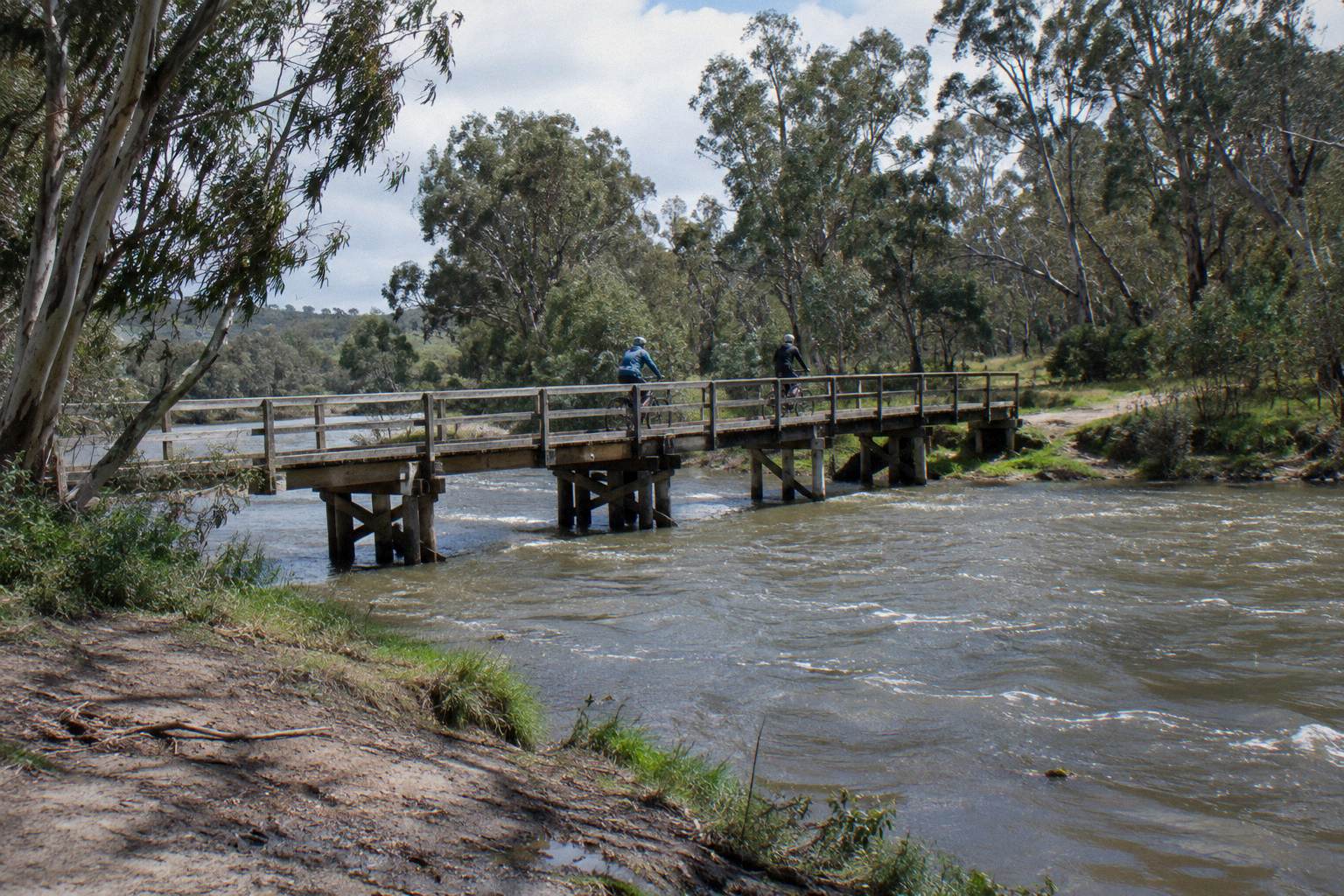
Yes, completely and safely. Freewheeling is built into the design: e-bikes have the same coasting drivetrain as regular bicycles, so you can stop pedalling at any speed and simply roll. The motor does not drag, brake or resist when it is not helping; it disengages and the bike rolls on its own momentum for as long as the terrain allows.
The fear behind this question is usually a specific image: a machine that surges on its own, or one that fights you when you stop contributing. Neither describes a pedal-assist bicycle. The assist is triggered by rotation, so still cranks mean a still motor. There is no idle, no creep and no lag. Riders testing an e-bike for the first time typically stop pedalling deliberately within the first hundred metres just to check this, and the bike simply glides.
Coasting also matters for the flow of a guided tour. City routes in Melbourne thread through shared paths along the Yarra, where the rules ask riders to give way to pedestrians, keep left and use a bell or voice before overtaking. A rider who can coast comfortably blends into that rhythm: rolling gently, ringing when needed, pedalling up again when the path opens. Our guide to the Yarra River bike ride maps out that corridor for riders who want to understand where the kilometres actually go.
There is a small caveat that belongs here rather than repeated later: stopping the pedals does not stop the bike. Brakes do that, and they are entirely your own to use, motor or no motor. The motor stops assisting the moment you quit pedalling, but slowing down is a brake job, exactly as on any bicycle. Tour briefings cover the brakes before anything else for this reason.
Who Finds Pedal Assist Easy Enough?
Almost anyone who can already ride a bicycle, since pedal assist takes on the hard pedalling work and neither tour screens for fitness. The Melbourne E-Bike Tour With Local Guide asks only that you can ride a bike, with guidelines of about 150 cm or taller and up to 113 kg, and under-18s accompanied by an adult, while the Private Melbourne E-Bike Tour sets a minimum age of 12.
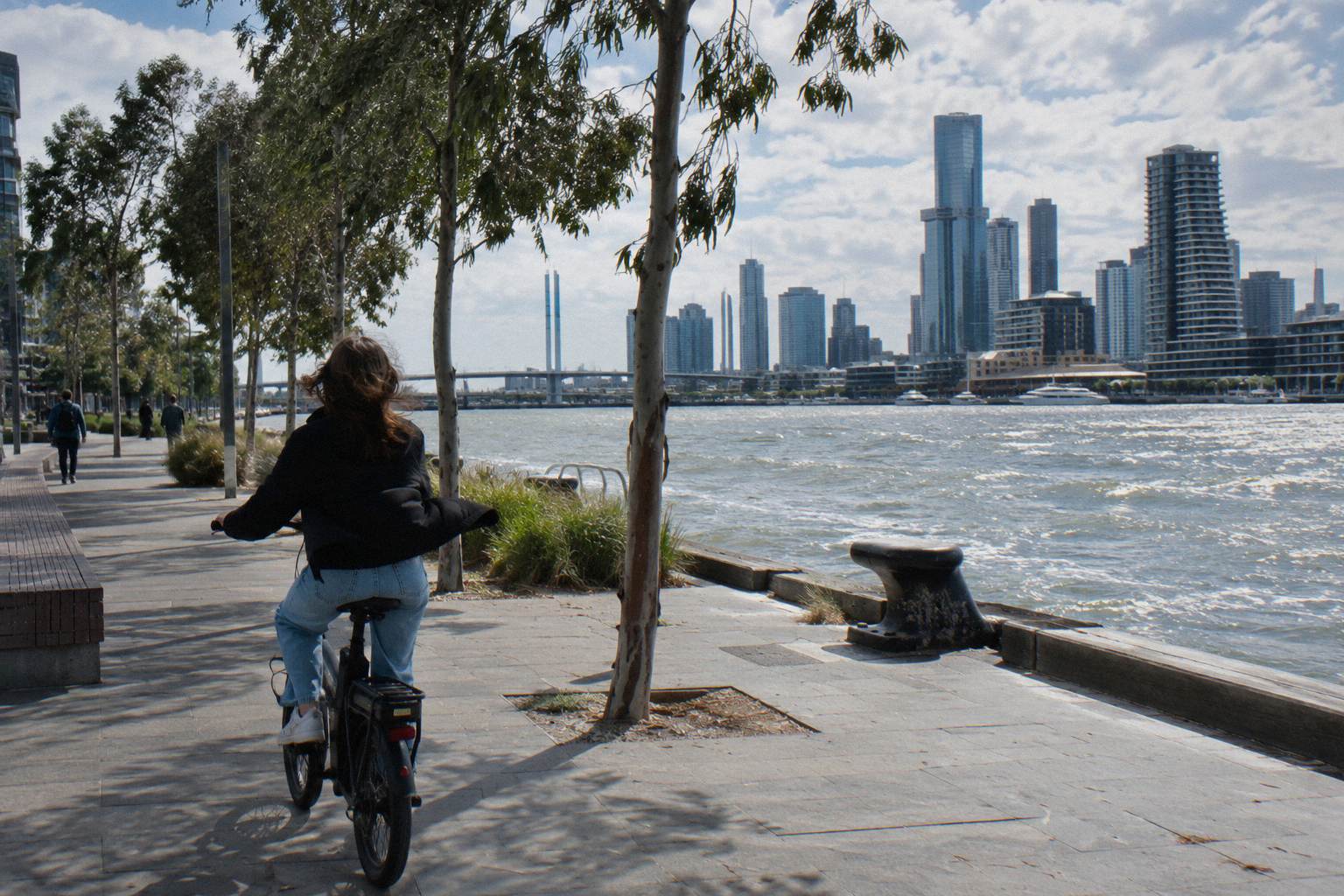
Effort anxiety, not balance anxiety, is what keeps people off a bike tour. Riders are not worried they have forgotten how to balance; they are worried about a hill appearing on kilometre three. Pedal assist exists, in a commercial sense, precisely for that worry. The operator's own line, that the electric assistance makes the ride manageable even if you do not ride often, is the promise the whole product hangs on.
The private format widens the door further. The Private Melbourne E-Bike Tour, from A$500 per person with the price varying by group size, gives you a dedicated guide, a duration of 2 to 4 hours, and a route and start time arranged directly with your group. It runs in English, German, Spanish, Hungarian and Chinese, and a Fitzroy lunch is available for an extra fee. For a family with a nervous rider, or a group that wants to control the pace entirely, that flexibility is the point.
Beyond the city, the same logic scales up. The Yarra Valley Guided And E-Bike Rail Trail Cycling day from Cycling Vine Tours, from A$350 per person over about 6 hours on a rail trail, uses standard bikes with bike and helmet included, with a minimum age of 18 and a group of up to 8; a separate 7-hour e-bike alternative uses fat-tyre e-bikes and suits riders over 155 cm and up to 130 kg. The Mornington Peninsula Small-Group Bike Tour, from A$120 per person for 2.5 hours, supplies single-rider e-bikes for riders over 14. Neither asks for cycling pedigree; both ask only that you fit the bike and can pedal.
Here is who each e-bike format suits, side by side.
| E-bike tour | Group | Best fit | Effort level |
|---|---|---|---|
| Melbourne E-Bike Tour With Local Guide | Up to 10 | First-timers and occasional riders who want the city's highlights | Light spinning, flat and gently rising terrain |
| Private Melbourne E-Bike Tour | Your own group | Families, mixed-ability groups, riders who want pace control | You set it |
| Yarra Valley Guided And E-Bike Rail Trail Cycling | Up to 8 | Riders wanting a full country day on a car-free trail | Steady rail-trail pace over about 6 hours |
| Mornington Peninsula Small-Group Bike Tour | Up to 15 | Coastal scenery at an easy pace, riders over 14 | Light, 2.5 hours |
If you are still weighing whether an e-bike or a regular bike suits you better for a guided day, the site's own comparison in e-bike or regular bike for a guided ride works through the trade-offs, and the pedalling question you have just read is usually the deciding factor in one direction or the other. Whichever way that lands, every tour on Melbourne Bike Tours offers free cancellation up to 24 hours before on its booking page, which takes most of the risk out of committing to the format.
Which Mistakes Trip People Up About Pedalling An E-Bike?
The biggest mistake is expecting a scooter. A legal Victorian e-bike assists only while you pedal, cuts out at 25 km/h, and its throttle works only as a walk mode up to 6 km/h. Riders who arrive expecting twist-and-go, skip the helmet law, or overestimate the effort end up surprised. Picture a bicycle that helps, not a moped.

- Waiting for a twist throttle. The only throttle on a legal assist bike is walk mode up to 6 km/h for pushing it beside you; above that, your pedals are the motor switch.
- Worrying about non-stop pedalling. You coast exactly as on any bicycle, because the motor disengages the moment the cranks stop turning.
- Forgetting the helmet. Helmets are mandatory in Victoria for e-bike riders too, and must carry an approved-standard label; tours normally supply one.
- Assuming fitness screens apply. The Melbourne e-bike tour asks only that you can ride a bike, with height and weight guidelines about fitting the machine, not a fitness test.
- Believing battery figures you read online. Battery life, range and charge time are not published for tour e-bikes, so ask the operator directly rather than trusting generic numbers.
Common Questions About Pedalling An Electric Bike
Do You Have To Pedal All The Time On An Electric Bike? What A Guided E-Bike Tour Asks Of You
No. The motor assists only while you pedal, but you coast whenever you like, exactly as on a regular bicycle, and guided tours add frequent stops and a lunch break. The pedalling is continuous in rhythm but light in effort, and no legal tour e-bike in Victoria moves at riding speed without it.
Do Electric Bike Motors Run When You Are Not Pedalling?
No. On a legal 250 W pedal-assist bicycle, the motor engages only when the cranks are turning and disengages the instant they stop. The only exception is walk mode, a throttle that helps push the bike along at up to 6 km/h while you walk beside it.
Can An E-Bike Go Faster Than 25 Km/H?
Yes, but only under your own power. The motor's assist cuts off at 25 km/h under Victorian law, yet a rider pedalling hard, or rolling downhill, can exceed that speed by leg power alone, just like on any bicycle.
Is Riding An E-Bike Still Exercise?
Yes, though you choose how much. You are pedalling the whole time the bike is moving, so your legs, heart and balance all work, but the assist keeps the pressure low. Pedal harder than required and the ride becomes as much exercise as you want it to be.
Do I Need To Be Fit For The Melbourne E-Bike Tour With Local Guide?
The tour asks only that you can ride a bike, with rider guidelines of about 150 cm or taller and up to 113 kg, and anyone under 18 rides with an adult. There is no fitness requirement, and the about 16 km route over roughly four hours includes stops and a lunch break.