Best Bike Paths For A Relaxed Ride Around Melbourne
Melbourne's easiest riding sits on a handful of shared paths that loop the river, the bay and the inner parks. Here is where they run, which rules apply, and which guided tours cover relaxed routes without you planning a thing.
Short answer
The relaxed core of Melbourne cycling is the Capital City Trail loop, the riverside Main Yarra Trail, and the bayside path from St Kilda toward Brighton. Guided options from A$120 to A$140 per person cover similar ground in 2.5 to 4.5 hours, with free cancellation up to 24 hours before on every booking page.
Melbourne rewards relaxed riders unusually well. The city wraps around a river, borders a bay, and strings its inner parks together with off-road shared paths, which means a visitor can pedal for hours without trading paint with traffic. The trick is knowing which paths are genuinely calm, which parks quietly bar e-bikes, and where a guided ride saves you from studying a map at every fork. Below, the relaxed options are mapped out and paired with the city highlights rides that ride them.
What Makes A Melbourne Bike Path Relaxing?
The relaxed factor in Melbourne comes down to three things: off-road separation from cars, gentle terrain along the river and bay, and shared-path etiquette that keeps speeds civil. The Capital City Trail, the Main Yarra Trail and the bayside Beach Road corridors deliver all three, while the inner parks add short car-free loops for riders who want even less distance between them and a coffee.
Shared paths in Victoria come with their own etiquette, and it is worth learning before your first ride. Bike riders give way to pedestrians, keep left, and use a bell or a voice call to overtake, rules set out by Transport Victoria's bicycle road rules page. Where a crossing has a green bike signal you may ride across, but a pedestrian-only light means dismounting and walking. None of this slows a relaxed rider down; it is mostly common courtesy at walking pace.
Helmets are the other fixed rule. Every rider in Victoria wears one, e-bike riders included, and the helmet must carry a label for an approved standard such as AS/NZS 2063 or EN 1078. Fines apply, and the only exemptions are religious headdress or a medical certificate carried while riding. On guided tours a helmet is normally supplied as part of the package, so a visitor joining a ride rarely needs to bring one. The detail matters most for independent riders hiring a machine, who should check the label before setting off.
The city itself is a natural fit for easy riding. Melbourne is close to flat along the river and the bay, the climate averages a mean maximum of 25.9 °C in January and 13.5 °C in July, and rainfall of about 650 mm a year is spread across every month rather than dumped in a wet season. In plain terms: there is no bad season, only a rain jacket to pack. The cloud cover statistic surprises visitors too, with Melbourne recording 48.6 clear days a year, the fewest of any Australian capital, which is why the light here is famous and the sky is rarely harsh for photos.
For context on how bike-friendly the whole setup is, Melbourne's cycling culture extends well beyond tourists: the city's standing as a cycling city rests on exactly this network of separated paths. A relaxed rider is not an afterthought here, the infrastructure was built for exactly that kind of trip.
The Capital City Trail: Melbourne's Easy Signature Loop
The Capital City Trail is Melbourne's signature relaxed ride, described on Wikipedia as an easy loop largely built from sections of other trails, circling the inner city through riverside, parkland and creek-side segments. It is the path most locals mean when they recommend a no-stress ride, and its off-road character suits families, cautious riders and anyone who simply wants to look around rather than train.
No guided tour rides the Capital City Trail as a named tour, which surprises people. The loop is a self-guided institution rather than a commercial product, and its segments overlap with the routes guided tours do use, particularly along the Yarra. If you want the full picture of the loop itself, our dedicated Capital City Trail ride guide breaks it down path by path. The shorter version: it is easy, signposted, and built from connecting trails rather than one purpose-built track.
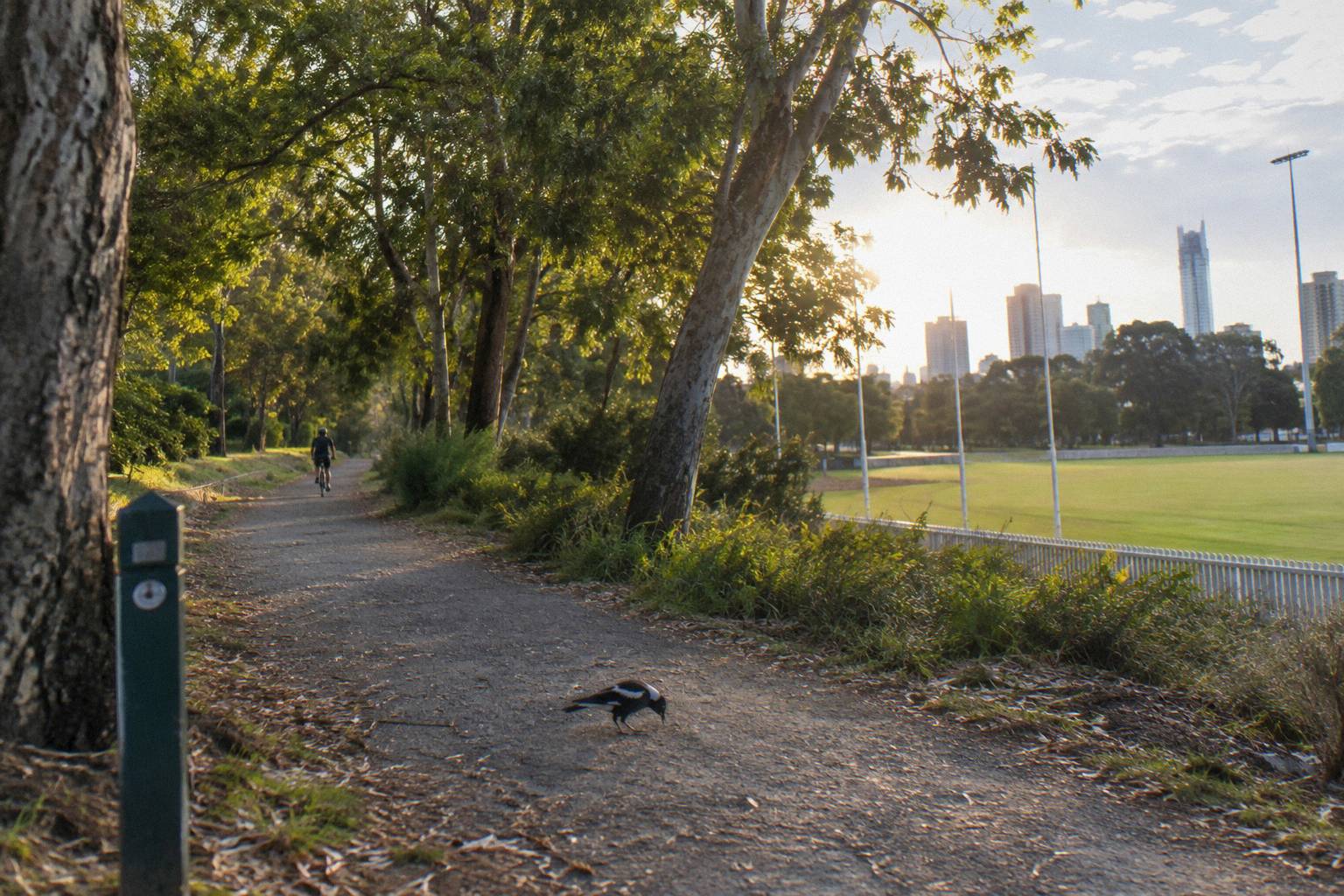
What makes the loop genuinely relaxing is its infrastructure. Wikipedia notes drinking fountains roughly every 2 km along the trail, a detail that matters more than any scenery claim on a warm afternoon. The trail also stitches together parks, so a rider can bail out for a break whenever the mood strikes. Riders who prefer company over self-navigation can cover comparable inner-city ground on a guided ride instead.
For a point of comparison on guided versus independent: the Classic Cycling Tour From Batman Park runs 4 hours from its Batman Park start, covering about 16 km including stops and a lunch stop in Fitzroy where you buy your own, all in a group capped at 10. It is the same relaxed pace the loop demands, with someone else reading the map. The tour starts at 10am, which leaves the afternoon free for a pier visit or a museum, a scheduling detail that suits visitors packing a lot into one day.
Families considering the loop should also read our family bike rides with kids guide, since the loop's off-road segments are the core of Melbourne's kid-friendly riding. The same separation from traffic that calms nervous adults makes the trail the default recommendation for children, and the footpath-riding exception for riders aged 12 and under means younger children can legally ride where adults must stay on the road or path.
The Yarra River Trail: Riverside Riding Without The Traffic
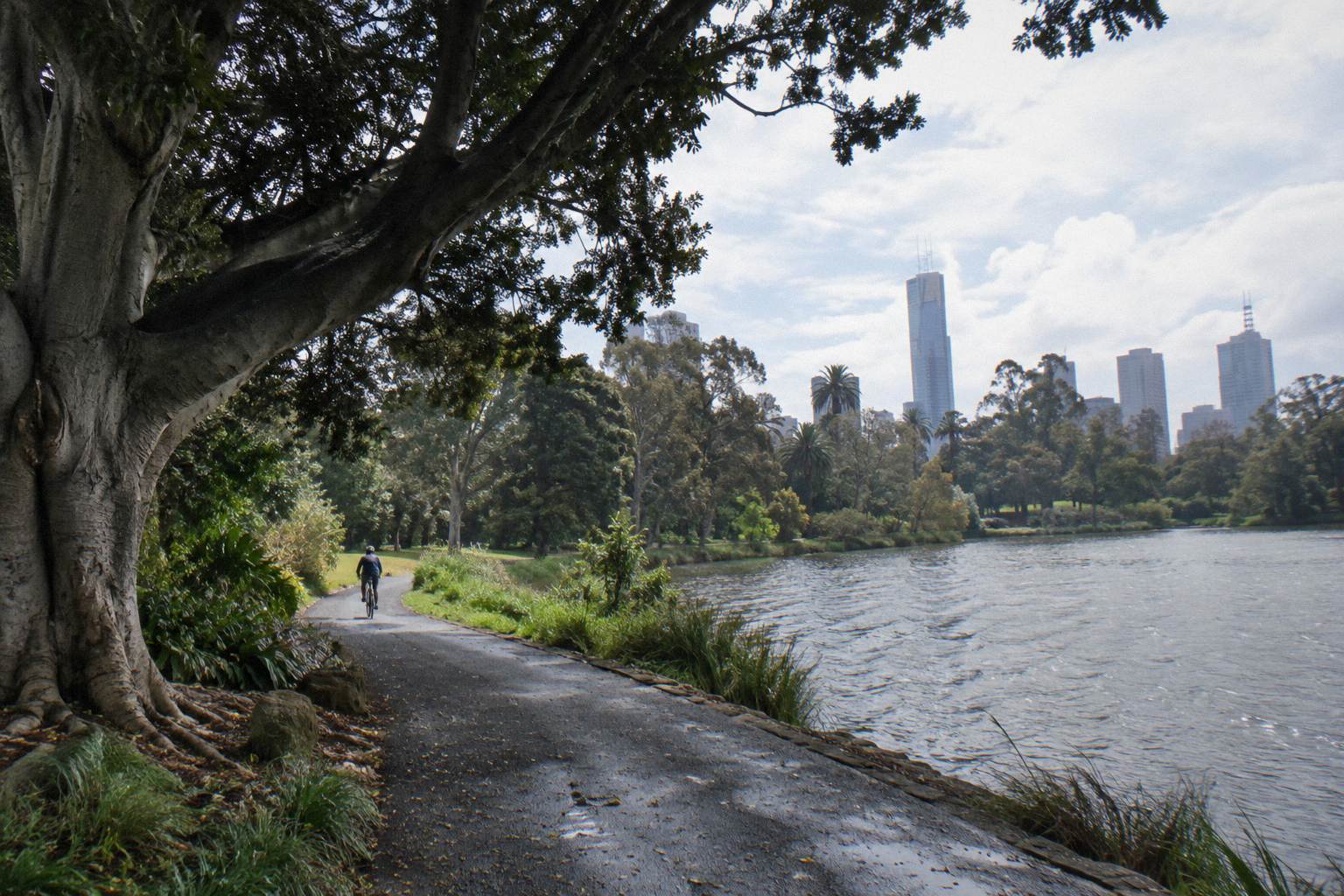
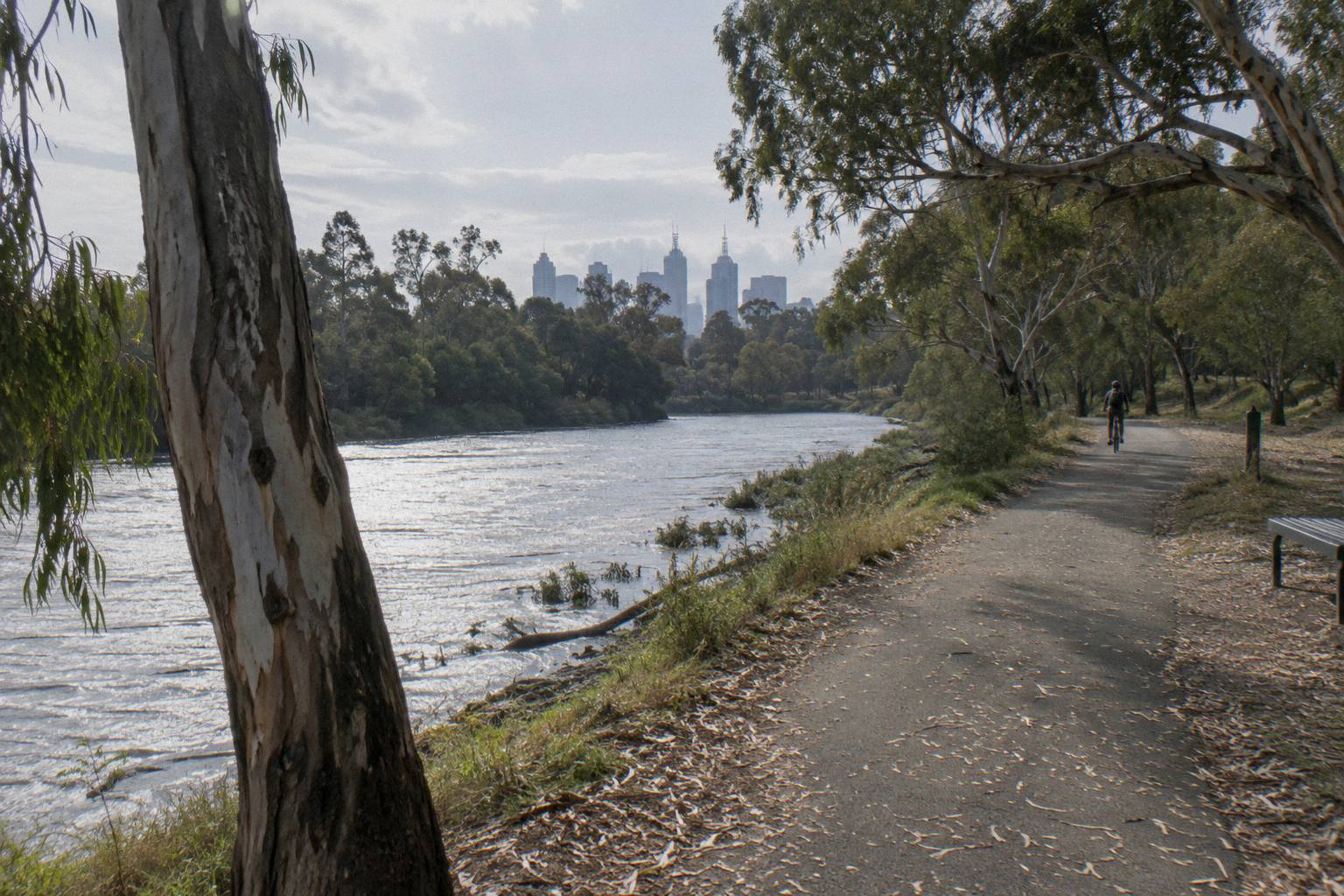
Riverside riding along the Yarra is the other pillar of relaxed Melbourne cycling, with the Main Yarra Trail following the river through parkland well beyond the CBD. Length estimates for the trail vary depending on how the trail is defined, so treat any single figure loosely; what matters for an easy day is that the inner stretches are flat, tree-lined and separated from roads.
Demand for the Yarra River trail is steady year-round, and the search terms usually mean the riverside path, not anything else sharing the name. Our Yarra River bike ride guide covers how the riverside sections connect. Two cautions from official sources shape any sensible plan. First, in Yarra Bend Park the riverside trail linking from the Bushland Circuit Trail is temporarily closed for structural damage, with a detour in place, so a full riverside loop cannot be promised. Second, that same park bars motorised bicycles on management-vehicle-only tracks and shared-use trails, which affects e-bike riders specifically.
The Yarra also appears on commercial routes. The Melbourne E-Bike Tour With Local Guide, run by Blue Tongue Bikes from its shop at 2 Rebecca Walk in Batman Park, lists the Yarra among its route highlights alongside the Shrine, the MCG, Cooks' Cottage and the Royal Exhibition Building. It runs about 4 hours including a lunch stop, from A$139 per person, rated 4.9 from 300+ reviews, with pedal-assist e-bikes supplied and groups capped at 10.
A guided e-bike ride like that covers riverside ground without any navigation on your part, and the pedal-assist format flattens the few rises the river valley does have. Legal e-bikes in Victoria assist only while you pedal and cut out at 25 km/h with a 250 W motor limit, so an e-bike tour is a relaxed ride by law, not a speed experience. Riders weighing up the two formats can read our e-bike or regular bike comparison for the full trade-off, and the electric bike rides around Melbourne guide lists where powered machines are welcome.
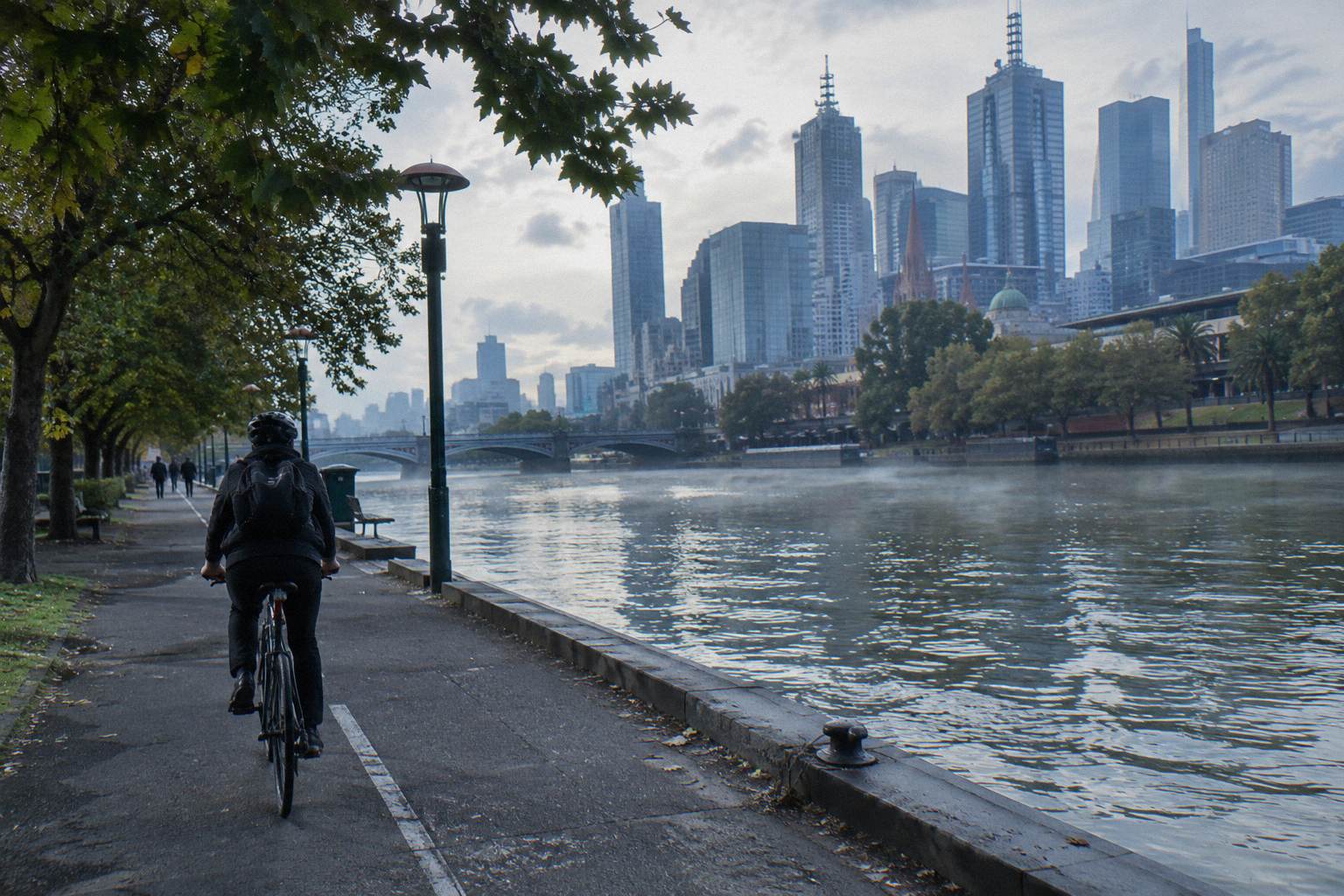
The riverside trail also connects, for ambitious riders, toward the valley itself. Our piece on cycling from Melbourne to the Yarra Valley explains what that longer commitment involves; for a relaxed day, the inner river stretches are the sensible portion.
Which Parks Allow Bikes, And Which Bar E-Bikes?
Albert Park and Yarra Bend are the two inner parks most relevant to relaxed riding, and both carry e-bike restrictions riders must check first. Albert Park's paths bar power-assisted bicycles above 200 W under Parks Victoria rules, while Yarra Bend lists motorised bicycles as barred on its management-vehicle-only tracks and shared-use trails, so e-bike riders should confirm their machine is welcome before planning a lap.
The Albert Park detail deserves spelling out because it catches visitors. Legal tour e-bikes are 250 W pedal-assist machines, and Albert Park's threshold is 200 W, which means an e-bike that is perfectly legal on every road and most paths in Victoria may not be permitted on Albert Park's paths. The park sits about 3 km from the CBD and offers a 5 km walking and running track around the lake, an easy standard-bike circuit. Check the operator's e-bike specification before promising yourself an Albert Park lap on a powered machine; the restriction is on the official Parks Victoria Albert Park page.
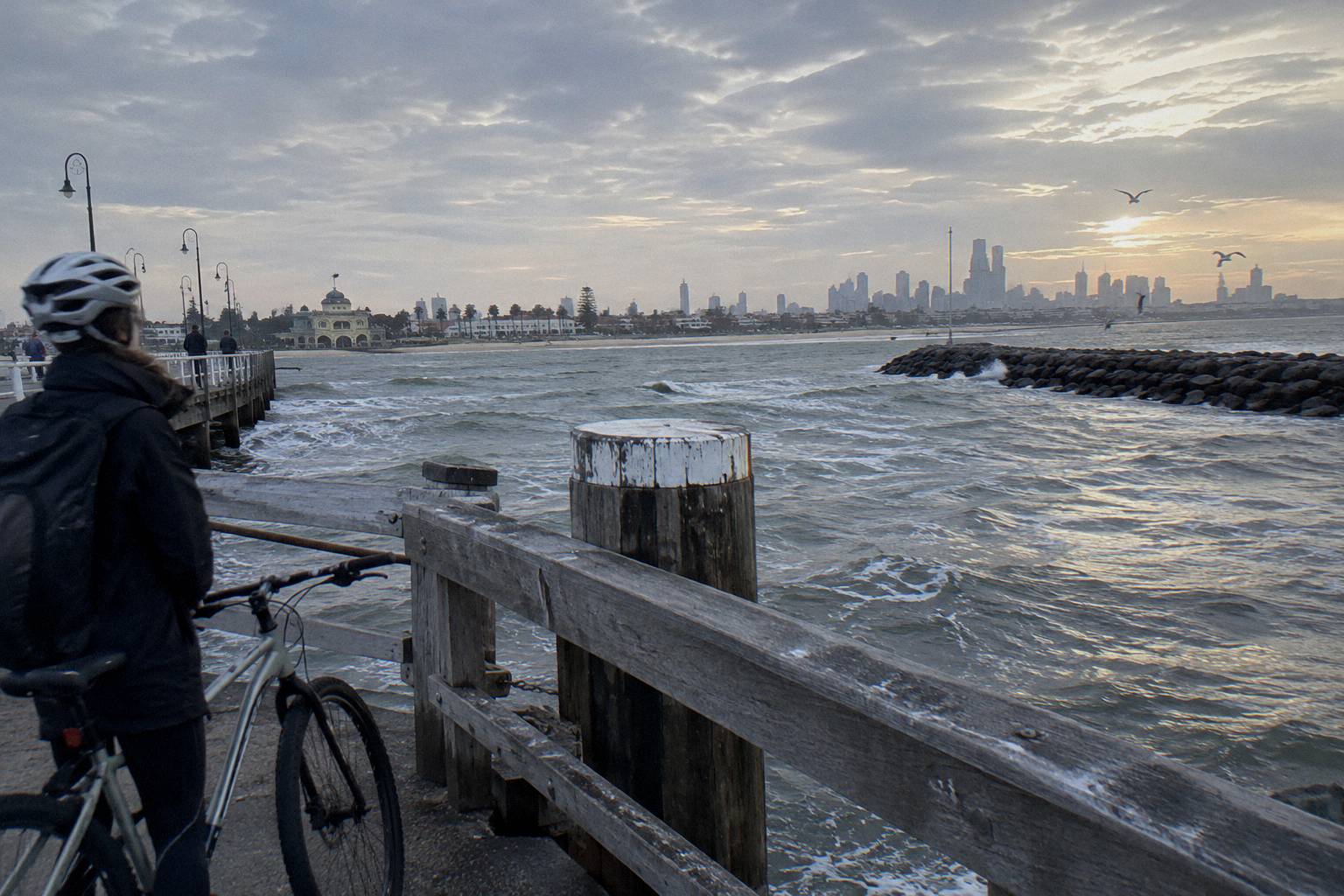
St Kilda Pier adds one more restriction worth knowing: no motorised vehicles, including e-bikes and scooters, on the management-vehicle-only paths, and dogs, cats and fishing are banned on the breakwater itself. Standard bikes on the shared approach are the way to see the pier, and the penguin boardwalk sessions at the far end need a separate booking through Phillip Island Nature Parks. Viewing is not guaranteed, and the sessions are not run by bike operators.
Bayside Paths: Riding From St Kilda Toward Brighton
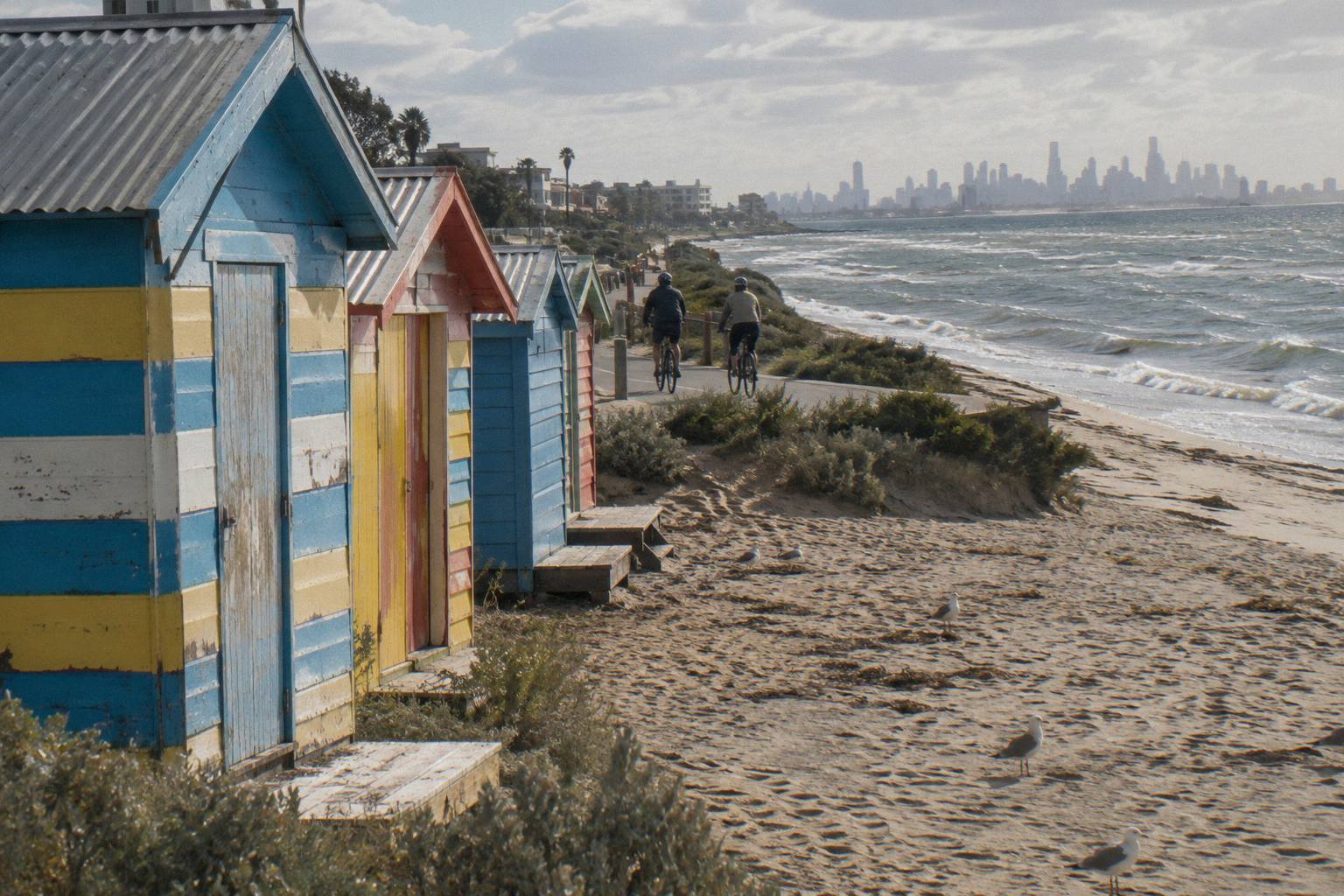
The bayside corridor from St Kilda toward Brighton is Melbourne's most scenic relaxed ride, tracing the water past beaches, piers and the famous bathing boxes, and it anchors the St Kilda And Brighton Bayside Bike Tour, a 3-hour guided ride from A$124 per person that starts at Brighton Beach Railway Station. The route is flat, coastal and almost entirely away from fast traffic.
Beach Road is the spine of bayside cycling, and our St Kilda Beach Road ride guide maps it in detail for independent riders. For visitors who would rather not plan a thing, the guided version handles bike supply, routing and timing. The St Kilda And Brighton bayside bike tour includes a hot or cold soft drink with a snack on one booking page and water on the other, and its listing notes that people who cannot ride a bike or who have mobility impairments are not suitable for the tour, so confirm the details before booking.
Bayside riding also pairs naturally with the pier rules above. If your route takes you onto St Kilda Pier, ride a standard bike, keep off the management-vehicle-only paths, and treat the penguin boardwalk as a booked add-on rather than a ride-through. The two-hour window of a sunset penguin session slots neatly after a morning bayside ride, which is how many visitors structure the day. Session times shift with last light through the year, so check the booking page rather than assuming a clock time. The full index of guides sits on Melbourne Bike Tours.
Further afield, the Mornington Peninsula Small-Group Bike Tour from Bayplay Adventure Tours extends the bayside idea down the bay, from A$120 per person for 2.5 hours from the Point Nepean Information Centre, with single-rider e-bikes for riders over 14 and groups up to 15. It is a full-day trip from the city but a genuinely relaxed one, with coastal paths rather than traffic.
Guided Rides Versus Riding The Paths Yourself
A guided ride trades planning for pace: you get a bike, a helmet, a route and local commentary, while the self-guided option gives you freedom to stop anywhere for as long as you like. Guided city and bayside tours run from A$120 to A$140 per person for 2.5 to 4.5 hours, and every one carries free cancellation up to 24 hours before on its booking page.
The decision usually comes down to confidence and time. A first-time visitor with one free afternoon often gets more from a guide; a repeat visitor with a favourite café usually prefers independence. Our bike hire or guided ride comparison works through the trade-offs in full, and what to expect on a guided bike ride covers the practical shape of a tour day.
| Tour | Operator | Duration | From price | Group |
|---|---|---|---|---|
| Classic Cycling Tour From Batman Park | Blue Tongue Bikes | 4 hours | A$129 | Up to 10 |
| Famous Melbourne City Cycling Tour With Local Guide | Melbourne By Bike | 4.5 hours | A$140 | About 8 to 10 |
| St Kilda And Brighton Bayside Bike Tour | Cycling Vine Tours | 3 hours | A$124 | Up to 10 |
| Mornington Peninsula Small-Group Bike Tour | Bayplay Adventure Tours | 2.5 hours | A$120 | Up to 15 |
Two notes on that table. The Famous tour is rated 4.9 from 900+ reviews, and its e-bike upgrade costs A$40 per person on top of the base price. The Classic tour from the same city-highlights family is rated 4.9 from 680+ reviews, from A$129 per person, and starts at 10am from Batman Park with a rain poncho supplied if needed.
Private formats round out the lineup. The Private Cycling Tour From Federation Square, run by Guydeez, runs 3 hours from A$255 per person, with pickup and the meeting point at Federation Square, and the Private Melbourne E-Bike Tour, from A$500 per person, runs 2 to 4 hours with a dedicated guide, a minimum age of 12, and the operator arranging route and start with the group. Our private guided bike rides guide explains when the premium is worth it. For riders who want the valley rather than the city, the Yarra Valley Guided And E-Bike Rail Trail Cycling tour runs 6 hours from A$350 per person, with a meal included, a group cap of 8 and a minimum age of 18.
Rules That Keep A Relaxed Ride Relaxed
Three rule sets shape easy riding in Melbourne: shared-path courtesy, helmet law, and light requirements after dark. Riders give way to pedestrians and keep left, everyone wears an approved-standard helmet, and night or low-light riding needs a white front light and red rear light visible from 200 m plus a red rear reflector visible from 50 m.
None of this is onerous, but a couple of details catch visitors. Footpath riding is not allowed for adults unless supervising a rider aged 12 or under or carrying a medical certificate, so touring riders stay on roads and paths proper. Motorists must leave 1 m when passing on roads up to 60 km/h and 1.5 m above that, and two cyclists may ride abreast no more than 1.5 m apart, which is why guided groups ride the way they do. The full legal picture, including the helmet standard labels, is in our Victoria bike helmet law guide, and tram lines get their own treatment in tram tracks and cycling safety.
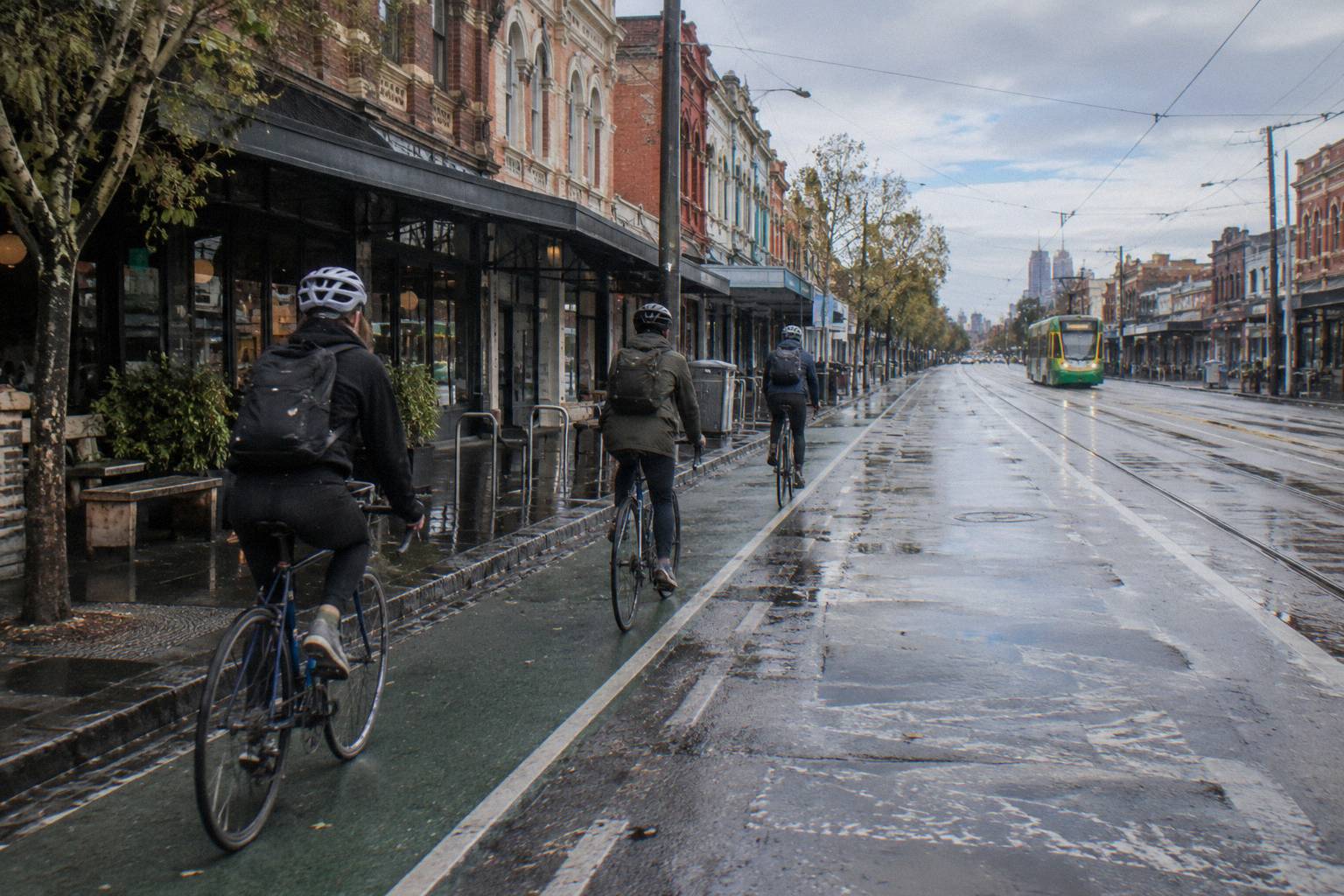
Public transport matters if you are assembling your own day. Metro trains carry bikes and factory-built e-bikes switched off, but only folding bikes may travel on trams and buses, so plan a rail-based start rather than a tram-based one. Converted e-bikes are banned from trains entirely. And if your relaxed day includes a drink at a winery or a brewery, note that riding impaired is unsafe and illegal; Victoria publishes no bicycle-specific blood-alcohol figure, and none is needed to make the point.
The restrictions above are easier to scan side by side:
| Path or park | Standard bikes | E-bikes | Key caveat |
|---|---|---|---|
| Capital City Trail | Welcome | Generally welcome | Shared-path rules, give way to pedestrians |
| Albert Park paths | Welcome | Barred above 200 W | 250 W tour e-bikes exceed the park limit |
| Yarra Bend shared trails | Welcome | Motorised bikes barred | Riverside section closed for structural damage, detour exists |
| St Kilda Pier paths | Shared approach fine | Barred as motorised vehicles | Penguin boardwalk needs a separate booking |
When To Ride, And What To Bring
Melbourne's climate suits relaxed riding in every month, with mean maximums from 13.5 °C in July to 25.9 °C in January, no wet season, and about 100 rain days a year spread evenly. Bring layers for changeable conditions, water for the fountains to top up at, and a light rain shell; there is no month when a relaxed ride needs to be ruled out.
The city is famously changeable rather than extreme, so the practical packing list is short. Our what to wear on a bike ride guide and the best season for a bike ride rundown go deeper if you are matching a trip to a month. Guided tours remove most of this thinking: helmets come supplied, the Classic tour includes a rain poncho if needed, and the Famous tour supplies bottled water with a lunch stop at Queen Victoria Market where lunch is bought by you.
For riders assembling their own day, a simple checklist covers the relaxed paths above:
| Check | Why it matters | Where it applies |
|---|---|---|
| Helmet with approved label | Mandatory for every rider, fines apply | Everywhere in Victoria |
| Bell or voice for overtaking | Shared-path rule, pedestrians give way to them | All off-road paths |
| Lights after dark | White front, red rear, reflector | Any night or low-light riding |
| E-bike wattage | 200 W bar on paths | Albert Park |
| Standard bike only | Motorised vehicles barred | St Kilda Pier paths, parts of Yarra Bend |
| Folding bike only | Non-folding bikes barred | Trams and buses |
One ride worth planning around is the Melbourne By Bike flagship, the Famous Melbourne City Cycling Tour With Local Guide, a 4.5-hour standard-bike ride with small groups usually of 8 to 10 or fewer and children welcome, solo riding recommended from 12. Its meeting details come in your booking confirmation, and it is the closest thing to a relaxed-path experience with a local narrating it. Melbourne By Bike has been serving Melbourne visitors since 2002, and buggies and tagalongs are available for small children, which makes the Famous tour one of the few relaxed options that genuinely spans ages.
Mistakes That Ruin A Relaxed Path Ride
The biggest mistakes are assuming every park welcomes e-bikes, riding on the footpath as an adult, and expecting a guided tour named after the Capital City Trail. Albert Park bars power-assisted bicycles above 200 watts, Yarra Bend restricts motorised bikes on shared trails, and no operator sells the loop as a guided product. Check your machine, your route and your expectations before you roll.
Adults on footpaths: Riders aged 12 and under may use the footpath, plus an adult supervising them. Everyone else stays on the road or shared path, so do not hop the kerb to dodge traffic.
E-bikes in parks: Albert Park's paths bar power-assisted bicycles above 200 watts, and Yarra Bend lists motorised bicycles as barred on shared-use trails. Confirm what you are riding before promising yourself a park lap.
Hoping for a guided loop: No tour runs the Capital City Trail as a named product. If you want a guide, book a city ride that covers comparable riverside and parkland ground instead.
Forgetting the helmet: Helmets are mandatory for every rider, e-bikes included, with fines for non-compliance. Tours normally supply one, but independent riders hiring a bike should check the approved-standard label.
Skipping the etiquette: On shared paths riders give way to pedestrians, keep left, and call or ring when passing. At a pedestrian-only light, dismount and walk. Relaxation here is mostly courtesy at modest speed.
Common Questions About Relaxed Bike Paths In Melbourne
What Is The Easiest Bike Path In Melbourne For Beginners?
The Capital City Trail is the standard answer, described on Wikipedia as an easy loop largely built from sections of other trails, with drinking fountains roughly every 2 km. The inner Yarra riverside stretches and the bayside path from St Kilda toward Brighton are similarly flat and separated from traffic.
Can You Ride An E-Bike On Melbourne's Shared Paths?
Generally yes, with exceptions. Legal e-bikes assist only while pedalling and cut off at 25 km/h. Albert Park's paths bar power-assisted bicycles above 200 W, and Yarra Bend Park lists motorised bicycles as barred on management-vehicle-only tracks and shared-use trails, so check the machine before you plan a park lap.
Is The Capital City Trail Flat?
The loop is rated easy and follows river, creek and parkland corridors through largely gentle terrain. No official length figure is published for it, so treat any kilometre count you see as an estimate rather than a fact.
Do Guided Bike Rides In Melbourne Take The Relaxed Paths?
Several do, by route if not by name. The Melbourne E-Bike Tour With Local Guide lists the Yarra among its highlights, the St Kilda And Brighton Bayside Bike Tour covers the coastal corridor, and the city tours use calm streets and riverside segments. Prices run from A$124 to A$140 per person for the main group options.
Do I Need To Bring A Helmet On A Guided Bike Ride?
Normally no. Helmets are mandatory in Victoria but are supplied on most guided tours as part of the package. Helmets must carry an approved-standard label, which tour helmets do; the law applies to e-bike riders exactly as it does to everyone else.
Can I Take My Bike On Public Transport To Reach A Path?
Metro trains carry bikes and factory-built e-bikes switched off and not charged, while trams and buses take only folding bikes and folding e-bikes. Converted e-bikes are banned from trains and ticketed areas entirely, so plan rail-based starts.