Tram Tracks And Cycling Safety In Melbourne
Tram tracks are the number one safety question visitors ask about riding a bike in Melbourne, and they are the main reason many first-time visitors book a guided tour instead of heading out alone.
Short answer
Melbourne's tram network shares the road with bikes, and tracks worry most visiting riders. Victorian law requires a helmet for every rider, bans non-folding bikes from trams, and lets cyclists cross at a green bike signal. A guided ride from about A$120 to A$140 per person puts a local guide at the front of the group.
Melbourne runs the largest tram network in the world on streets that bikes also use, and every visitor who has watched a bicycle wheel slip sideways near a rail groove understands the hesitation. Safety worries about trams are the main reason a visitor picks a guided ride over solo riding, and that instinct is not unreasonable: the CBD mixes rails, hook turns, tram stops and painted lanes in ways few other cities do. What follows sets out what is actually written in the Victorian road rules, what the public transport rules mean for cyclists, and how a guided tour changes the picture. It sticks to the published road rules and tour details, and it sends you to the operator for anything that depends on the route a particular group rides on the day.
There is no official Victorian guidance specifically about riding over tram tracks, so ask the operator about crossing technique before you ride. What it can do, reliably, is explain the rules that do exist, explain why a guide changes the calculus, and give you a checklist of questions to put to any operator or hire desk before you ride.
Why Do Tram Tracks Worry Cyclists In Melbourne?
Melbourne's tram tracks sit in the same traffic lanes bikes use, and a rail groove is wide enough to catch a narrow road-bike wheel, which is why the tracks, not the trams themselves, are what visiting riders ask about. The concern is legitimate enough that many visitors choose a guided tour with a local guide out front rather than testing their first CBD ride alone. Neither worry should stop you riding; both should shape how you plan it.
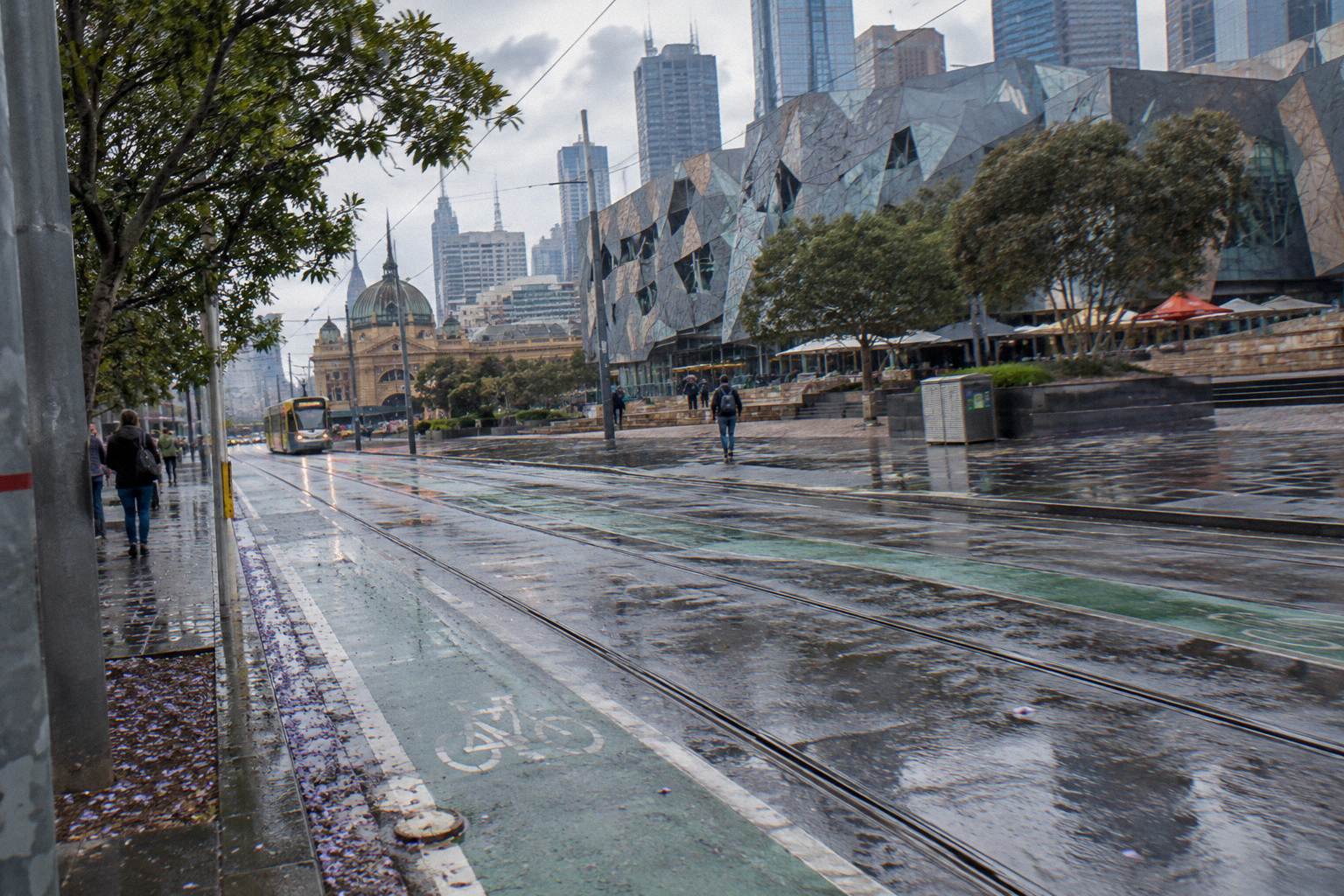
The network is genuinely large and genuinely central. Trams run down the middle of Swanston Street, Collins Street, Bourke Street and St Kilda Road, among many others, and bike routes across the city regularly intersect those corridors. Unlike a metro system buried underground, the rails are surface infrastructure, so a cyclist heading from the Fitzroy Gardens to the Yarra River will cross tram lines several times on a short trip.
The worry also has a second layer that has nothing to do with the rails. Tram passengers board from the road surface, so cars must stop behind trams, and bikes filtering forward need to be aware of boarding passengers, opening tram doors and stopped traffic. Add rain, which Melbourne delivers on roughly 100 days a year spread across every month, and a wet rail groove becomes the image that sticks in a visitor's mind.
The practical answer most visitors land on is simple: ride with someone who does this daily. A guided city ride does not remove the tracks from the street, but it puts a local guide at the front of the group who rides these routes constantly and chooses the line, the pace and the timing.
Can You Take A Bike On A Tram If You Feel Unsafe?
No. Victorian rules allow only folding bikes, folding e-bikes and folding e-scooters on trams and buses, with folded size limits of 82 by 69 by 39 centimetres and wheel rims up to 51 centimetres; children's bikes up to 31 centimetres wheel circumference are also permitted. A standard rental bike or tour e-bike cannot board a tram at all, so riding to a tram stop as an escape plan simply does not work.
The rules come from Transport Victoria and they are worth knowing before you plan a day around them. There is no "squeeze on if it's quiet" allowance: the dimensions are the test, and a full-size bike fails it. That matters for two common visitor scenarios. First, the "if I get tired I'll hop on a tram" plan is off the table on a regular bike. Second, if rain arrives mid-afternoon, your way home is riding, walking, a train or a cab, not a tram with your bike.
Metro trains are the friendlier option. Bikes and factory-built e-bikes are allowed on metropolitan trains, with e-bikes switched off and not ridden or charged on board, and bikes walked on platforms. Converted e-bikes are banned from all trains and ticketed areas. Regional V/Line travel is free for bikes, with the conductor deciding the space. So a train-based plan, such as starting a ride out of the city on the best bike paths for a relaxed ride, works with a bike; a tram-based one does not.
| Transport | Regular bike | Folding bike or folding e-bike | E-bike (factory-built) |
|---|---|---|---|
| Trams | Not allowed | Allowed folded, up to 82 x 69 x 39 cm, rims to 51 cm | Only if folding, same size limits |
| Buses | Not allowed | Allowed folded, same size limits | Only if folding, same size limits |
| Metro trains | Allowed | Allowed | Allowed, switched off, not ridden or charged |
| V/Line regional trains | Free, conductor decides space | Free | Free, switched off; converted e-bikes banned everywhere |
This is one of the quiet strengths of a guided city tour: the logistics are already solved. The Famous Melbourne City Cycling Tour With Local Guide, run by Melbourne By Bike, takes small groups through the city for 4.5 hours with a lunch stop at Queen Victoria Market, and it is the most-reviewed tour of the lot, rated 4.9 from 900+ reviews, from A$140 per person. There is also an e-bike upgrade on that tour at A$40 per person. Meeting point details come in your booking confirmation. You never need a tram bailout plan because the guide and the route are the plan, and you can check availability if that arrangement suits your visit.
What Do Victoria's Road Rules Actually Say About City Cycling?
Victoria's road rules require cyclists to ride on the road rather than the footpath unless they are 12 or under, supervising a rider that age, or carrying a medical certificate. Riders need a white front light and red rear light at night or in low light, drivers must leave at least 1 metre when passing at up to 60 km/h and 1.5 metres above that, and two cyclists may ride abreast no more than 1.5 metres apart.
The full set of bicycle road rules is published by Transport Victoria and it rewards a slow read before your first ride. On shared paths, bike riders give way to pedestrians, keep left, and use a bell or voice to overtake. At crossings, a green bike signal means you may ride across, while a pedestrian-only light means dismount and walk: a distinction that comes up repeatedly near tram super-stops in the CBD.
Riding impaired is unsafe and illegal, full stop. The safe summary is simply: if you would not drive, do not ride.
| Rule | What it says | Who it applies to |
|---|---|---|
| Footpath riding | Road only, unless 12 or under, supervising a rider 12 or under, or carrying a medical certificate | All riders on tour routes |
| Night lights | White front and red rear light visible from 200 m, red rear reflector visible from 50 m | Riding at night or low light |
| Passing distance | 1 m up to 60 km/h, 1.5 m above 60 km/h | Drivers passing cyclists |
| Riding abreast | Two riders side by side, no more than 1.5 m apart | Cyclists on the road |
| Shared paths | Give way to pedestrians, keep left, bell or voice to overtake | All path riders |
| Bike signals | Green bike signal means ride across; pedestrian-only light means walk | Riders at signalised crossings |
For a fuller street-by-street treatment of the central city, the companion page on cycling through the Melbourne CBD covers the layout without repeating these rules. Melbourne Bike Tours keeps the rule summaries short and points you to the official source for the detail.
Are Helmets Compulsory, And Do Tours Supply Them?
Yes, helmets are mandatory for every bicycle rider in Victoria, e-bike riders included, and the helmet must carry a label for an approved standard such as AS/NZS 2063 or EN 1078; the only exemptions are religious headdress or a medical certificate carried while riding, and riders can be fined. Every guided ride supplies a helmet as standard, so a visitor on a tour does not need to bring one.
The helmet law is enforced, not advisory, and it applies on shared paths and rail trails just as it does on Swanston Street. The official page from Transport Victoria on bicycle helmets lists the approved standards and the exemption conditions, and it is the page to read if you have a specific circumstance. What it does not offer is wiggle room for "it's just a short ride".
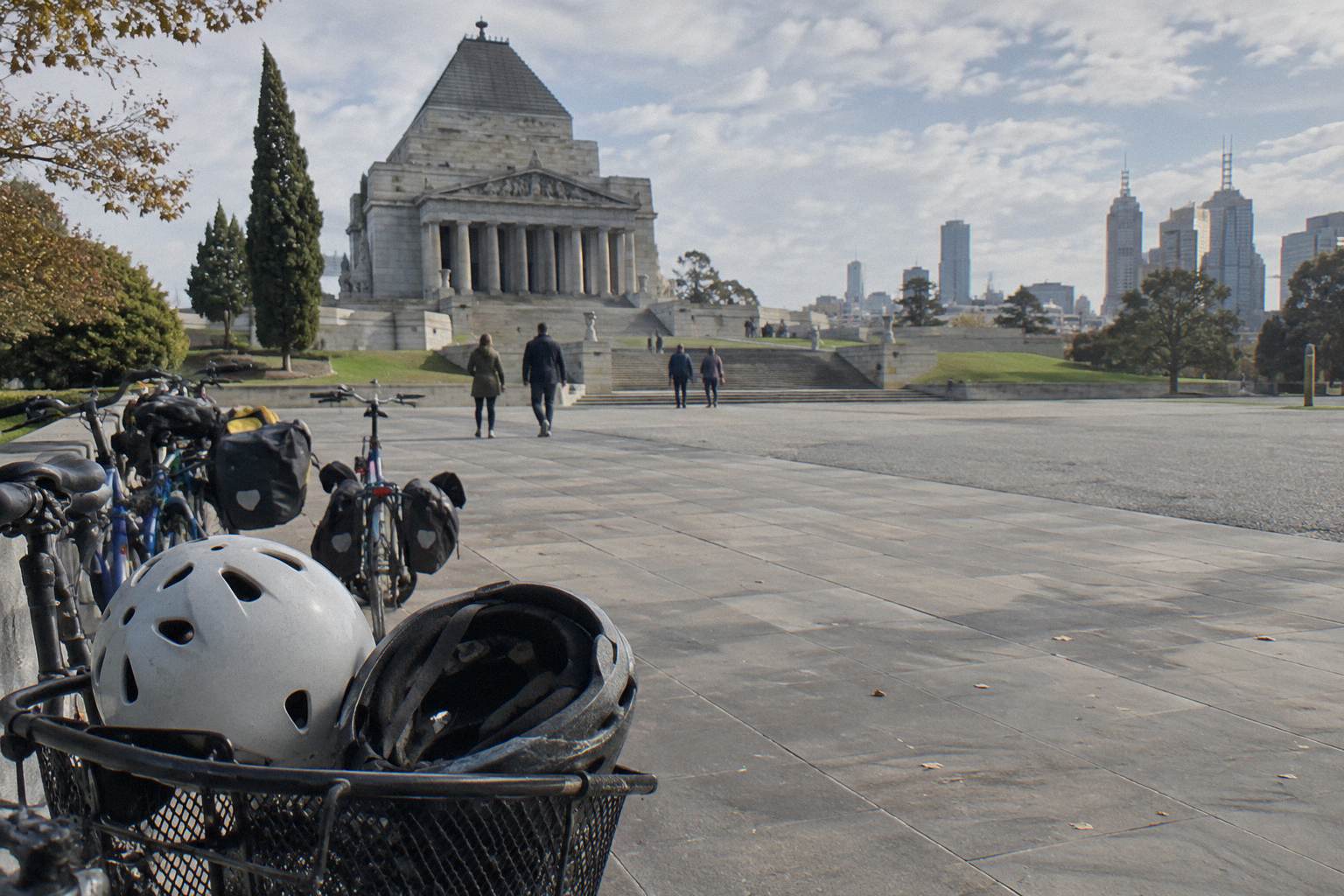
On guided tours, the helmet question answers itself. The booking listings for the Famous Melbourne City Cycling Tour, the Classic Cycling Tour From Batman Park, the Melbourne E-Bike Tour With Local Guide, the St Kilda And Brighton Bayside Bike Tour, the private e-bike option, the Yarra Valley guided ride and the Mornington Peninsula tour all include a helmet, and several include the bike and lock as well. Specific helmet models are not promised by any operator, only that one is supplied. Riders who prefer their own can bring it, and the deeper background is on the site's page about the Victorian bike helmet law.
Is A Guided Tour Safer Than Riding Alone In Melbourne?
A guided ride does not change the road, the rails or the rules, but it puts a guide who rides the route constantly at the front of the group, which removes the two hardest solo tasks: choosing a line through unfamiliar intersections and judging local traffic behaviour. For a first-time visitor worried about tram tracks, that is the single biggest risk reduction available, and it costs from about A$120 to A$140 per person on the city tours.
Guides earn their place at the front. They set the pace, they call the turns, they pick where the group stops, and on Melbourne By Bike's public tours the groups are small, usually 8 to 10 riders or fewer, with a minimum of two riders to run. The Classic Cycling Tour From Batman Park and the Melbourne E-Bike Tour With Local Guide both cap groups at 10. A small group behind a local guide behaves like a predictable unit, which is exactly what a busy CBD street rewards.
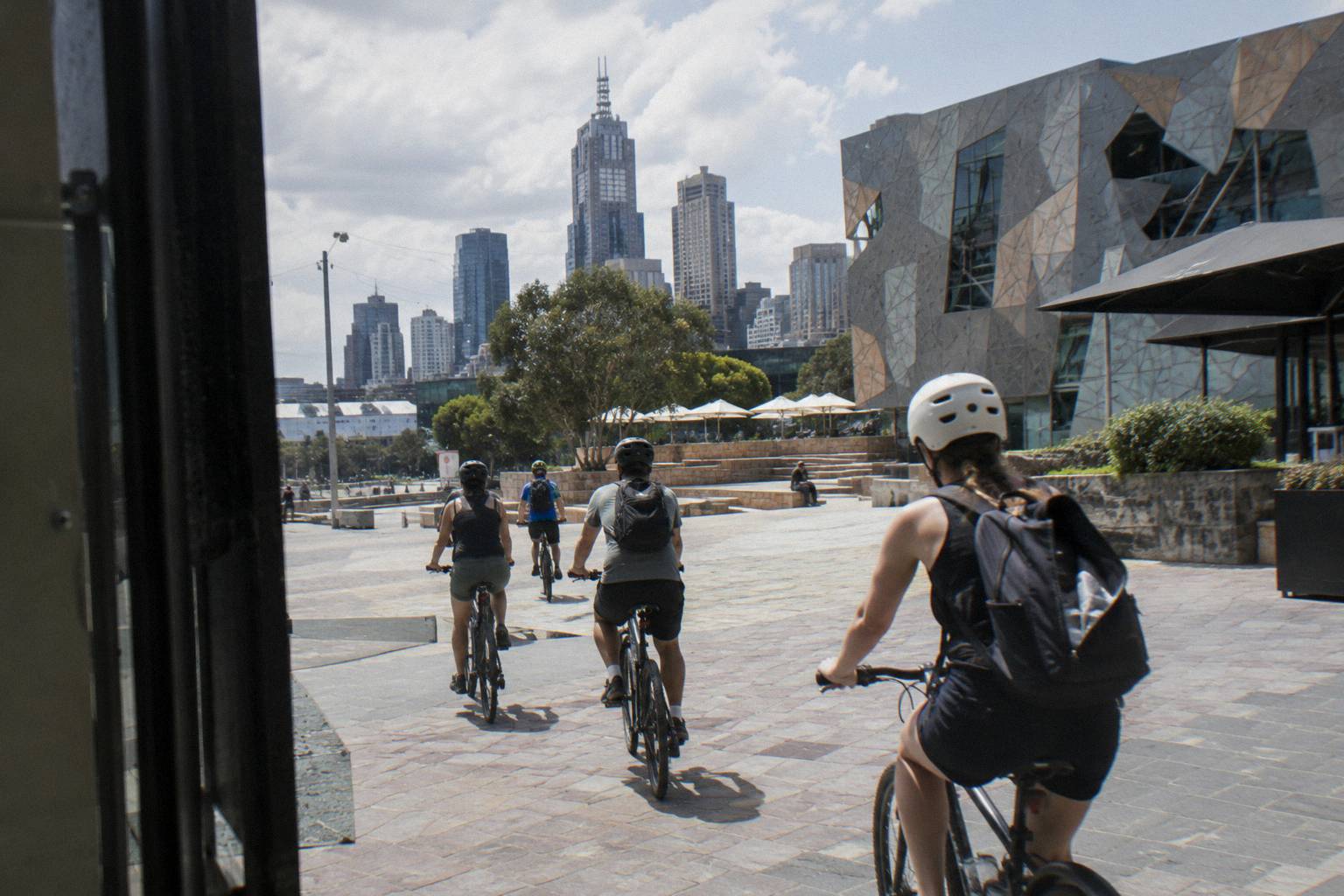
Riding alone is not forbidden or reckless, and plenty of locals do it daily. But solo riding shifts every decision onto you on day one: which street, which crossing, when to wait. The Blue Tongue Bikes e-bike tour, which starts at 10am from the shop at 2 Rebecca Walk in Batman Park and runs about 4 hours over roughly 16 km with a lunch stop, illustrates what a guided route delivers, taking in the Yarra, the Shrine, the MCG, Cooks' Cottage, Parliament, Fitzroy, the Royal Exhibition Building, Chinatown and Hosier Lane without the rider planning a metre of it. It is rated 4.9 from 300+ reviews, from A$139 per person. If you are weighing the two bike types first, the site's comparison of an e-bike or a regular bike for a guided ride works through that choice, and first-timers may also want the page on a guided ride for first-time cyclists.
What Should You Ask An Operator Or Hire Desk Before Riding?
Before any booking or hire, ask four things: whether a helmet and lock are included, how the group is led through tram-track intersections, what happens if rain arrives mid-ride, and what the cancellation terms are. You can already answer some yourself, since every tour here includes a helmet, all offer free cancellation up to 24 hours before, and the Classic and E-Bike tours list a rain poncho if needed.
The questions that remain genuinely open are the route and the day. How a particular guide brings a group through a tram-corridor intersection is operator knowledge, built from daily experience, and there is no official published guidance on riding across tracks, so ask the operator rather than guess. That is precisely why asking is better than guessing. A good operator will answer plainly, because they answer it every week.
| Question to ask | Why it matters | What The Tours Below Confirm |
|---|---|---|
| Is a helmet included? | Helmets are legally required for every rider | Included on all eight tours listed |
| How does the group handle tram-track intersections? | Route handling is operator knowledge, not published guidance | A guide leads every group ride |
| What happens in rain? | Melbourne averages rain on about 100 days a year | Rain poncho listed on Classic and E-Bike tours |
| Can I cancel? | Weather and plans change | Free cancellation up to 24 hours before on every booking page |
| What is the group size? | Small groups are easier to manage in traffic | Up to 10 on the city tours, 8 on the Yarra Valley ride, 15 on Mornington |
| Where do we meet? | Start points vary by operator | Batman Park, Federation Square or details in your confirmation |
If you are hiring rather than touring, the same questions apply with one addition: ask what the shop supplies and what happens if the bike has a problem mid-ride. The site's broader comparison of bike hire versus a guided ride sets out the trade-offs, including the reality that hire puts every route decision on you.
Do The Tours Avoid Tram Tracks, Or Ride Through Them?
No Melbourne city tour can avoid tram tracks entirely, because the rails run through the corridors the main sights sit on. What the tours do instead is control the context: a guide chooses the route, the group rides at a set pace, and the rider follows a wheel rather than reading an unfamiliar street alone. The tracks stay; the guesswork goes.
Be suspicious of any riding experience that promises the rails away. The framing the operators use is that the guide leads and the group follows. The Famous tour's route and lunch stop at Queen Victoria Market, the Classic tour's 4 hours from Batman Park and the Guydeez private ride from Federation Square all operate in the tram city, and the difference between them is format and route, not the presence of rails. Comparing routes rather than operators is the useful comparison, and the site's overview of what to expect on a guided bike ride covers the mechanics of a group day.
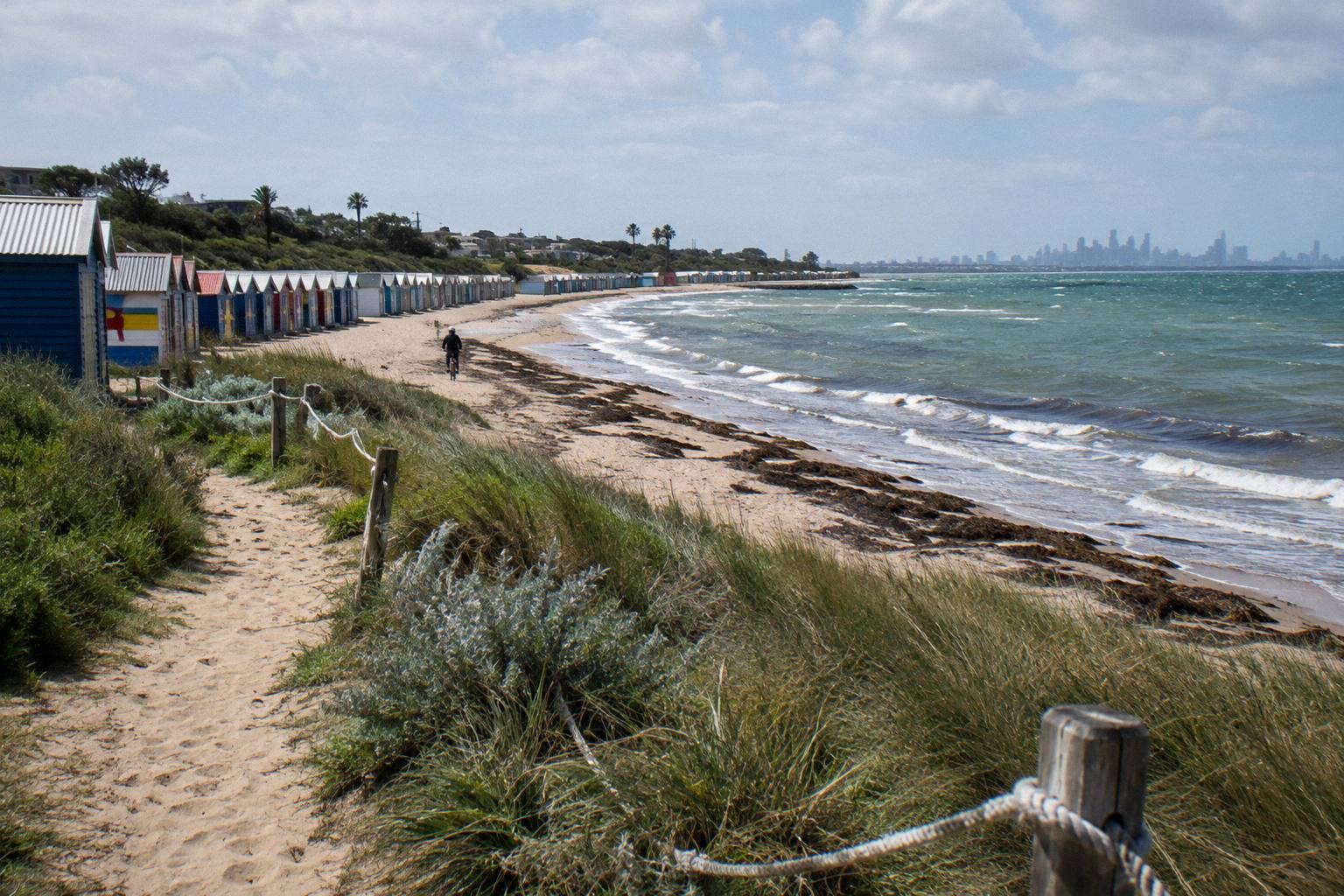
For riders who would rather start away from the tram network altogether, the bayside and regional options do exactly that. The St Kilda And Brighton Bayside Bike Tour starts at Brighton Beach Railway Station, runs 3 hours from A$124 per person along the bay, and swaps rails entirely for beach-front riding, a genuinely different introduction to Melbourne by bike. It carries no rating or review count worth printing yet, so judge it on its route.
Does Rain Or Season Change The Safety Picture?
Yes, it shifts the picture but does not shut it down: Melbourne is the cloudiest Australian capital, collecting about 650 mm of rain across every month with roughly 100 rain days a year, and mean maximums run from 25.9 °C in January to 13.5 °C in July. Guided city tours keep riding in rain, listing a poncho where noted, and every tour allows free cancellation up to 24 hours before on the booking page.
The Bureau of Meteorology averages behind those figures come from the long-running Melbourne Regional Office station, and they describe a city where no month is dry. For a visitor, the practical readings are these: pack a light rain layer in any season, check the forecast the day before, and know your cancellation window. The 24-hour free cancellation on every tour means a genuinely bad forecast is a reschedule, not a sunk cost.
Season also shifts which tour format makes sense. Summer heat, with a record high of 46.4 °C in the city's climate history, argues for morning starts and the bayside routes; the winter mean maximum of 13.5 °C is fine riding weather in a windproof layer. The site's guide to the best season for a bike ride in Melbourne works through the calendar in detail.
What Does A Guided City Ride Cost Versus Going Alone?
The city tours start between A$129 and A$140 per person, the bayside ride from A$124, and regional guided days from A$120 to A$350, all as booking-page from-prices in Australian dollars. Solo riding looks cheaper per day until you price a hire bike, a helmet, a route plan and your own mistakes; a guided tour front-loads all of it into one figure with free cancellation up to 24 hours before.
The table below is a format comparison, not a ranking. Every tour listed is a legitimate choice, the prices are booking-page from-prices per person, and ratings are shown only where a count exists beside them.
| Tour | Operator | Format | Duration | From price |
|---|---|---|---|---|
| Famous Melbourne City Cycling Tour With Local Guide | Melbourne By Bike | Small-group city ride, 4.9 from 900+ reviews | 4.5 hours | A$140 |
| Classic Cycling Tour From Batman Park | Blue Tongue Bikes | Small-group city ride, 4.9 from 680+ reviews | 4 hours | A$129 |
| Melbourne E-Bike Tour With Local Guide | Blue Tongue Bikes | Small-group e-bike ride, 4.9 from 300+ reviews | 4 hours | A$139 |
| St Kilda And Brighton Bayside Bike Tour | Cycling Vine Tours | Bayside small-group ride | 3 hours | A$124 |
| Private Cycling Tour From Federation Square | Guydeez | Private ride, pickup included | 3 hours | A$255 |
| Mornington Peninsula Small-Group Bike Tour | Bayplay Adventure Tours | Regional small-group ride | 2.5 hours | A$120 |
| Yarra Valley Guided Ride | Cycling Vine Tours | Regional guided day, meal included | 6 hours | A$350 |
Note what the private options buy: the Guydeez ride includes pickup, the only tour that does, and the Yarra Valley day includes a meal, which the city tours do not. The Mornington route has no food or drink available along the way, so bring water and snacks. None of these differences is about safety equipment, because the helmet and the guide come as standard on every tour.
Mistakes That Trip Up Riders Around Tram Tracks
The costly mistakes are planning a tram bailout with a full-size bike, crossing rails without a technique, filtering past a stopped tram while passengers board, and forgetting that rain turns rail grooves slick. Victorian rules allow only folding bikes on trams and buses, so your escape plan has to be a train, a cab or riding on. There is no official guidance on crossing tracks, so ask your operator about technique before the ride.
- Tram bailout plans: A standard rental or tour bike cannot board a tram under any circumstances. Use metro trains, which carry bikes, with e-bikes switched off and walked on platforms.
- Rail grooves: A groove is wide enough to catch a narrow road-bike wheel. Cross rails positively and ask your guide or hire desk about crossing lines before you set out.
- Filtering past trams: Passengers board from the road surface, so watch for opening doors and stopped traffic. Never pass a stopped tram on the passenger side.
- Wet weather complacency: Melbourne gets rain on roughly 100 days a year spread across every month, and wet grooves are the real hazard. Slow down in showers.
- Helmet skipping: Helmets are compulsory for every rider in Victoria and tours supply them. Riding without one is a fineable offence, track or no track.
Common Questions About Tram Tracks And Cycling Safety
Why Do Tram Tracks Worry Cyclists In Melbourne?
Tram tracks run in the same traffic lanes bikes use, and the rail grooves sit on the main central corridors, so almost any city ride crosses them repeatedly. The worry is common enough that many visitors choose a guided ride with a local guide out front rather than riding the CBD alone on day one.
Can You Take A Bike On A Tram In Melbourne?
No. Only folding bikes, folding e-bikes and folding e-scooters up to 82 x 69 x 39 cm with wheel rims up to 51 cm may board trams and buses, plus children's bikes up to 31 cm wheel circumference. A standard rental or tour bike cannot board a tram, so riding to a tram stop as a backup plan does not work. Metro trains do take bikes and factory-built e-bikes, switched off.
Are Helmets Compulsory On Guided Bike Rides?
Yes. Helmets are mandatory for every rider in Victoria, e-bike riders included, with fines possible; exemptions apply only for religious headdress or a carried medical certificate. Every tour includes a helmet, so you do not need to bring one.
Is A Guided Tour Safer Than Riding Alone In Melbourne?
A guided tour does not change the road or the rails, but it puts a guide who rides the route daily at the front of a small group, typically up to 10 riders on the city tours. That removes route-finding and traffic-judgement errors, which are the main risks for a first-time visitor. City tours start between A$129 and A$140 per person.
What Should I Ask A Bike Tour Operator Before Booking?
Ask whether a helmet and lock are included, how the group handles tram-track intersections on the route, what happens if rain arrives mid-ride, and what the cancellation terms are. The helmet is included on every tour and free cancellation applies up to 24 hours before on every booking page, so the route and rain questions are the ones worth asking directly.
Can I Ride On The Footpath To Avoid Tram Tracks?
No. Victorian rules require bicycle riders to use the road, not the footpath, unless aged 12 or under, supervising a rider that age, or carrying a medical certificate. On shared paths, riders give way to pedestrians, keep left and use a bell or voice to overtake.
If the tram-track question is the thing holding you back from riding in Melbourne, treat it as a routing problem with a ready-made solution: pick a guided ride, let a local guide who crosses those intersections daily lead the group, and keep the official road rules in your pocket for the parts of the day you spend on foot.