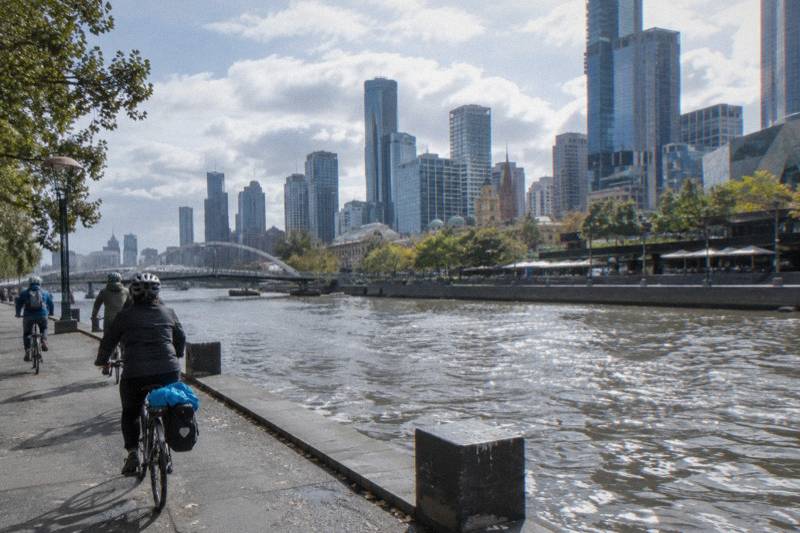
Cycling The Melbourne CBD: Lanes, Traffic And Quiet Times
Central Melbourne is dense, busy and threaded with trams, which is exactly why so many visitors hesitate before riding it. The rules are clear, the paths are real, and a guided ride removes most of the guesswork.
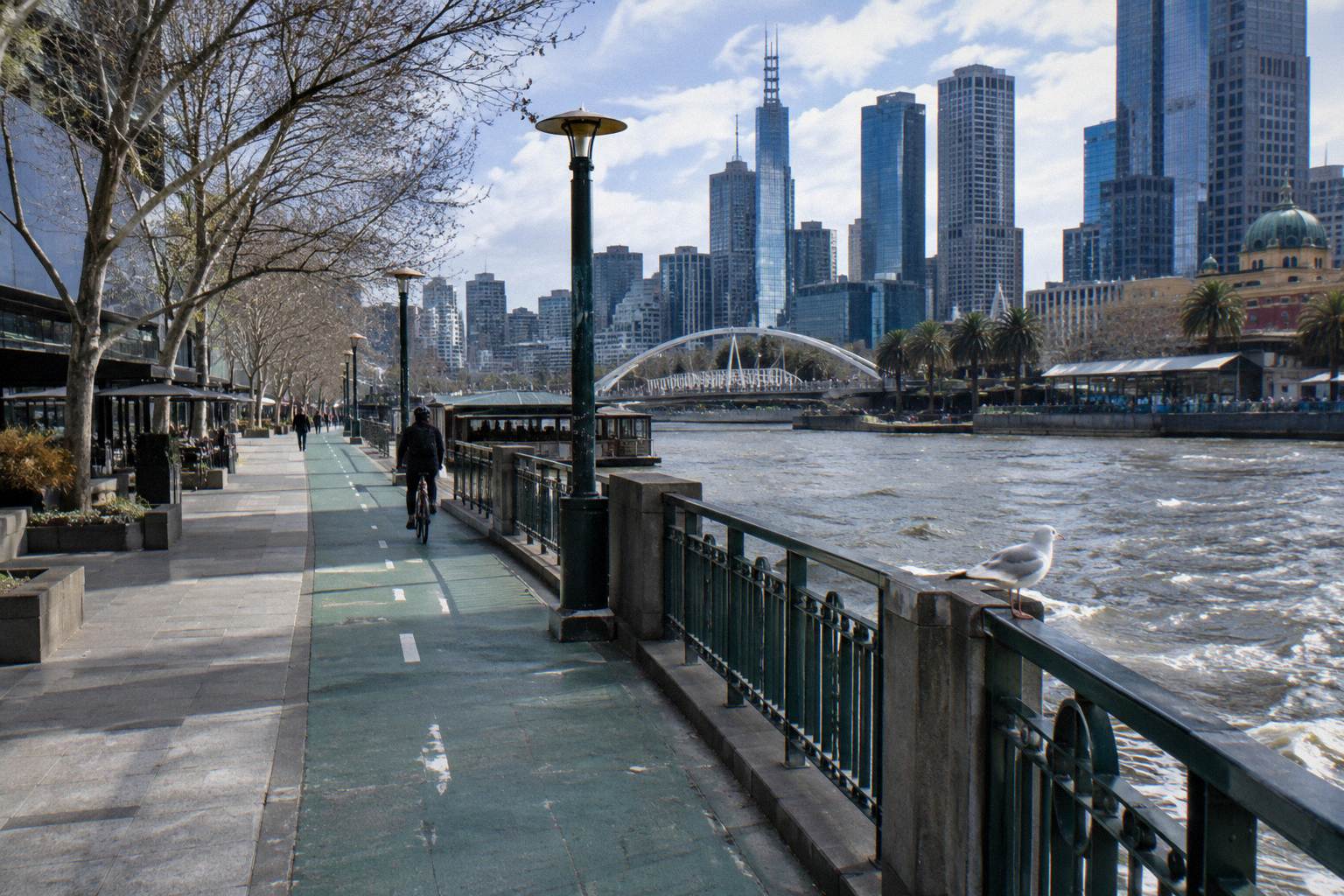
Short answer
Yes, you can cycle the Melbourne CBD, and thousands do. Riders use the road, not the footpath, follow the same rules as cars, and give way to pedestrians on shared paths. A guided tour costs from A$120 per person, and three CBD tours start from Batman Park or Federation Square.
Melbourne's centre is a grid of narrow streets laid over tram tracks, bike lanes and river paths, and it moves fast. Anyone standing at the corner of Swanston and Collins at midday can see the problem a visiting cyclist faces: trams, cars, delivery vans, pedestrians, and bikes all sharing the same corridor. The good news is that Victoria's road rules are unusually clear about where a bike belongs, and a growing set of guided rides means you never have to work out the answer alone.
Below we work through what the rules actually say, where city highlights rides in the CBD start, how trams and trains treat bikes, and the choice between going guided or setting off yourself. Everything here comes from official state sources and from the operators' own published details, so you can plan on facts rather than forum folklore.
Is It Safe To Cycle In The Melbourne CBD?
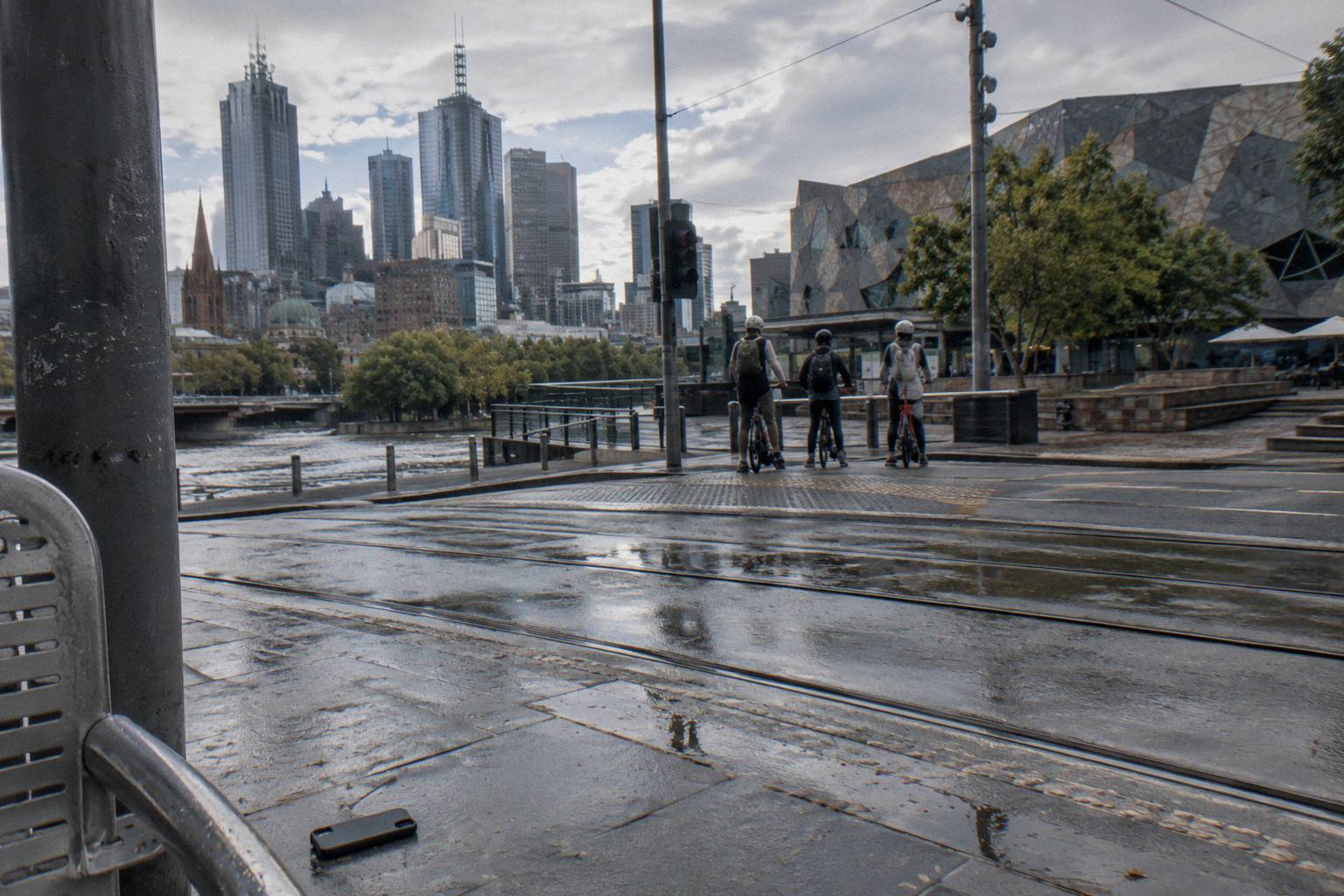
Riding in central Melbourne is legal, normal and manageable, but it is city riding, not bike-path riding. Bikes share roads with trams and cars, riders aged over 12 must stay off footpaths, and helmets are mandatory for everyone. No official traffic count or accident statistic exists for the CBD grid, so treat any such claim you read elsewhere with suspicion.
On safety, the centre rewards attention. Melbourne's grid is flat, compact and connected, and drivers in the CBD are used to bikes. What catches new arrivals is not aggression but infrastructure quirks: tram tracks set into the road, hook turns at some intersections, and shared paths along the Yarra where pedestrians have right of way. A rider who knows the rules in advance handles all of these without drama.
The single biggest reassurance available is a guide. On a guided tour, the person in front chooses the lane, sets the pace through intersections and deals with the tracks, and the group follows. Operators make this point themselves: leading a group through the city is precisely the service being sold. If your worry is "will I know where to position myself," a led ride answers it before you have to ask. The Famous Melbourne City Cycling Tour With Local Guide, runs 4.5 hours at from A$140 per person with a 4.9 rating from 900+ reviews, and its whole premise is that a local guide absorbs the route-finding for you.
For riders going alone, the same rules apply and there is no shortcut around learning them. The sections below set out exactly what the law requires and what the official pages say, so nothing here is guesswork. If you want a broader picture of how the city treats cyclists generally, our piece on whether Melbourne is a good city for cycling covers the wider network beyond the grid.
What Are The Road Rules For Cyclists In Victoria?
Four rules matter most in the CBD: a helmet is mandatory for every rider including e-bike riders; riders over 12 stay on the road, not the footpath; a green bike signal means you may ride across while a pedestrian-only light means dismount and walk; and on shared paths bikes give way to pedestrians, keep left and call out when overtaking.
These come straight from Transport Victoria's road rules pages, and they are enforced. A rider without a helmet can be fined, and the helmet must carry a label for an approved standard such as AS/NZS 2063 or EN 1078. The only exemptions are religious headdress or a medical certificate carried while riding. Helmets are normally supplied on tours, with listing inclusions confirming a helmet on most of them, though no operator promises a specific helmet type.
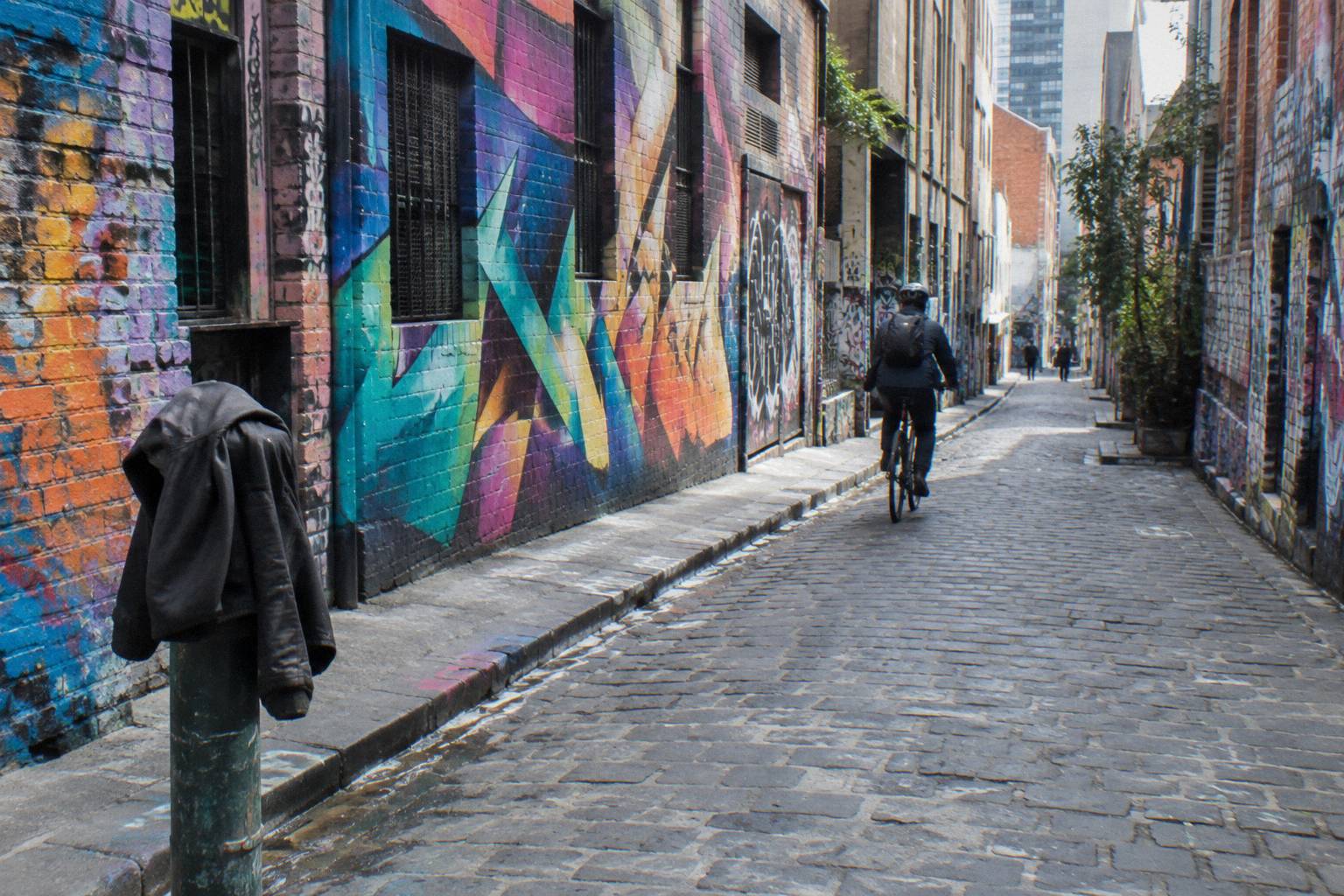
The footpath rule surprises visitors from countries where adults routinely ride sidewalks. In Victoria, only riders aged 12 or under, an adult supervising a rider 12 or under, or a rider carrying a medical certificate may use the footpath. Tour groups therefore ride the road and the shared paths, never the sidewalk. At intersections, look for the bike signal: green means cross, and a pedestrian-only light means you walk your bike across.
The remaining rules shape how you move through traffic. Passing drivers must leave 1 m on roads up to 60 km/h and 1.5 m above that, and two cyclists may ride abreast no more than 1.5 m apart. At night or in low light you need a white front light and red rear light visible from 200 m plus a red rear reflector visible from 50 m. And on the shared paths along the river, the give-way hierarchy is explicit: bikes yield to people on foot. The full rules are published on the official bicycle road rules page at Transport Victoria.
| Rule | What it means in the CBD | Who it applies to |
|---|---|---|
| Helmet | Mandatory, approved-standard label, fines apply | Every rider, e-bikes included |
| Footpath | Road or shared path only | Riders over 12, unless supervising or medically exempt |
| Bike signal | Green means ride across; pedestrian-only light means walk | All riders at signalised crossings |
| Shared paths | Give way to pedestrians, keep left, bell or voice to overtake | All riders on river and park paths |
| Lights | White front, red rear visible 200 m, red reflector 50 m | Night and low-light riding |
On alcohol, keep it simple: riding impaired is unsafe and illegal, and Victoria publishes no bicycle-specific blood-alcohol limit and no penalty figure. If a tour includes a brewery or winery stop, the operator's own arrangements govern that day. Our separate guide to the Victoria bike helmet law unpacks the helmet standards in detail.
Guided Or Unguided: Which Is Better In The CBD?
A guided tour is the better choice for a first CBD ride, because the guide picks the lane, handles intersections and sets a pace suited to the group, which removes the two things that worry new riders most. Unguided riding suits confident cyclists who already know the rules and only need a bike and a route.
The cost gap is smaller than most visitors expect. The Classic Cycling Tour From Batman Park runs 4 hours from A$129 per person, rated 4.9 from 680+ reviews, covering about 16 km including stops and a lunch break in Fitzroy where you buy your own food. The Melbourne E-Bike Tour With Local Guide, also from Blue Tongue Bikes, is 4 hours from A$139 per person, rated 4.9 from 300+ reviews, on pedal-assist bikes with a 10 am start and groups up to 10. Both include the guide, the bike and a helmet; lunch and drinks are not included on the e-bike ride.
Unguided riding is genuinely fine for experienced city cyclists. Melbourne's flat grid is easy to read, and the Capital City Trail, looping the inner city, lets you ride from the river to the docks mostly away from traffic, as our Capital City Trail bike ride guide describes. But the CBD core itself, the laneways and the tram-track intersections, is where local knowledge pays. A guide also removes the planning load: route, stops, timing and bike hire all arrive as one package. For a fuller comparison of the two approaches across the whole city, see our guide to bike hire or a guided ride.
The Classic tour in particular is built for the value-minded first-timer: a fixed 10 am departure from Batman Park, a manageable distance, and a rain poncho supplied if the weather turns, which in Melbourne it does. One recent guest review on the live listing calls the route "a perfect first-day introduction," and that sentiment recurs across the review pool for a reason.
Where Do CBD Bike Tours Start?
Three tours start in or beside the CBD grid: the Classic Cycling Tour From Batman Park and the Melbourne E-Bike Tour With Local Guide both depart from Blue Tongue Bikes at 2 Rebecca Walk, Batman Park, while the Private Cycling Tour From Federation Square leaves from Federation Square. The Famous Melbourne City Cycling Tour keeps its meeting details private until booking.
Batman Park sits where King Way meets the river, one block off the grid, which means groups roll out of a quiet park edge rather than a busy intersection and reach the Yarra paths in seconds. Federation Square is the opposite: dead centre, facing Flinders Street Station, ideal for anyone staying in the CBD who wants to start on foot. The Guydeez Private Cycling Tour From Federation Square runs 3 hours from A$255 per person, with pickup at Federation Square, the meeting point, and details on the booking page.
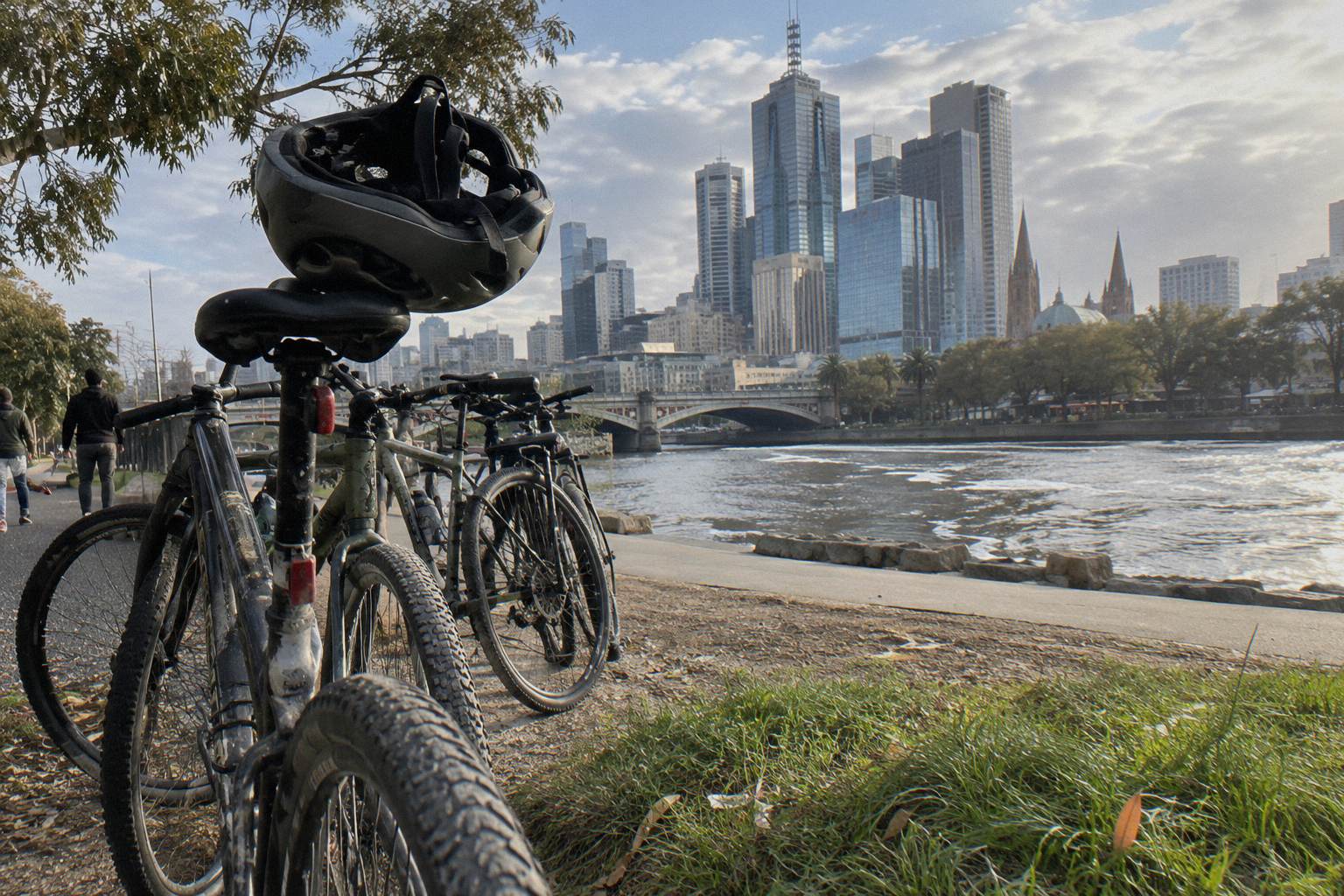
For the Famous Melbourne City Cycling Tour With Local Guide, operated by Melbourne By Bike, a company serving Melbourne visitors since 2002, the meeting address comes only in your booking confirmation, because the operator has used more than one meeting point and current details travel with the booking. The tour itself runs 4.5 hours with a lunch stop at Queen Victoria Market, or elsewhere on Mondays and Wednesdays when the market is closed, and lunch is bought by you. An e-bike upgrade is available at A$40 per person. Groups are usually 8 to 10 or fewer.
| Tour | Start point | Duration | From price (per person) |
|---|---|---|---|
| Famous Melbourne City Cycling Tour With Local Guide | Details in booking confirmation | 4.5 hours | from A$140 |
| Classic Cycling Tour From Batman Park | 2 Rebecca Walk, Batman Park | 4 hours | from A$129 |
| Melbourne E-Bike Tour With Local Guide | 2 Rebecca Walk, Batman Park | 4 hours | from A$139 |
| Private Cycling Tour From Federation Square | Federation Square | 3 hours | from A$255 |
The bayside option rides a different geometry again: the St Kilda And Brighton Bayside Bike Tour starts at Brighton Beach Railway Station, 3 hours from A$124 per person, trading the grid for beachside paths. Which start point suits you best depends on where you are staying and how much city you want before the water, and both are easy to reach by train with a bike, as the next section explains.
Can You Take A Bike On Trams And Trains?
Bikes are not allowed on Melbourne trams or buses at all, except folding bikes, folding e-bikes and folding e-scooters up to 82 x 69 x 39 cm with wheel rims up to 51 cm. Metro trains do take bikes and factory-built e-bikes, but e-bikes must be switched off, not ridden or charged on board, and converted e-bikes are banned everywhere on the rail network.
This is the rule visitors get wrong most often, and it kills the common plan of riding to a tram stop and hopping on with a bike. It does not work: standard bikes simply cannot board. The train network is the friend, with bikes carried free and the conductor deciding available space on regional V/Line services. Walk your bike on platforms and through stations, and if you are bringing an e-bike to a tour start by train, remember it travels switched off.
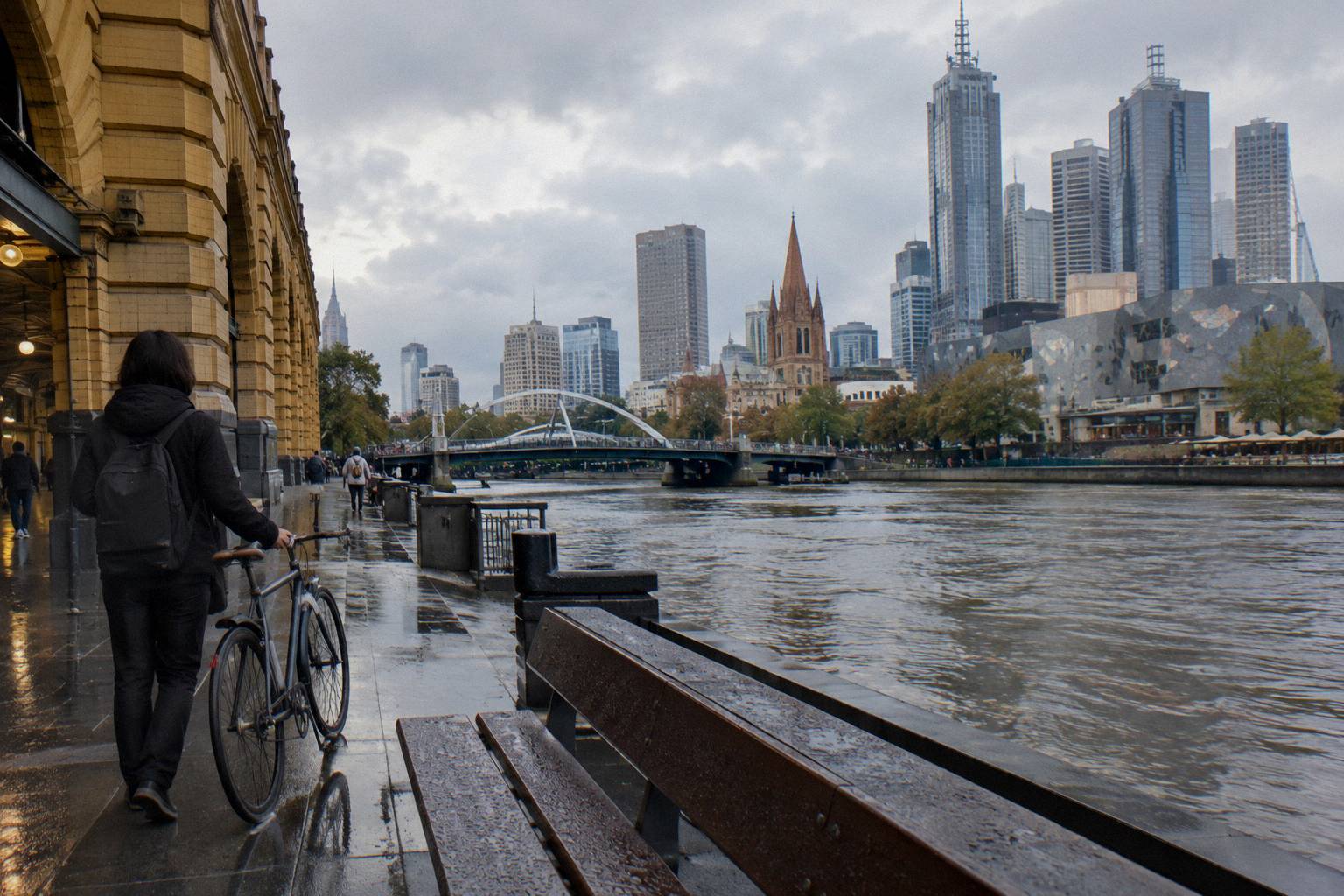
For the tours above, the practical reading is simple. Batman Park and Federation Square are both short walks or rides from Flinders Street and Southern Cross stations, so arriving by train with a standard bike is realistic. Brighton Beach station is the start point of the bayside ride itself, so the train is effectively part of that tour's route. The official rules are on Transport Victoria's page about bicycles and public transport, and our piece on tram tracks and cycling safety covers the street-level side of sharing the grid with trams.
On the tracks themselves, there is no official guidance on riding across tram tracks, so check with your operator before you set off. A guided tour answers this directly, because the guide leads the group through tracked intersections; for an unguided ride, ask your hire shop or operator how they recommend handling them before you set off.
What Should You Ask A Hire Shop Or Tour Operator?
Ask five things before you commit: does the price include a helmet and a lock, what is the group size, where exactly do we meet, what happens if it rains, and what is the cancellation policy. Every tour here offers free cancellation up to 24 hours before on the booking page, so the last question is about timing, not risk.
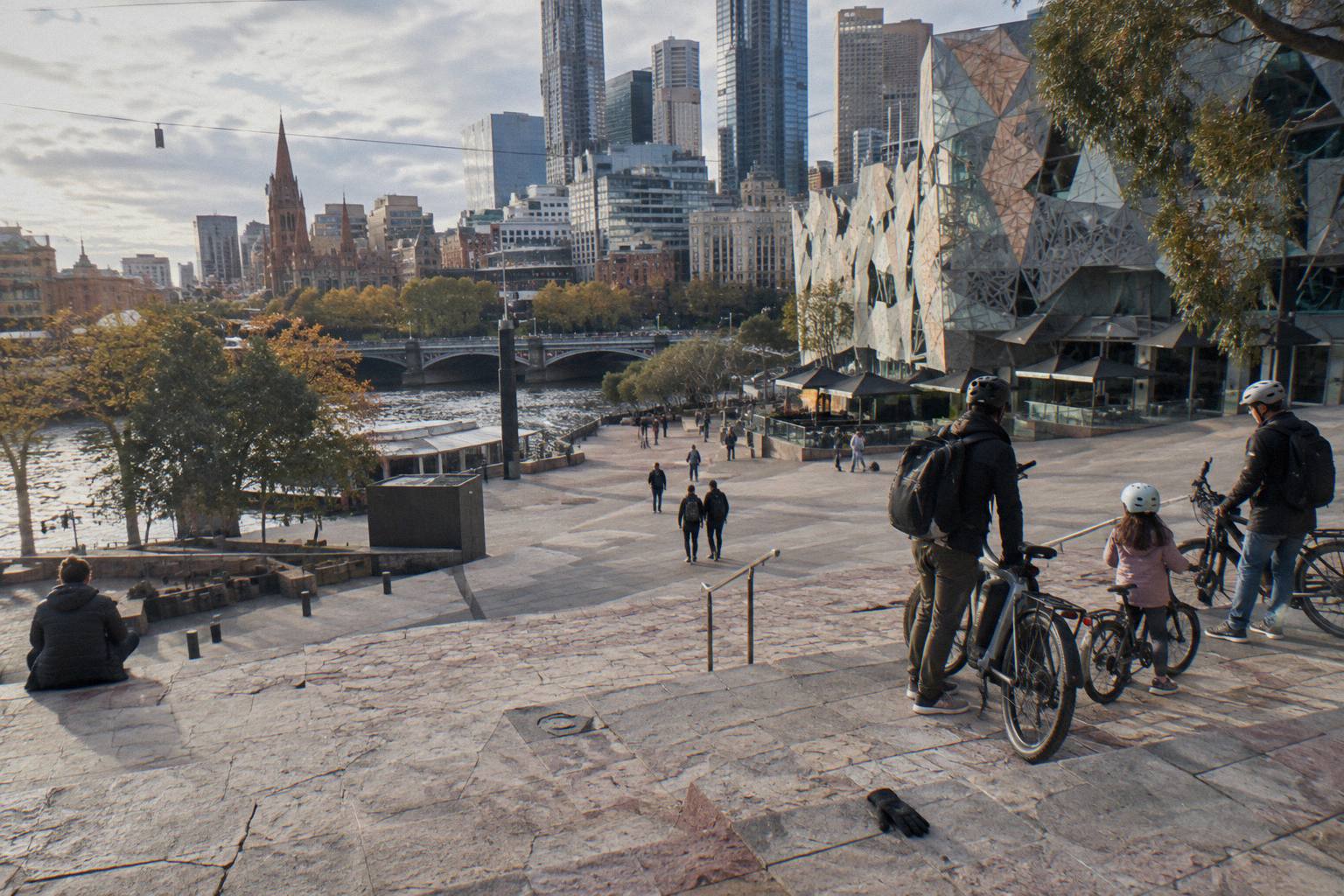
The checklist exists because listing pages vary in what they spell out. Some include water, one bayside listing shows a drink and snack while another shows only water, and lunch is bought by you on the city tours. None of this is hidden, but it is spread across pages, and asking upfront avoids arriving surprised. A shop that answers these questions clearly in a message or at the counter is also telling you something about how it will treat you on the road.
| Question | Why it matters | What a good answer looks like |
|---|---|---|
| Helmet and lock included? | Helmets are legally required; locks matter if you stop | A clear yes, helmet supplied on most tours |
| Group size? | Shapes pace and how much you hear the guide | A stated cap, such as up to 10 |
| Exact meeting point? | CBD start points differ by operator | A street address or booking-confirmation details |
| Wet weather plan? | Melbourne averages about 650 mm of rain a year across all months | A poncho supplied or a reschedule option |
| Cancellation window? | Plans shift on trips | Free cancellation up to 24 hours on the booking page |
Fitness and ability are worth raising too. The city tours are rated moderate: the Famous tour suggests comfortable fitness for 4.5 hours of riding with stops, children are welcome with solo riding recommended from 12, and buggies and tagalongs exist for small children. The bayside listing states plainly that people who cannot ride a bike, or who have mobility impairments, are not suitable, so read it as useful planning information rather than a warning. Our guide to a guided ride for first-time cyclists goes deeper on what a supportive beginner group looks like.
Weather deserves a realistic word. Melbourne's climate record shows a mean maximum of 25.9 °C in January and 13.5 °C in July, with roughly 100 rain days a year and showers that arrive and clear quickly. The Blue Tongue Classic cycling tour supplies a rain poncho if needed, and every operator runs in light rain, so a damp forecast is a clothing question, not a cancellation. Layer accordingly and the grid looks the same in drizzle as in sun.
E-Bike Or Regular Bike For The CBD?
A regular bike is enough for the CBD grid itself, which is flat and compact, and it is what the two most-reviewed tours use. An e-bike makes sense if you are combining the city with hills, longer distances or a full-day itinerary, or if you simply want to arrive at each stop fresh. The upgrade on the Famous tour costs A$40 per person.
The e-bike case is really the regional case. Inside the grid, distances are short and the terrain is flat, so pedal-assist mostly buys comfort, not capability. Out of the city it changes the day: the Yarra Valley Guided And E-Bike Rail Trail Cycling covers 6 hours of rail-trail riding from A$350 per person with a meal included, and the Mornington Peninsula Small-Group Bike Tour runs 2.5 hours from A$120 per person, both built around distances and hills that reward assistance. Our comparison of an e-bike or a regular bike for a guided ride works through the trade-off in detail.
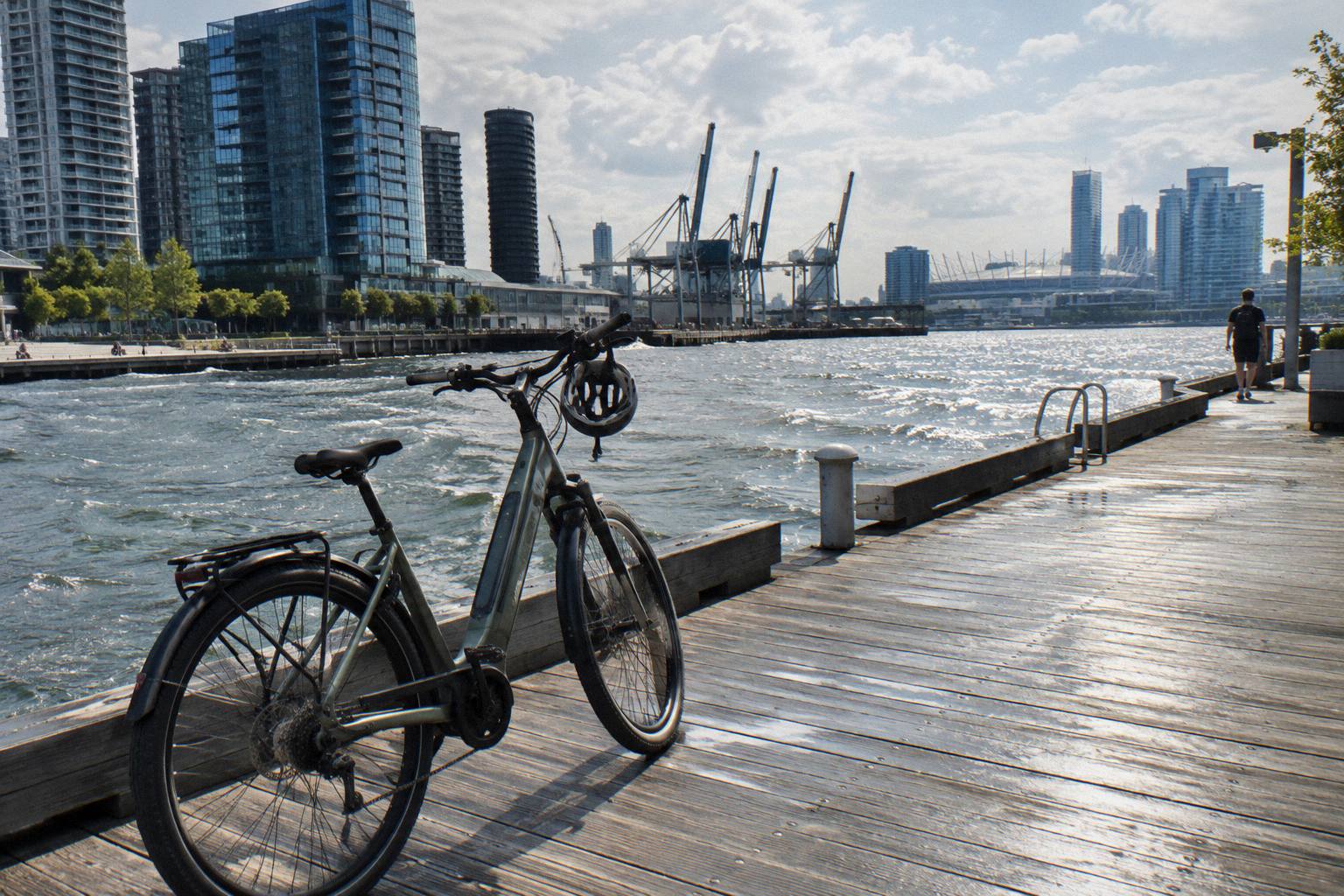
Know the legal shape of the machine, too. A legal e-bike in Victoria carries a 250 W motor, assists only while you pedal and cuts off at 25 km/h; anything faster or throttle-driven is not a tour bike and cannot be ridden on public roads. Tour operators supply compliant pedal-assist bikes, and the e-bike tour's route, published by Blue Tongue Bikes, covers the Yarra, the Shrine, the MCG, Cooks' Cottage, Parliament, Fitzroy, the Royal Exhibition Building, Chinatown and Hosier Lane across about 16 km. One caution for private planners: Parks Victoria bars power-assisted bicycles above 200 W from Albert Park's paths, so an e-bike lap there needs the operator's confirmation first.
The Melbourne E-Bike Tour With Local Guide is the cleanest way to test whether assistance suits you, with the same 10-person cap and Batman Park start as the Classic ride at a similar price, rated 4.9 from 300+ reviews. The full electric picture, including how battery range behaves across a day, sits in our guide to electric bike rides around Melbourne.
For a private version, the Private Melbourne E-Bike Tour runs 2 to 4 hours from A$500 per person, with the price depending on group size as shown on the booking page, and riders must be 12 or over. Private tours let you set the pace and the stops, which matters if your CBD list is specific: one laneway, one rooftop, one stretch of river. Guydeez's Federation Square private ride covers the same idea on standard bikes, from A$255 per person.
Whatever you choose, the fundamentals hold: the city is ridable, the rules are published, and the tours on offer between them cover every way of doing it. Melbourne Bike Tours exists to match you to the right one, whether that is your first ever group ride or your tenth city.
Mistakes That Trip Up First-Time CBD Cyclists
The mistakes that catch new riders are riding the footpath, crossing tram tracks at the wrong angle, skipping a helmet, and treating river paths like bike-only lanes. Riders over 12 must stay on the road, helmets are mandatory for everyone and enforced with fines, and on shared paths pedestrians have right of way. None of this is complicated once you know it in advance.
- Footpath riding: Adults assume sidewalks are fair game. Only riders 12 or under, an adult supervising them, or a rider with a medical certificate may use the footpath, so stay on the road and the shared paths.
- Tram tracks: Tracks set into the road grab narrow tyres when crossed shallowly. Cross them close to a right angle and let a guide pick the lane if you are unsure.
- Skipping the helmet: Helmets are mandatory for every rider, with fines for non-compliance, and the helmet must carry a label for an approved standard. Tours normally supply one.
- Wrong signal at crossings: A green bike signal means you may ride across, but a pedestrian-only light means dismount and walk your bike. Guessing wrong puts you in the path of turning traffic.
- Forgetting the lights: Riding at night or in low light requires a white front light and red rear light visible from 200 m plus a red rear reflector. If your tour finishes late, check what the shop supplies.
Common Questions About Cycling The Melbourne CBD
Can You Ride A Bike On The Footpath In The Melbourne CBD?
No. Riders aged over 12 must ride on the road, not the footpath, unless supervising a rider aged 12 or under or carrying a medical certificate. Adults may ride on the footpath only when carrying a baby or small child. Tour groups ride roads and shared paths, never sidewalks.
Do You Have To Wear A Helmet Cycling In Melbourne?
Yes, helmets are mandatory for every rider in Victoria, including e-bike riders, and the helmet must carry an approved-standard label. Fines apply. The only exemptions are religious headdress or a medical certificate carried while riding. Tours normally supply a helmet as part of the package.
Can You Take A Bike On A Melbourne Tram?
No. Standard bikes are not allowed on trams or buses. Only folding bikes, folding e-bikes and folding e-scooters measuring up to 82 x 69 x 39 cm with wheel rims up to 51 cm may board. Metro trains do carry bikes and factory-built e-bikes, with e-bikes switched off for the journey.
How Much Does A Guided CBD Bike Tour Cost?
City tours start from A$120 per person for the bayside ride, with the CBD options at from A$124 to A$140 per person for group tours and from A$255 per person for a private ride from Federation Square. Every tour listed here carries free cancellation up to 24 hours before on its booking page.
Is A Guided Tour Better Than Riding The CBD Alone?
For a first visit, usually yes. A guide chooses the lane, sets the pace and leads the group through tram-track intersections, which removes the main sources of stress. Confident city cyclists who already know the rules can ride the grid unguided, and the Capital City Trail offers a lower-traffic alternative loop.
What Does A Green Bike Signal Mean At Melbourne Intersections?
A green bike signal means you may ride across the intersection. A pedestrian-only light means you must dismount and walk your bike across. On shared paths, riders give way to pedestrians, keep left and use a bell or their voice when overtaking.
Before you go, here again are the three rides that best cover the CBD from every angle: